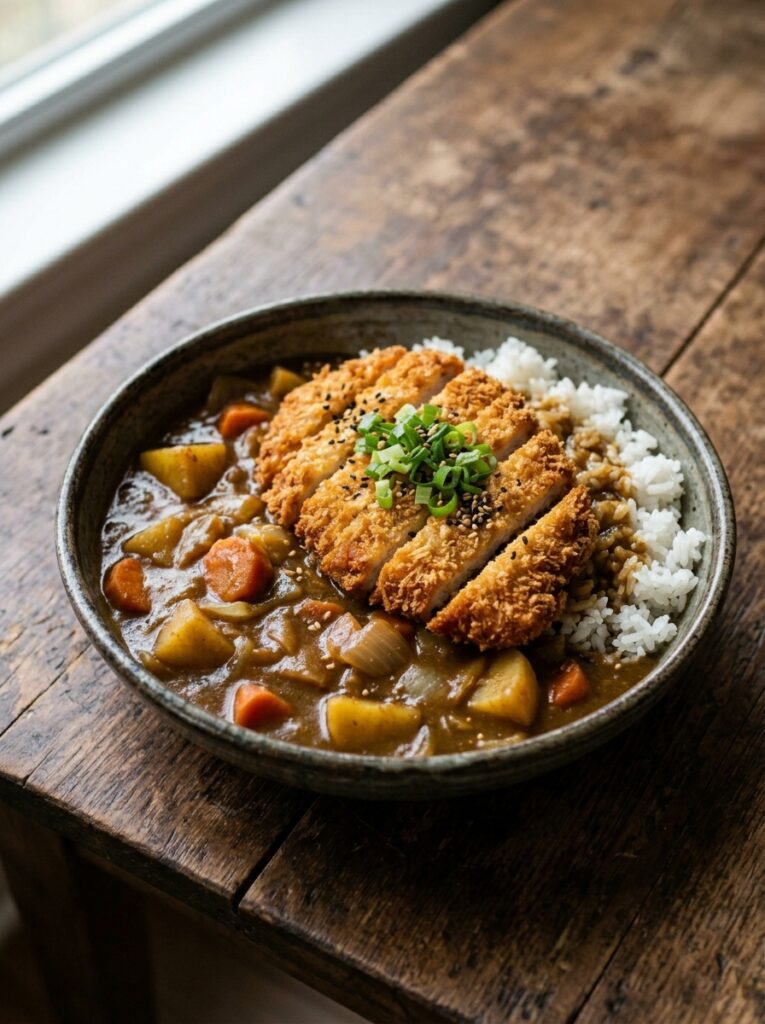
Japanese chicken katsu curry sauce is a golden, velvety curry that brings together crispy chicken katsu and aromatic Japanese curry roux for a comforting meal. This recipe teaches you how to create an authentic Japanese chicken katsu curry sauce at home with simple pantry ingredients, rich flavor, and a restaurant-quality finish that elevates any dinner table.
| Prep Time | Cook Time | Total Time | Servings | Difficulty | Cuisine |
|---|---|---|---|---|---|
| 20 minutes | 40 minutes | 60 minutes | 4 | Medium | Japanese |
Why This Japanese Chicken Katsu Curry Sauce Works
This Japanese chicken katsu curry sauce works because it balances savory depth, gentle sweetness, and comforting texture in a way that feels both indulgent and approachable. I rely on classic Japanese curry roux blocks for reliable flavor, then build layers of umami with sautéed onions, carrots, and potatoes, plus a hint of apple or honey for balance.
The sauce is silky yet substantial, clinging beautifully to crispy chicken katsu without becoming heavy or greasy. I appreciate how the curry stays cohesive during simmering, giving home cooks consistent results every time they prepare this Japanese chicken katsu curry sauce.
Flavor control is a standout feature, since you can adjust heat level, sweetness, and thickness to match your family preferences, from mild and kid-friendly to deeper and more robust. Texture stays velvety, and the method respects authentic Japanese techniques while remaining practical for weeknight cooking.
Home cooks will love how this recipe integrates with many quick Japanese dinner ideas, pairs well with rice or noodles, and keeps successfully for leftovers. The approach emphasizes gentle heat, careful stirring, and timing that makes the Japanese chicken katsu curry sauce taste like a ramen shop favorite.
Finally, the recipe avoids pork and alcohol and uses standard pantry staples, making it friendly for halal and family kitchens. You get a comforting, crowd-pleasing dish that showcases the signature, velvety richness of authentic Japanese chicken katsu curry sauce.
Japanese Chicken Katsu Curry Sauce Ingredients
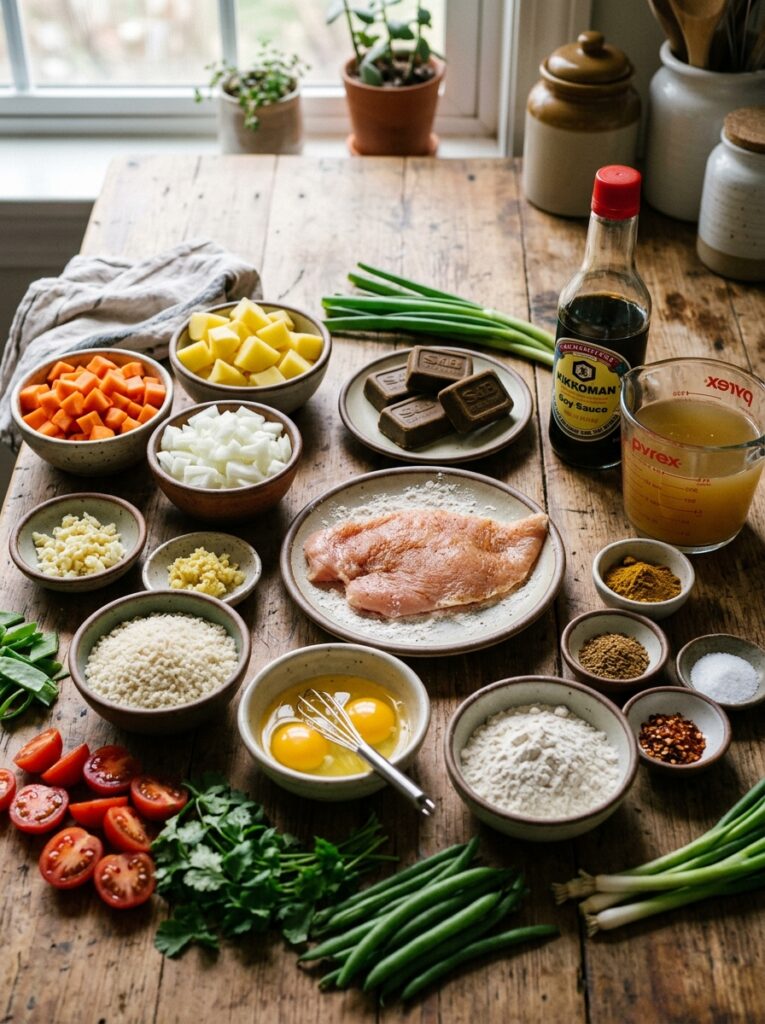
The ingredients below make a balanced Japanese chicken katsu curry sauce that clings to chicken katsu without being too thick or thin. Use quality curry roux blocks and fresh aromatics for the best result, and feel free to adjust vegetables based on seasonality.
| Ingredient | Quantity | Notes with alternatives |
|---|---|---|
| Japanese curry roux blocks | 3 to 4 blocks | Medium or hot; use all-purpose roux for balanced flavor |
| Onion, diced | 1 large | Aromatics base; substitute shallots for a sweeter profile |
| Carrot, diced | 1 medium | Sweetness; parsnip is an acceptable alternative |
| Potato, diced | 1 medium | Body and starch; sweet potato adds a different sweetness |
| Garlic, minced | 2 cloves | Depth; use roasted garlic for milder flavor |
| Ginger, grated | 1 tsp | Fresh brightness; powdered ginger works in a pinch |
| Vegetable or chicken broth | 3 cups | Halal or non-alcoholic broth; low-sodium preferred |
| Neutral oil | 2 tbsp | For sautéing; canola, rice bran, or sunflower oil |
| Unsweetened applesauce | 1 tbsp | Substitute for honey or mirin; adds gentle sweetness |
| Soy sauce | 1 tbsp | Umami; use tamari for gluten-free option |
| All-purpose flour | 1 tbsp | Optional thickening; can omit for lighter sauce |
| Chicken cutlets | 4 pieces | For katsu; breast or thigh; panko and egg for coating |
| Salt and pepper | To taste | Adjust during simmering for balance |
| Green onions, sliced | 2 tbsp | Garnish; scallions add freshness |
How to Make Japanese Chicken Katsu Curry Sauce
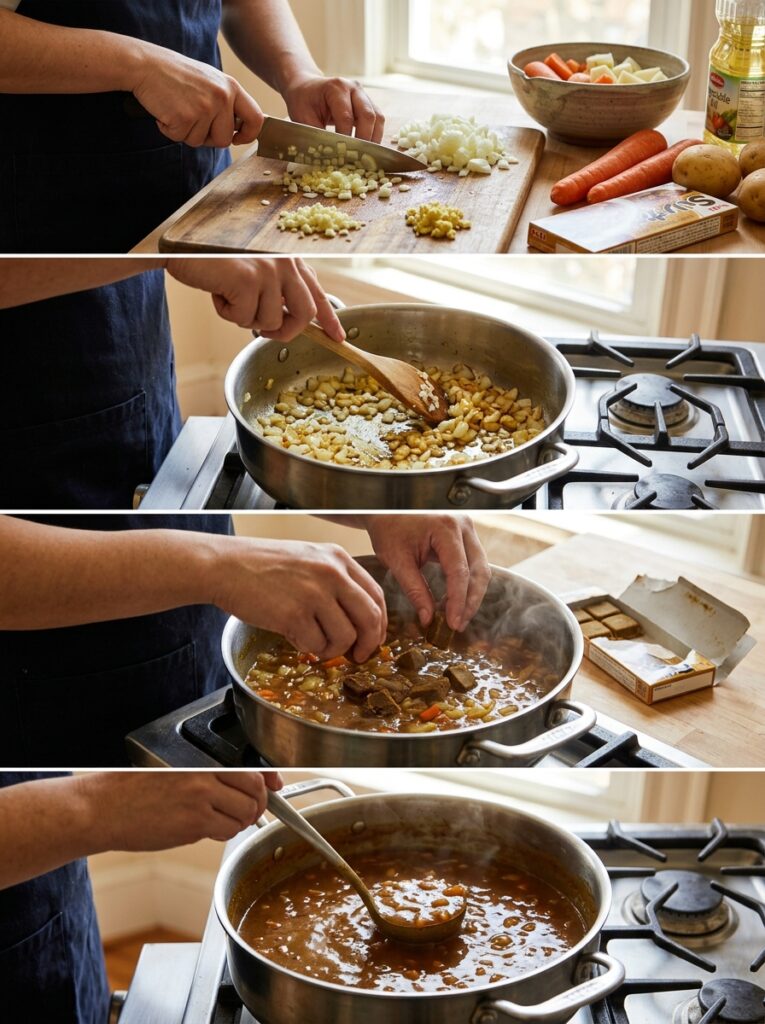
Follow these steps to build a rich Japanese chicken katsu curry sauce that tastes authentic and delivers velvety texture. Work methodically, simmer gently, and adjust thickness and sweetness to your preference.
- Heat a wide pot over medium heat and add neutral oil until it shimmers for sautéing aromatics.
- Sauté diced onion, carrot, and potato for 5 minutes until softened and fragrant, stirring frequently.
- Add minced garlic and grated ginger, then cook for 1 minute until aromatic without browning.
- Stir in soy sauce and unsweetened applesauce, mixing to distribute sweetness and umami evenly.
- Sprinkle flour and stir for 1 minute to lightly coat vegetables and build a silky base.
- Pour in broth gradually, whisking to avoid lumps and create a smooth, cohesive mixture.
- Bring the pot to a gentle simmer and cook vegetables for 15 minutes until tender.
- Add Japanese curry roux blocks and stir until fully melted and incorporated into the sauce.
- Simmer for 5 to 10 minutes until the Japanese chicken katsu curry sauce thickens slightly.
- Season with salt and pepper, then taste and adjust sweetness or heat if needed.
- Prepare chicken katsu by pounding cutlets, seasoning, then coating with flour, beaten egg, and panko.
- Fry chicken cutlets in neutral oil at 350°F until golden and cooked through, then drain on a rack.
- Slice the katsu and plate over steamed rice, then spoon the Japanese chicken katsu curry sauce generously over the top.
- Garnish with sliced green onions and serve immediately for the best texture and aroma.
Chef Tips for Perfect Japanese Chicken Katsu Curry Sauce
Use these chef tips to refine your Japanese chicken katsu curry sauce and achieve consistent results every time you cook.
- Simmer gently rather than boiling hard, because high heat can cause the Japanese chicken katsu curry sauce to split or become grainy.
- Control thickness by adjusting simmer time; longer simmer thickens, while a splash of broth restores a silky pour.
- Balance sweetness by adding applesauce in small increments, since Japanese curry roux blocks already contain mild sweet notes.
- Fry chicken katsu at a stable oil temperature around 350°F, which prevents soggy breading and keeps the crust shatteringly crisp.
- Use fresh aromatics for superior depth; garlic and ginger should be added late enough to perfume but not burn during sauté.
- Taste and season at the end, because the Japanese chicken katsu curry sauce develops deeper flavor once the roux fully melts and integrates.
Common Japanese Chicken Katsu Curry Sauce Mistakes to Avoid
Avoid these common errors to ensure your Japanese chicken katsu curry sauce turns out silky, flavorful, and perfect every time.
- Boiling vigorously: This can break the emulsion and make the Japanese chicken katsu curry sauce greasy or separated; simmer gently instead.
- Under-sautéing aromatics: If you rush the onions and carrots, the sauce will taste flat; cook until soft and sweet.
- Adding curry roux to boiling liquid: The roux may clump; reduce heat and stir slowly for smooth integration.
- Over-thickening with flour: Too much flour can dull flavor; use a modest amount or rely on roux thickness.
- Slicing katsu too early: Let fried chicken rest briefly, so the crust stays crisp when topped with sauce.
- Skipping tasting: The sauce needs adjustment; season at the end for better control and balance.
Best Japanese Chicken Katsu Curry Sauce Variations and Substitutions
These practical variations let you adapt the Japanese chicken katsu curry sauce to dietary needs, flavor preferences, or ingredient availability without losing authenticity.
| Ingredient | Substitution | Impact on Flavor |
|---|---|---|
| Butter | Neutral oil | Keeps sauce vegan-friendly and lighter |
| Vegetable broth | Chicken broth | Adds deeper savory notes while staying halal |
| Applesauce | Grated apple | Provides natural sweetness and fresh aroma |
| Soy sauce | Tamari | Offers gluten-free option with similar umami |
| Hot curry roux | Mild curry roux | Reduces heat for kids or sensitive palates |
| Panko breaded chicken | Tofu cutlet | Crisp vegetarian option with mild protein flavor |
Serving Suggestions for Japanese Chicken Katsu Curry Sauce
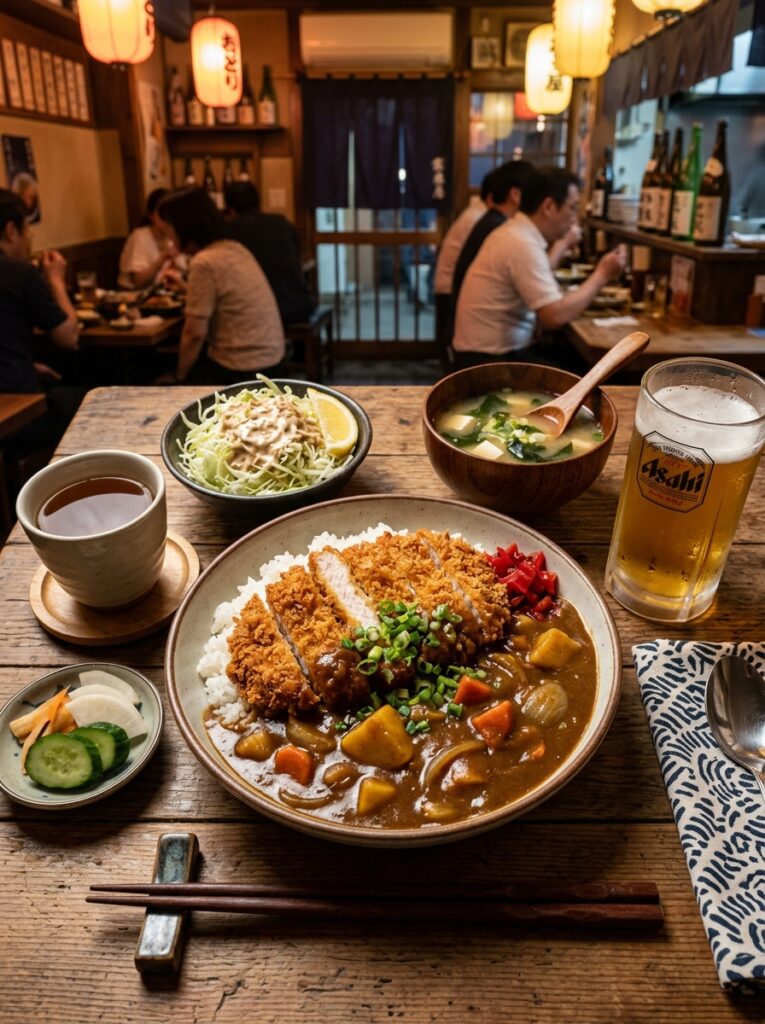
Serve your Japanese chicken katsu curry sauce over steamed short-grain rice with the sliced katsu on top, and add a simple side salad or pickles for contrast. Pair with green tea or sparkling water for a refreshing balance, and consider family dinners, meal prep containers, or casual gatherings where comfort food shines.
For weeknight meals, prepare the sauce in advance and fry katsu just before serving, ensuring maximum crispness and aroma. This Japanese chicken katsu curry sauce is perfect for holidays when you want a crowd-pleaser that feels special yet remains approachable.
Storage and Reheating for Japanese Chicken Katsu Curry Sauce
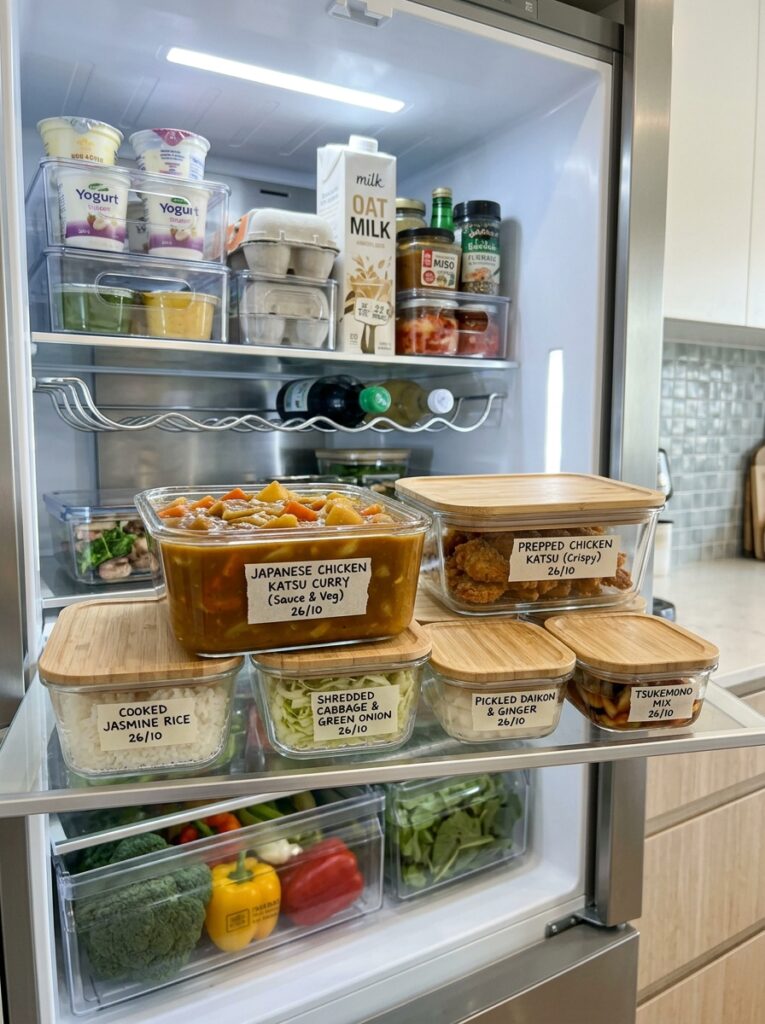
Proper storage and reheating keep your Japanese chicken katsu curry sauce tasting fresh while maintaining food safety. Follow these guidelines for best results.
| Method | Duration | Instructions |
|---|---|---|
| Refrigerator | 3 to 4 days | Cool sauce fully, store airtight, and separate from fried katsu to preserve crispness. |
| Freezer | 1 to 2 months | Portion sauce into freezer-safe containers; thaw overnight in the refrigerator. |
| Reheating | Immediate | Warm gently in a pot over medium-low heat, stirring and adding broth as needed. |
| Make-ahead | 1 day | Cook sauce fully, cool, and refrigerate; reheat and fry katsu just before serving. |
| Food safety | Per guidelines | Keep hot food hot and cold food cold; reheat to 165°F before serving. |
Nutritional Information for Japanese Chicken Katsu Curry Sauce
Approximate values per serving of Japanese chicken katsu curry sauce with chicken katsu and rice.
| Nutrient | Amount per Serving |
|---|---|
| Calories | 650 |
| Protein | 30 g |
| Fat | 25 g |
| Carbohydrates | 75 g |
| Fiber | 6 g |
| Sugar | 10 g |
| Sodium | 900 mg |
Frequently Asked Questions About Japanese Chicken Katsu Curry Sauce
Can I substitute the curry roux blocks for a homemade roux?
Yes, you can make a homemade roux with flour, oil, and spices, but it is more complex. For best results, use Japanese curry roux blocks and add your own aromatics to the Japanese chicken katsu curry sauce for customized flavor.
How do I know when the sauce is done?
The sauce is done when vegetables are tender and the texture is velvety yet pourable. The Japanese chicken katsu curry sauce should coat a spoon without feeling gluey, and the flavors should taste balanced after simmering.
Why is my sauce too thick or thin?
Too thick usually means long simmering or excess flour; thin with broth gently. Too thin means more simmering or additional roux; stir slowly to integrate and avoid clumps in the Japanese chicken katsu curry sauce.
Can I make the sauce ahead of time?
Yes, the Japanese chicken katsu curry sauce tastes even better the next day after flavors meld. Cool fully, refrigerate, and reheat gently while frying katsu just before serving for maximum crispness.
What side dishes pair best with this dish?
Steamed rice, simple greens, pickles, or shredded cabbage pair well. These sides keep the Japanese chicken katsu curry sauce as the star while adding freshness and texture.
How should I store leftover sauce?
Store in airtight containers in the refrigerator for 3 to 4 days or freeze for 1 to 2 months. Keep katsu separate to preserve crispness, and reheat the Japanese chicken katsu curry sauce gently.
What is the best way to reheat the sauce?
Reheat on the stovetop over medium-low heat, stirring often and adding broth to maintain a silky consistency. Avoid boiling to prevent the Japanese chicken katsu curry sauce from separating.
Can I freeze the sauce without changing texture?
Yes, but thaw overnight in the refrigerator and reheat gently. The Japanese chicken katsu curry sauce may need a splash of broth to restore a smooth, pourable texture.
What flavor variations can I try?
Try adding grated apple, honey, or a pinch of cayenne for heat. You can also use hot curry roux or a milder blend to customize the Japanese chicken katsu curry sauce to your taste.
What beginner tips help the most?
Use medium heat, taste at the end, and fry katsu just before serving. These steps keep the Japanese chicken katsu curry sauce balanced, silky, and paired with a crisp cutlet.
For additional food safety and preparation guidance, consult reputable sources like USDA Food Safety and Cooks Illustrated.
This Japanese chicken katsu curry sauce delivers velvety richness and comforting warmth that pairs perfectly with crispy chicken katsu. Make it once, and the deep, savory-sweet flavor and luxurious texture will become a favorite you return to often.
Print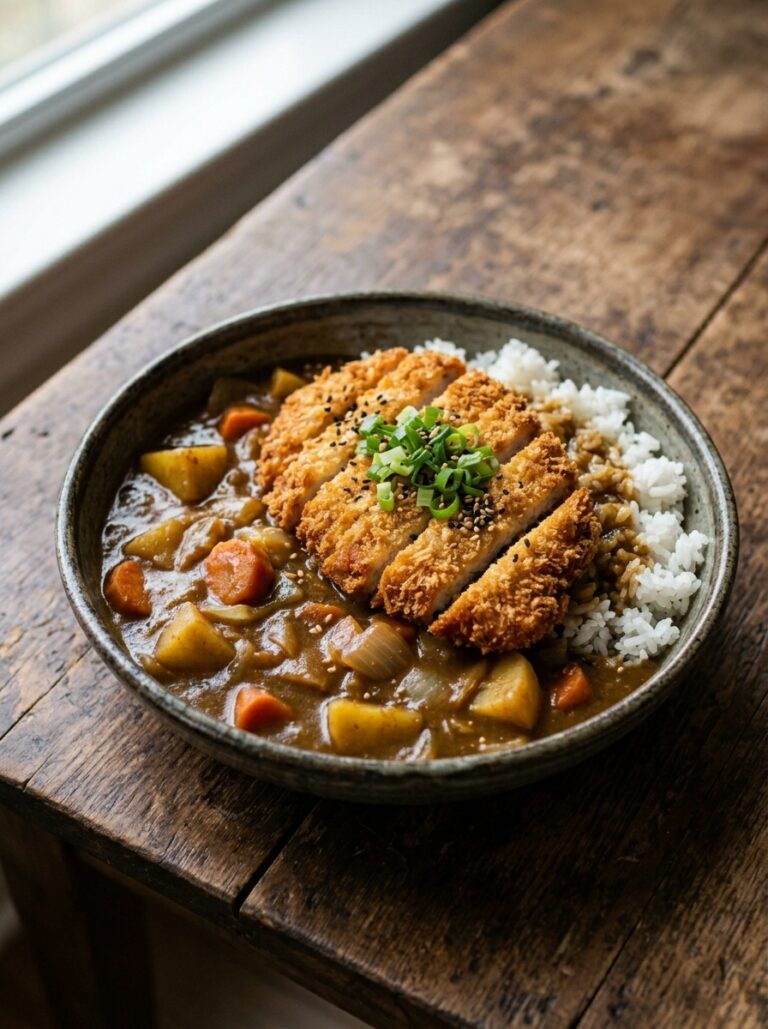
Japanese Chicken Katsu Curry Sauce: Authentic Homemade Recipe
A golden, velvety Japanese chicken katsu curry sauce made with crispy chicken breasts and homemade curry, featuring onions, carrots, and potatoes. Easy to customize for your family’s taste, free from pork and alcohol, perfect for a comforting, restaurant-quality meal.
- Total Time: 60
- Yield: 4 servings 1x
Ingredients
4 skinless chicken breasts
1/2 cup all-purpose flour
2 large eggs, beaten
1 cup panko breadcrumbs
1 large onion, sliced
2 medium carrots, sliced
2 large potatoes, cubed
3 cups vegetable broth
1 large Japanese curry roux block (or 3 cups curry roux powder)
Salt and black pepper to taste
1 tablespoon unsweetened apple juice or honey (optional for sweetness)
2 tablespoons vegetable oil (for frying)
Instructions
Pound chicken breasts to 1-inch thickness and season with salt and pepper.
Set up a dredging station: flour, beaten eggs, panko breadcrumbs.
Dredge chicken in flour, dip in eggs, and press panko into place.
Heat oil in a large skillet to 350°F (175°C). Fry chicken cutlets until golden and crispy (4-5 minutes per side). Drain on paper towels.
In the same skillet, sauté onions, carrots, and potatoes until tender (5-7 minutes).
Pour in vegetable broth, bring to a boil, then reduce heat and simmer for 5-7 minutes.
Crush the curry roux block into the simmering broth (or gradually mix in powder), stirring until fully dissolved and sauce thickens.
Taste and balance with apple juice or honey, adjusting salt and pepper as needed.
Serve the curry sauce over the crispy chicken cutlets, traditionally paired with steamed rice.
Notes
Adjust sweetness to taste. Use a mild curry roux for a subtler flavor or a hotter variant for spice.
For gluten-free, substitute panko with gluten-free breadcrumbs.
Store leftovers in an airtight container in the fridge for 3-4 days.
Can simmer sauce longer for a thicker consistency or dilute with extra broth for a lighter texture.
- Prep Time: 20
- Cook Time: 40
- Category: Mediterranean Basics
- Method: Stovetop
- Cuisine: Japanese
- Diet: Halal
Nutrition
- Serving Size: 1 serving
- Calories: 350
- Sugar: 10g
- Sodium: 600mg
- Fat: 12g
- Saturated Fat: 4g
- Carbohydrates: 25g
- Fiber: 2g
- Protein: 25g
- Cholesterol: 60mg