I’ll be honest with you: I used to think putting anything but butter in my frying pan was a culinary sin. But did you know that over 60% of Mediterranean home cooks prefer olive oil for its flavor and health benefits? Once I made the switch to Olive Oil Scrambled Eggs, my breakfast routine changed forever! The texture is lighter, the flavor is fruitier, and your heart will seriously thank you for those healthy fats.
The Mediterranean Secret: Why Extra Virgin Olive Oil Wins
I remember the first time I saw my friend Elena splash olive oil into a cold pan for eggs. I actually stopped her! “Elena, what are you doing? Where is the butter?” I was so sure she was about to ruin our Sunday brunch. She just laughed at me, her eyes twinkling like she knew something I didn’t. She told me that back in her village in Greece, they wouldn’t dream of using butter. They use the “liquid gold” they grow right in their backyard. Honestly, I thought it would taste weird or greasy. But after one bite? I was a convert. It wasn’t just breakfast; it was a total flavor explosion.
Flavor Like You Wouldn’t Believe
Most people think olive oil is just for salads or pasta. But when you use a good extra virgin olive oil (EVOO) for eggs, something magical happens. It brings this peppery, fruity vibe that butter just can’t touch. Butter is great, don’t get me wrong, but it is heavy. Olive oil feels light. It makes the eggs taste more like… well, eggs! It lifts the flavor. I have found that a really high-quality oil actually highlights the creaminess of the yolk. If you use a peppery oil from Italy or a smooth one from Spain, your breakfast tastes different every single time. It is like a little trip to the coast without leaving your kitchen.
Better for Your Ticker
As a teacher, I am on my feet all day. I need energy that does not make me feel sluggish by lunchtime. Butter is full of saturated fat, which is not the best if you are watching your heart health. But olive oil? It is packed with monounsaturated fats. Those are the “good” fats. My doctor actually gave me a high-five when I told him I switched. Plus, EVOO has these things called polyphenols. They are antioxidants that help fight inflammation. So, while I am eating my delicious eggs, I am also doing something nice for my body. It feels good knowing I am starting my day with fuel that is actually functional.
It Just Feels Better
Ever feel that “heavy” feeling in your stomach after a big buttery breakfast? I used to get that all the time. Switching to olive oil stopped that. The eggs feel silkier and they do not sit like a rock in my gut. I think it is because the oil is a natural plant product. It is simple. It is clean. And honestly, it is easier to clean the pan afterward too! No scrubbing at burnt milk solids. Just a quick wipe and you are done. For a busy person like me, that is a huge win.
Mastering the Technique for Silky Olive Oil Scrambled Eggs
I’ve spent a lot of time in a classroom, and if there is one thing I’ve learned, it is that the right tools make all the difference. You wouldn’t try to grade a stack of papers with a broken pencil, right? Well, making Olive Oil Scrambled Eggs is the same way. People ask me all the time how I get my eggs so soft and silky. They think I have some expensive French gadget or spent years in a fancy kitchen, but I don’t. It is all about the technique. Once you get the hang of it, you will never want to eat those dry, rubbery eggs they serve at the school cafeteria ever again.
The Pan Matters More Than You Think
First off, let’s talk about your pan. I used to use whatever was clean in the sink, but that was a huge mistake. If your pan is too big, the eggs spread out too thin and cook way too fast. I like a small, heavy-bottomed non-stick pan. This helps the heat stay even so you don’t get hot spots that burn your oil or make the eggs stick. And since we are using extra virgin olive oil, we want that heat to stay steady. If the pan is too thin, it gets hot way too fast. Just grab a small skillet that fits about three eggs comfortably. It makes a big difference in how they turn out.
My Secret Whisking Trick
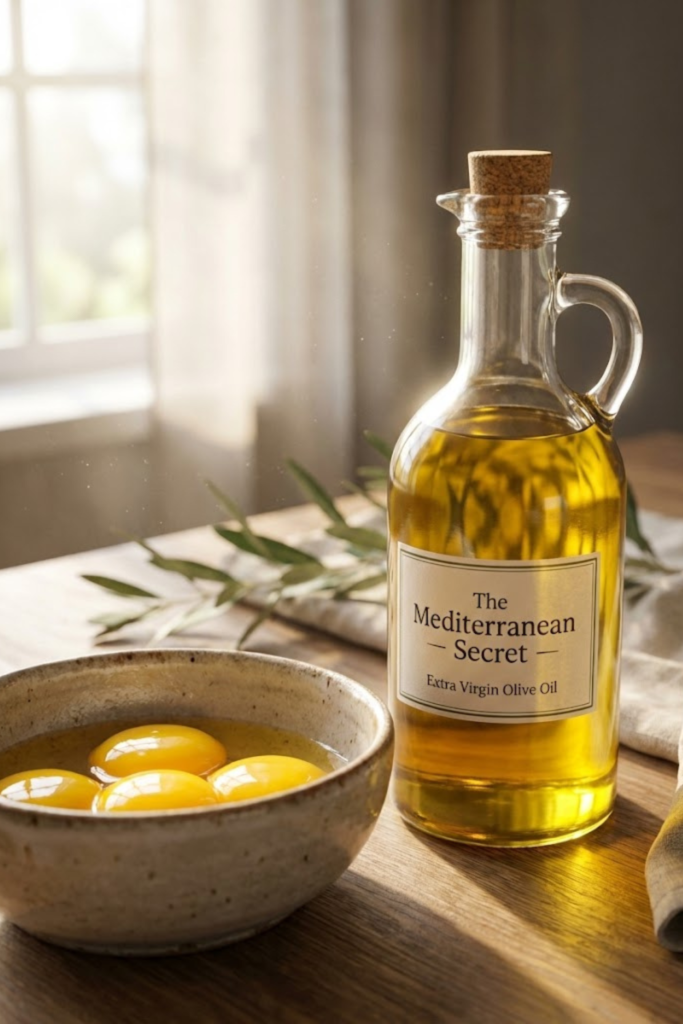
Here is a little trick I picked up after many failed attempts. Most people just crack the eggs and throw them in the pan. Instead, I crack mine into a bowl first. I add a tiny splash of water—just a teaspoon—and a little drizzle of the olive oil directly into the bowl. Then I whisk them like crazy. You want to get some air in there until you see little bubbles. This makes the eggs fluffy and helps the oil mix in before they even touch the heat. It keeps the eggs from separating and makes the final result look like something from a gourmet magazine.
Low Heat is Your Best Friend
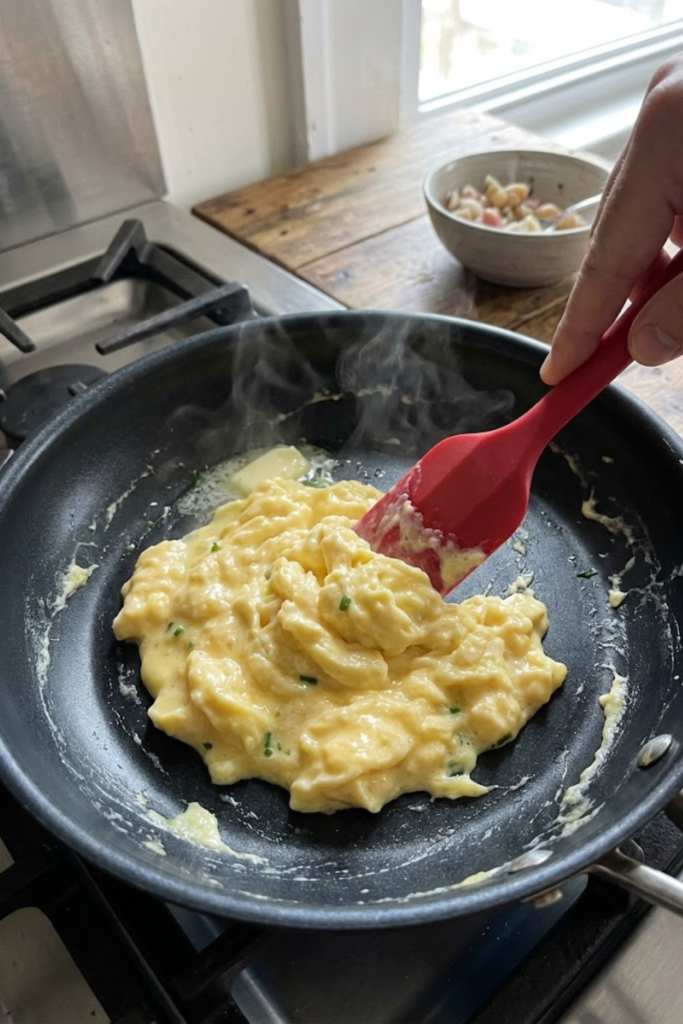
The biggest mistake I see? Turning the stove up to high heat. I get it, we are all in a rush in the morning and want to get out the door. But you have to resist that urge. I keep my burner on medium-low. You want to hear a tiny hiss when the eggs hit the pan, but that’s it. Use a rubber spatula to move the eggs slowly from the edges to the center. It should feel like you are just gently folding them. If you see brown edges, the heat is too high! Keep it slow, stay patient, and you will get those silky folds every single time.
It takes maybe two minutes longer, but your breakfast will go from “okay” to “amazing” just by slowing down. Trust me, your taste buds will thank you for the extra wait.
Common Mistakes: The “Rubbery Egg” Trap
I’ve been teaching for a long time, and I have seen it all in the kitchen. One thing that really makes me sad is when a student tells me they tried making eggs at home and they turned out like pieces of yellow eraser. We have all been there. You are hungry, you are in a rush, and you think you can just beat the system. But making Olive Oil Scrambled Eggs requires a little bit of respect for the ingredients. If you treat them poorly, they will treat your breakfast poorly. I’ve made every mistake in the book so you don’t have to.
Turning the Heat Too High
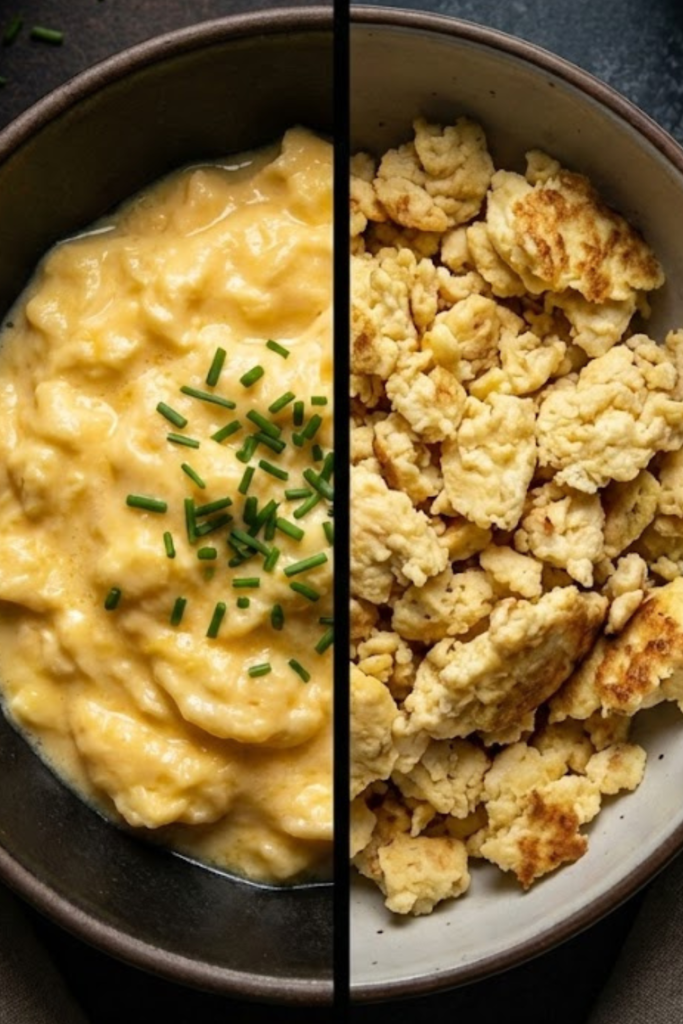
The biggest mistake I see—and I used to do this myself when I was younger—is cranking that stove up to high. We think that more heat means breakfast gets on the table faster. In reality, high heat just shocks the eggs. Since we are using olive oil, high heat can actually make the oil taste bitter if it starts to smoke. Eggs are mostly protein, and when protein gets hit with high heat too fast, it tightens up. That is how you get that rubbery, bouncy texture. I always tell my students to keep it low and slow. If you see the eggs bubbling like crazy or browning the second they hit the pan, you need to pull that pan off the burner right away.
Walking Away from the Stove
I know, I know. You want to go check your email or help the kids find their shoes. But eggs cook in a flash. If you walk away for even thirty seconds, you might miss the “perfect window.” I used to try to multi-task by putting bread in the toaster and looking for the jam, only to come back to a dry mess. You have to stay right there with your spatula. Keep the eggs moving. If they sit still for too long, they get tough on the bottom. It only takes about two or three minutes total, so just stay put and enjoy the smell of the olive oil warming up. It is almost like a tiny meditation before the school day starts.
The “Done” Delusion
This is the one that trips everyone up. Most people wait until the eggs look completely dry in the pan before they scoop them onto a plate. By then, it is already too late! You have to remember something called “carryover cooking.” The eggs are still hot when you take them out, and that heat keeps cooking them for another minute. I always tell people to stop when the eggs still look a little bit “shiny” or wet. By the time you get the plate to the table, they will be just right. If they look perfect in the pan, they will be overdone on the plate. It takes a little practice to trust your gut on this, but once you do, you’ll never go back to dry eggs again.
Serving Ideas and Storing Your Leftovers
I’ve had many mornings where I’m running out the door with a piece of toast in one hand and my grade book in the other. But when I actually have a second to sit down, I like to make my Olive Oil Scrambled Eggs look like they came from a fancy cafe. It’s funny how a little bit of effort on the plate makes the whole day feel a bit more organized. Even if I’m just eating at my kitchen counter, I feel like I’m treating myself.
How to Plate These Like a Pro
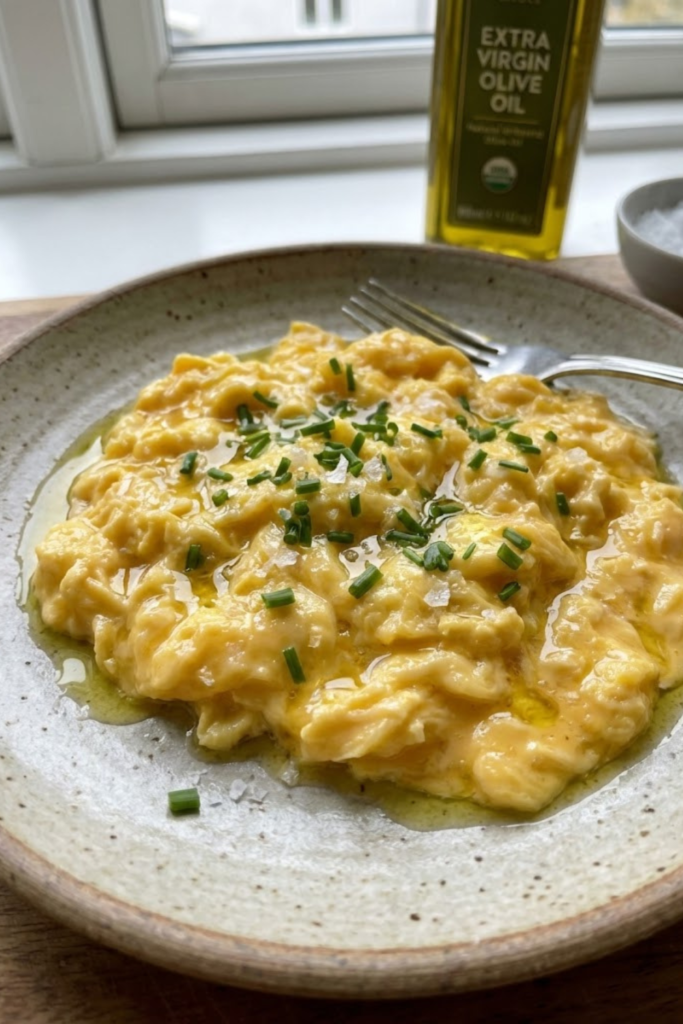
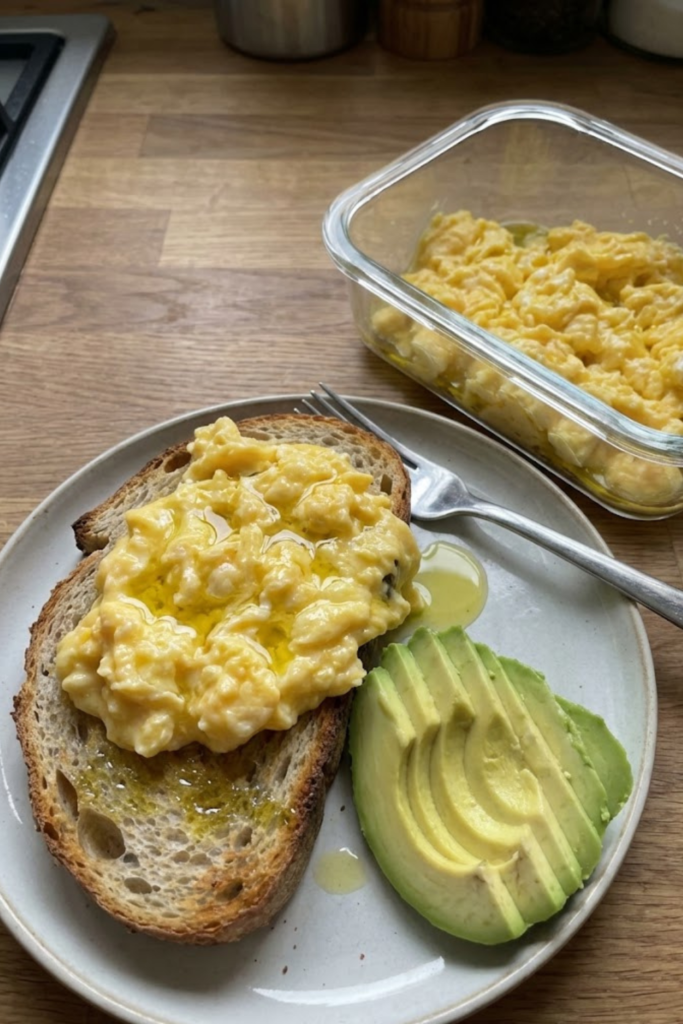
Once you have those silky eggs ready, you need the right partners on the plate. My absolute favorite is a thick slice of toasted sourdough. The crunch of the bread with the soft texture of the eggs is just a perfect match. I usually drizzle a tiny bit more of that fresh olive oil over the top of the eggs right before I eat. Sprinkle some flaky sea salt and maybe some red pepper flakes if you like a little kick. If I have some fresh tomatoes from the garden or even just some sliced avocado, I’ll toss those on the side too. The green of the avocado against the bright yellow eggs looks great and adds even more of those healthy fats we talked about.
Storing Your Eggs for a Quick Snack
Now, I’ll be honest with you—scrambled eggs are always best the second they leave the pan. But as a busy teacher, I know that sometimes you make too much or you need to prep ahead. If you have leftovers, let them cool down for a few minutes first. If you put hot eggs in a container, the steam will make them soggy, and nobody wants that. Put them in an airtight glass container and stick them in the fridge. They will stay good for about two days. I wouldn’t go much longer than that because the texture starts to get a bit grainy.
How to Reheat Without the Rubber
Reheating eggs is where most people fail. If you throw them in the microwave for two minutes, you’ll end up with something that feels like a sponge. Instead, try using the microwave on 50% power in short 20-second bursts. Stir them every time the timer goes off. This helps them heat up evenly without drying out. If you have the time, the best way is actually back in a pan on the stove. Put a tiny drop of oil in, keep the heat very low, and just let them get warm. It takes a little more work, but it keeps that olive oil flavor fresh and avoids that weird leftover taste. It’s a great way to have a high-protein snack ready to go during a busy work week.
Why You’ll Never Go Back to Butter
I’ll be the first to admit that I am a creature of habit. As a teacher, my morning routine is usually set in stone—coffee, toast, and eggs. For years, that meant a big slab of butter in the pan. I thought I was doing it right! But honestly, after making the switch to Olive Oil Scrambled Eggs, I feel like I finally graduated from the “basic” level of breakfast. It is funny how such a tiny change in your kitchen can totally flip your morning upside down in the best way possible. I don’t miss that heavy, greasy feeling at all. Instead, I get to enjoy that bright, grassy flavor of the oil, and I know I am putting something good into my body before I head off to deal with a room full of energetic teenagers.
It’s really about making choices that make you feel better. We spend so much time worrying about the big stuff, but sometimes it is the small things—like what kind of fat you use in your frying pan—that really add up. I’ve started telling all my colleagues in the breakroom about this. At first, they looked at me like I was crazy. “Olive oil? For breakfast?” they’d ask. But then I brought some in for a staff brunch, and let me tell you, there wasn’t a single scrap left on the plates. People were shocked at how fluffy and light they were. One of the math teachers even asked if I had used heavy cream! Nope, just good old EVOO and a little bit of patience.
If you are sitting there on the fence, I want to challenge you. Try it just once tomorrow morning. Don’t worry about being perfect. If you mess up and the heat gets too high, or if they look a little bit wet when you plate them, that’s okay! That is how we learn. I’ve burned more eggs than I care to count, and I still turned out alright. The goal isn’t to be a pro chef; the goal is just to have a breakfast that makes you happy and keeps you full until lunch.
Once you see that golden oil shimmering in the pan and smell that amazing aroma, you’ll see exactly what I mean. It’s a game changer. If you enjoyed these tips and want to help your friends fix their boring breakfasts, please share this post on Pinterest! It helps me out a lot, and it helps spread the word that healthy food doesn’t have to taste like cardboard. Now, go get that pan heating up—your taste buds are waiting!