I still remember the first time I heard the crackle of an egg hitting a pool of hot olive oil—it wasn’t just breakfast; it was a revelation! For years, I was a loyal butter devotee, thinking it was the only way to fry. Boy, was I wrong. There is something magical that happens when high-quality olive oil meets high heat; the whites bubble up into a golden, lacy skirt that butter just can’t replicate. In this guide, I’m going to walk you through exactly how to master Olive Oil Fried Eggs, ensuring you get that “Spanish fried egg” texture that’s taking the internet by storm. Grab your skillet, let’s get frying!
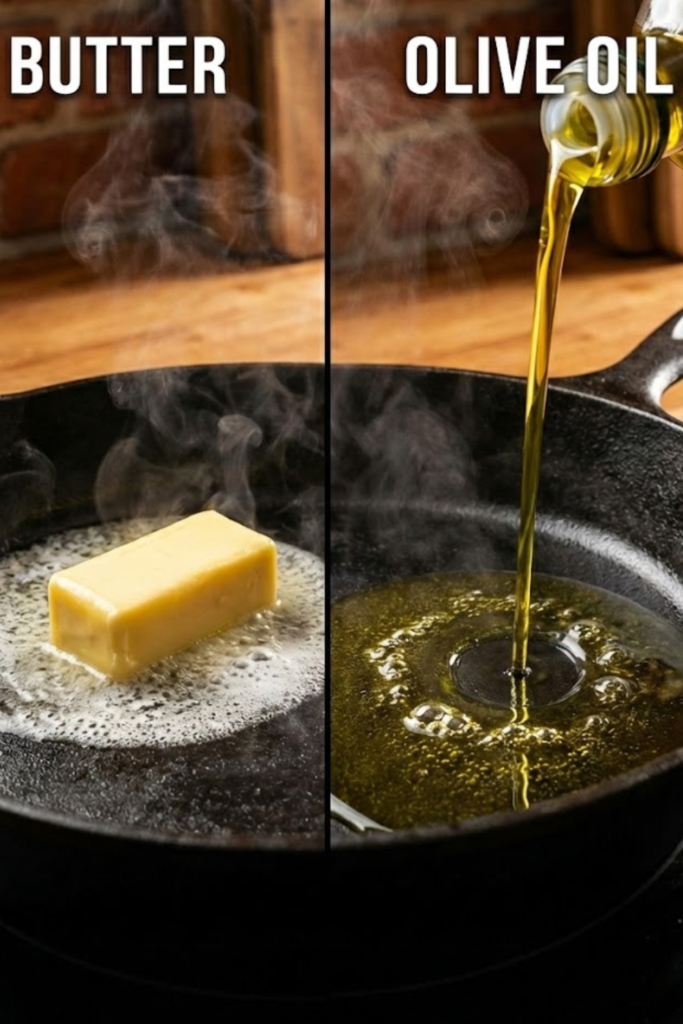
Why Olive Oil Beats Butter for Frying Eggs
I used to be a die-hard butter fan. If I was making breakfast on a Saturday morning, half a stick of butter was going into that skillet, no questions asked. But I kept running into this annoying problem where my butter would turn brown and bitter before the egg whites were even fully cooked. I’d serve these sad, burnt-bottom eggs to my kids and just shrug, thinking that was just how it had to be. It wasn’t until I accidentally ran out of butter and was forced to make Olive Oil Fried Eggs that I realized what I had been missing. It was honestly a total game changer for my breakfast routine.
The Smoke Point Drama
Here is the thing nobody really tells you when you are learning to cook. Butter has a pretty low smoke point, usually sitting around 350°F. That means if you want those super crispy edges, you have to crank the heat up, and butter just can’t handle the pressure. It burns way too fast.
Olive oil, on the other hand, can handle higher temperatures much better without turning into a cloud of black smoke. When you make Olive Oil Fried Eggs, you can get that oil shimmering hot—like, properly hot—without setting off the smoke alarm. I have set off my smoke alarm way too many times trying to force butter to do a job it just wasn’t built for!
Texture That Actually Snaps
We really need to talk about the texture difference here. Butter gives you a soft, creamy egg, which is totally fine if you want something gentle. But olive oil? It basically flash-fries the egg white on contact.
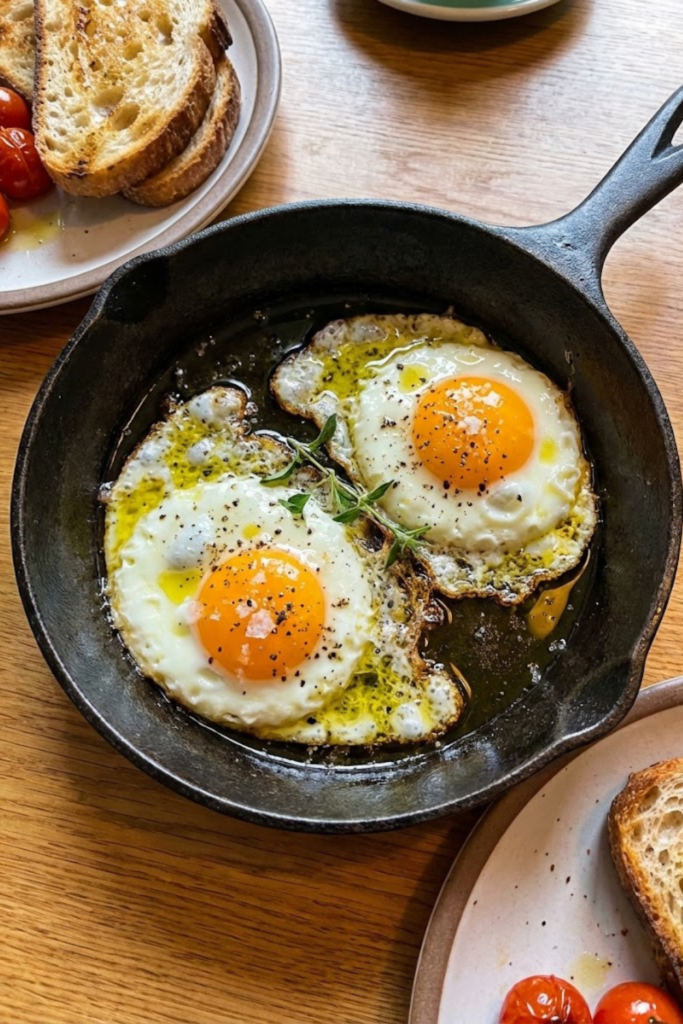
You get these insane, lacy golden edges that actually shatter when you bite into them. In Spain, they call these crispy bits “puntillitas,” and they are addictive. I remember trying to get that crunch with butter for years and just ending up with a greasy, soggy mess that slid around the plate. Olive oil creates a hot barrier that crisps up the protein instantly while keeping the inside tender.
A Flavor Profile Upgrade
Butter is rich, sure, but it is kind of one-note. Olive oil adds this grassy, savory pepperiness that cuts right through the richness of the runny yolk. It feels a bit more “chef-y” and sophisticated, even though it is actually easier to pull off than the butter method. Plus, getting some healthy fats in first thing in the morning makes me feel a little better about eating three of them in one sitting. Once you try Olive Oil Fried Eggs, that stick of butter is going to look pretty boring.
Choosing the Best Olive Oil for Your Eggs
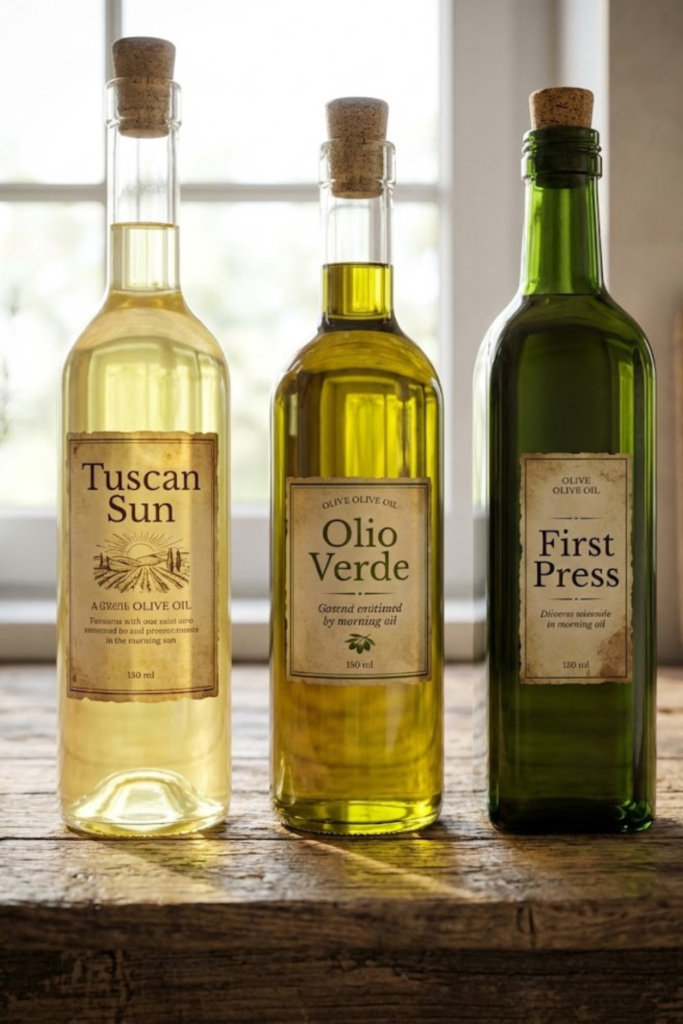
I remember standing in the baking aisle at the grocery store a few years ago, staring at what felt like fifty different bottles of olive oil. It was honestly overwhelming. You have extra virgin, virgin, light, pure, cold-pressed… it made my head spin. I used to just grab the cheapest one or the bottle with the prettiest label. But after making Olive Oil Fried Eggs a few dozen times, I learned that the oil you pick actually matters a lot. You don’t need the most expensive bottle on the shelf, but you can’t just use anything if you want that perfect flavor.
Don’t Burn Your Money
Here is a tip that saved me some cash. You know that really expensive bottle of olive oil you got as a gift? The one you are saving for a special salad or bread dipping? Keep saving it. Do not put that in your frying pan.
When you fry eggs, the heat needs to get pretty high to crisp up those edges. High heat can actually break down the delicate flavors in those really pricey, fancy oils. So, if you use the expensive stuff, you are basically burning money. I usually go for a mid-range “Extra Virgin Olive Oil” (EVOO) from the supermarket. It has enough flavor to taste good, but I don’t feel guilty pouring a generous amount into the skillet.
Avoid the “Light” Trap
I used to think “Light Olive Oil” meant it had fewer calories. Spoiler alert: it doesn’t. It just means the oil has been refined to have less flavor and a lighter color.
For Olive Oil Fried Eggs, you actually want that flavor! You want the oil to be an ingredient, not just something to stop the egg from sticking. A good Extra Virgin oil will add a peppery, grassy taste that mixes perfectly with the yolk. If you use “light” oil, you miss out on that deliciousness, and it just tastes like plain grease.
The Sniff Test is Real
I am guilty of keeping spices in my cabinet for ten years, but you really cannot do that with oil. Olive oil is basically a fruit juice. It goes bad eventually.
If your oil smells like old crayons or Play-Doh, throw it out. It is rancid. Cooking your eggs in rancid oil will make them taste terrible, no matter how fresh your eggs are. I always look for a harvest date on the bottle now, or I just give it a quick sniff before I start cooking. Fresh oil smells like grass or green tomatoes, not like a box of wax crayons.
The Technique: How to Get Those Crispy Lacy Edges
I have to admit, the first time I tried to make these, I was actually a little scared. Splattering hot oil isn’t exactly fun, and I was worried I’d ruin breakfast. But once I figured out the rhythm of it, it became the easiest way to cook an egg. The trick is understanding that you aren’t just sautéing the egg like you do with vegetables; you are essentially shallow-frying it. That requires a bit of bravery with the heat and the oil amount. If you follow these steps, you will get that perfect Olive Oil Fried Egg every single time.
The Pool of Oil (Don’t Be Shy)
Here is where most people mess up, including me back in the day. You cannot just coat the pan with a little spray or a tiny drizzle. You really need a pool of oil.
I usually use about two to three tablespoons for just one or two eggs. It feels like a lot when you are pouring it, and you might worry it’s going to be greasy, but trust me. The egg needs to float a little bit to get those crispy edges. If the oil is too shallow, the egg just sticks to the metal and burns instead of frying. Think of it less like cooking an omelet and more like frying a donut.
The Shimmer Test
You have to be patient before you crack that egg. If you put the egg in cold oil, it will just soak up the fat and turn into a heavy, oily mess. You want the oil to be hot enough that the egg cooks immediately upon contact.
I put my skillet on medium-high heat and watch the oil closely. You are looking for a “shimmer.” The surface of the oil will start to ripple slightly, almost like water in a breeze. If you see white smoke, you’ve gone too far—take it off the heat! But if you drop a tiny crumb of bread in and it sizzles right away, you are good to go.
The Basting Trick
This is the secret that changed everything for me. I used to flip my eggs because I hate slimy, raw whites on top, but flipping always broke the yolk. With Olive Oil Fried Eggs, you don’t flip.
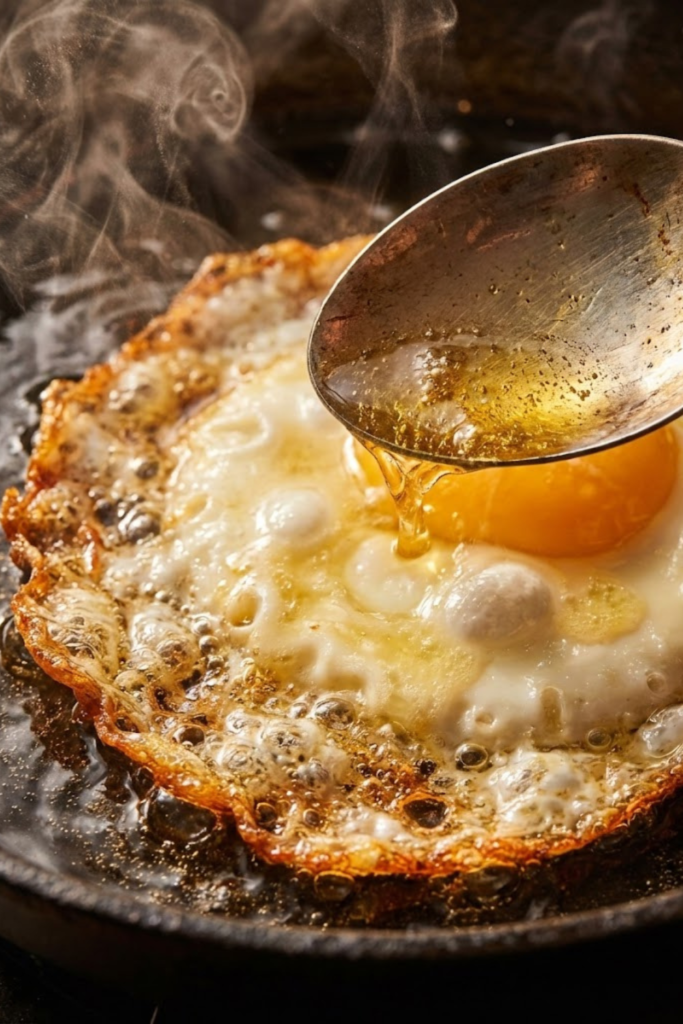
Once the egg is in the pan, let it sit for about 30 seconds so the bottom gets sturdy. Then, carefully tilt the pan so the hot oil pools at the bottom. Take a large spoon, scoop up that hot oil, and pour it over the egg whites. It will hiss and bubble, cooking the whites instantly while keeping the yolk runny. I usually baste the whites three or four times. It makes them puffy and cooked through without ever having to touch the delicate yolk.
Common Mistakes When Frying Eggs in Olive Oil
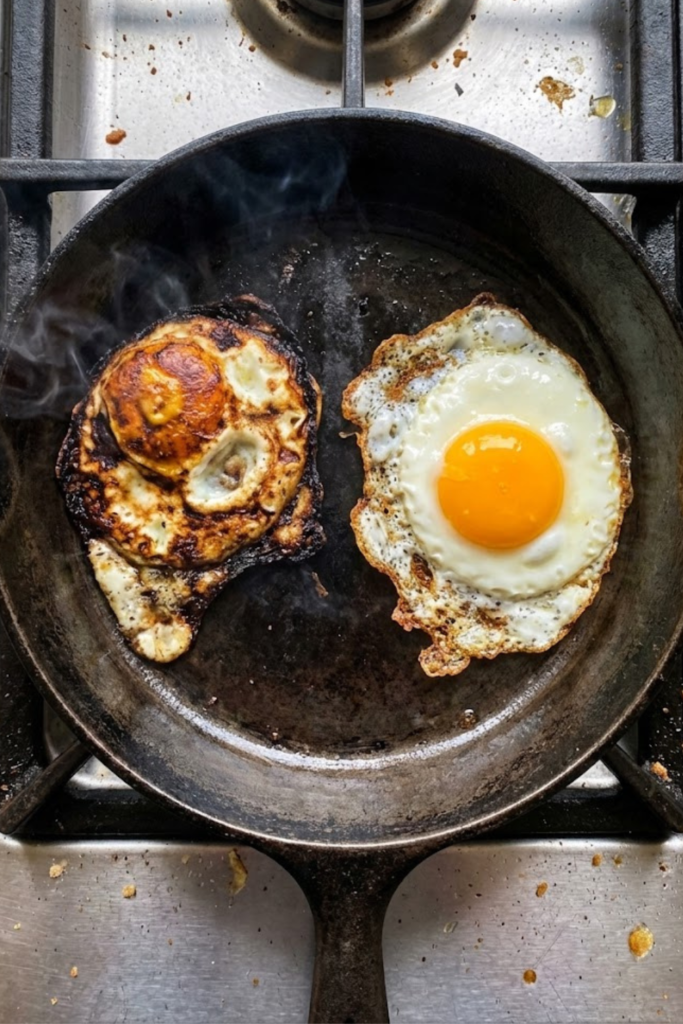
Even though this is a simple recipe, things can still go sideways. I have definitely had my share of mornings where I ended up with a burnt mess or an egg that just wouldn’t cook right. It usually comes down to just a few simple things. If your Olive Oil Fried Eggs aren’t turning out quite like the pictures, you are probably doing one of these small things wrong.
The Pan Is Too Cold
I see this happen all the time. You get impatient, you toss the egg in before the oil is ready, and it just sits there. When the oil is cold, the egg absorbs it like a sponge.
Instead of getting crispy, the whites turn rubbery and greasy. It is not pleasant to eat. You really have to wait for that oil to get hot. If you are unsure, just wait another thirty seconds. It is better to have the oil a little too hot than too cold. A cold pan ruins the texture completely.
Crowding the Skillet
If you have a big family, it is tempting to crack four or five eggs into the pan at once to get breakfast done faster. I have tried it, and it never works well.
When you drop a cold egg into hot oil, the temperature of the oil drops. If you drop four cold eggs in at once, the oil cools down way too much. Suddenly, you aren’t frying anymore; you are just boiling eggs in oil. They stick together, they don’t get crispy, and they cook unevenly. Stick to one or two eggs at a time. It actually saves time in the long run because they cook faster when they have space.
Using the Wrong Pan
I love my cast iron skillet for this. It holds heat really well and keeps the oil temperature steady. But you have to make sure it is seasoned, or the egg will stick.
If you don’t have a cast iron pan, a good non-stick pan works, but you won’t get quite the same level of crispiness. The worst mistake is using a thin, cheap metal pan. They get hot spots, so one part of your egg burns while the other part is still raw. If you are struggling, try switching your pan. A heavier pan usually gives you a better result.
Serving Suggestions: Elevating Your Breakfast
For the longest time, I just ate my Olive Oil Fried Eggs on a plain piece of white bread and called it a day. And honestly, that is still a pretty good breakfast. But because the flavor of the oil is so rich and the texture is so crispy, these eggs can actually handle some stronger pairings. If you want to turn a five-minute egg into a meal that feels like a fancy Saturday brunch, you have a few easy options. You don’t need to be a chef to make these plates look good.
The Classic Toast Dip
This is the most obvious choice, but it is a classic for a reason. You need good bread here. Soft sandwich bread is okay, but it doesn’t offer enough support for the heavy yolk and the oil.
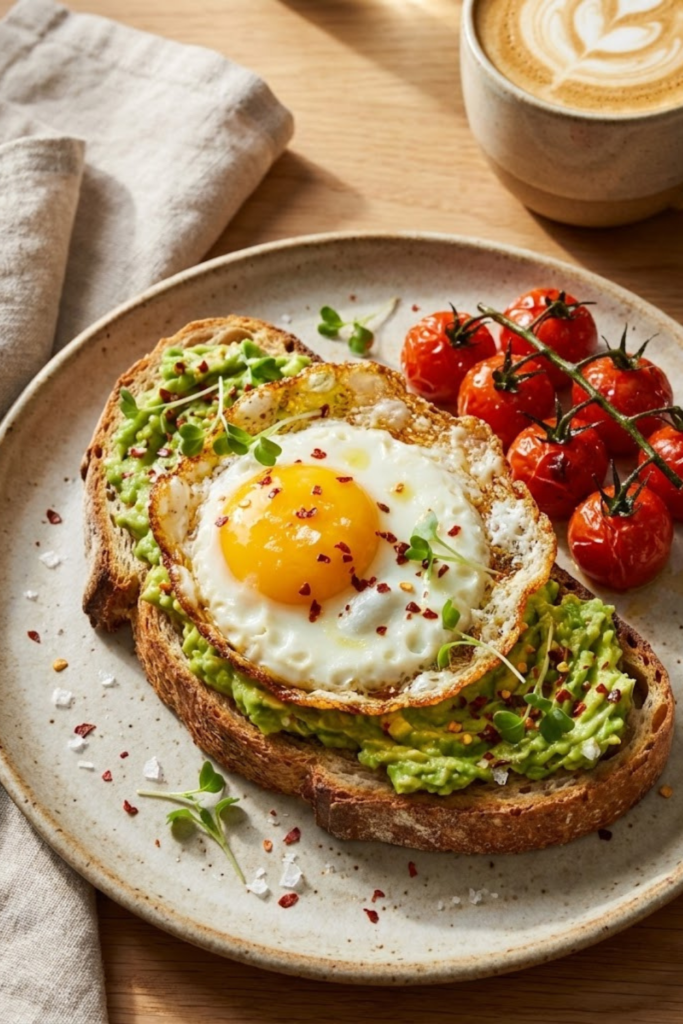
I always try to use a thick slice of sourdough or a crusty baguette. You want something with a bit of “chew” to it. Toast the bread until it is golden, then rub a raw clove of garlic on the hot crust before putting the egg on top. When you cut into the yolk and it runs into the nooks and crannies of the sourdough, it is just perfect. The crunch of the toast matches the crunch of the egg edges beautifully.
Herbs and Spices
Salt and pepper are great, but your spice cabinet has so much more to offer. Since olive oil has that grassy flavor, it pairs really well with earthy spices.
I love sprinkling a little bit of Za’atar (a Middle Eastern spice blend with thyme and sesame seeds) over the eggs right before I take them out of the pan. It adds a nice pop of flavor. If you like heat, red pepper flakes are a must. The heat cuts through the fat of the oil. I keep a little jar of chili flakes right next to my stove so I don’t forget. Fresh herbs like dill or chives also brighten up the plate and make it look like you put in way more effort than you actually did.
Yogurt and Chili Oil
Okay, hear me out on this one. I know savory yogurt sounds weird if you are used to fruit and granola, but it is delicious.
Spread some plain Greek yogurt on a plate. Mix in a little minced garlic and lemon juice. Place your hot, crispy fried egg right on top of the cold yogurt. Then, drizzle a little bit of chili oil or even the leftover olive oil from the pan over everything. The mix of hot and cold, plus the creamy yogurt against the crispy egg, is amazing. It is a very popular dish in Turkey, and once I tried it, I started eating it for lunch all the time.
Greens and Grains
If you want something a bit healthier, these eggs are the perfect topper for a grain bowl. I often have leftover quinoa or brown rice in the fridge.
I warm up the grains, maybe sauté some spinach or kale in the same pan I plan to cook the egg in, and pile it all in a bowl. When you put the runny egg on top, the yolk acts like a dressing for the greens and the grains. It makes eating your vegetables feel a lot less like a chore and more like a treat.
Final Thoughts on the Perfect Breakfast
Changing how you cook something as basic as a fried egg feels a little strange at first. We are creatures of habit, and for the longest time, I was stuck in my ways. I thought I knew exactly how to make breakfast, and I didn’t think there was any room for improvement. But switching to olive oil didn’t just change the flavor of my morning meal; it actually made cooking fun again. There is something really satisfying about hearing that loud crackle when the egg hits the oil and watching those edges turn into golden lace in seconds.
Why This Recipe is a Keeper
If you are still on the fence about ditching the butter, just think about the texture. That combination of the crispy, salty white and the rich, runny yolk is something you just can’t get with any other method. It turns a boring Tuesday morning breakfast into something that feels like a treat. Plus, it is fast. I love that I can have a hot, delicious meal on the table in under five minutes. As a busy parent and teacher, saving time without sacrificing flavor is basically the ultimate goal in my kitchen.
Don’t Be Afraid of the Heat
The biggest piece of advice I can leave you with is to be brave with your heat. It goes against what we are usually taught about being gentle with eggs, but this recipe rewards a heavy hand. If your first attempt isn’t perfect, don’t worry about it. Maybe the oil wasn’t hot enough, or maybe you didn’t use enough of it. That happens to all of us. Just eat the mistake (it will still taste good!) and try again tomorrow. Cooking is all about trial and error, and this is one of the most forgiving experiments you can try.
Share the Love
I really hope this guide helps you step up your breakfast game. If you make these Olive Oil Fried Eggs, I would love to hear about it. Did you serve them on toast? Did you try the yogurt trick? Once you start making them this way, you might find yourself buying olive oil in bulk like I do now.
Don’t forget to save this recipe! Pin this to your “Best Breakfast Recipes” board on Pinterest so you can find it later!