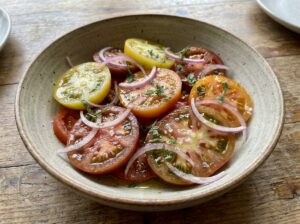
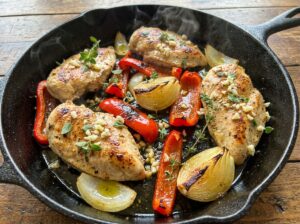
Did you know that plant-based Mediterranean diets are consistently ranked as some of the healthiest ways to eat in the world? I absolutely love it! Let me tell you, when I first started experimenting with vegetarian meals, I struggled to find something that was both filling and packed with flavor. Then, I discovered the magic of a beautifully assembled Mediterranean Veggie Couscous Plate. It changed everything! This dish brings together fluffy, golden grains, roasted seasonal vegetables, and a tangy lemon-herb vinaigrette that just sings on the palate. Whether you are meal-prepping for the week or hosting a summer dinner party, this quick and healthy recipe is an absolute lifesaver. Plus, it’s so incredibly versatile.
Choosing the Best Couscous for Your Mediterranean Bowl
Let’s talk about the base of your dish. Getting the foundation right is super important for a great Mediterranean Veggie Couscous Plate. There are actually a few different types of couscous out there, and picking the wrong one can change your meal completely.
Moroccan vs. Pearl Couscous
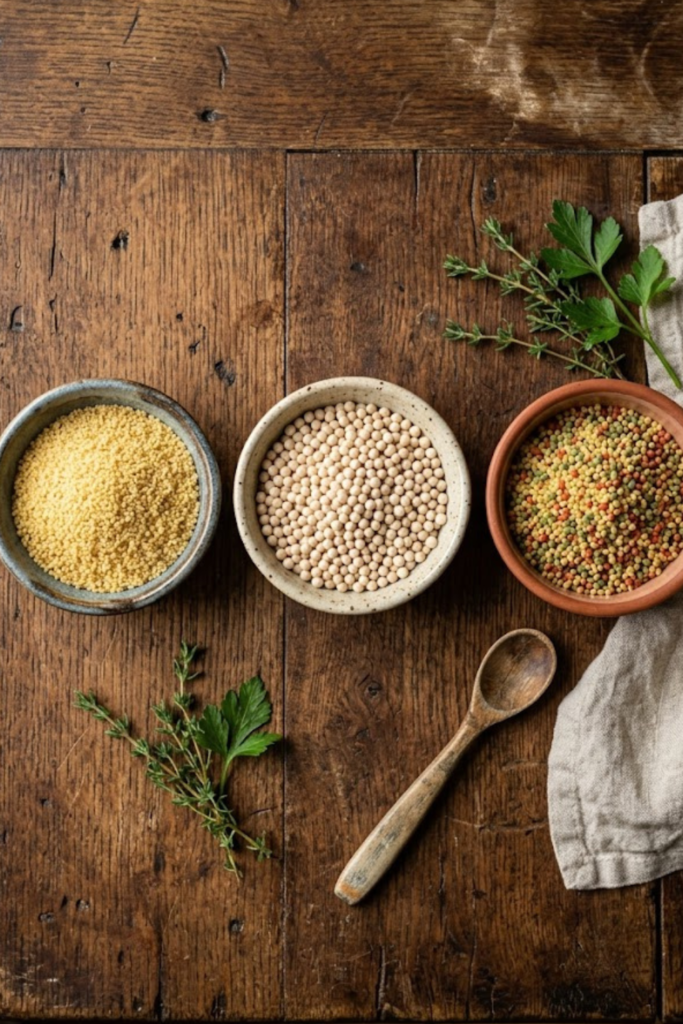
The most common type you will find at the grocery store is traditional Moroccan couscous. These are tiny, quick-cooking granules made from semolina flour. They fluff up beautifully and are perfect if you want a lighter, more delicate texture for your dinner.
Then you have pearl couscous, which is often called Israeli couscous. These are much larger, chewy spheres that look and feel a bit like tiny pasta. If you want a heartier bite in your bowl, this is absolutely the way to go.
There is also Lebanese couscous, which is the largest of the three varieties. It takes the longest to cook on the stove. However, it offers a really satisfying, dense texture that holds up great against chunky roasted vegetables.
Nailing the Liquid-to-Grain Ratio
Cooking this ingredient is pretty easy, but the liquid ratio is where things can easily go wrong. For traditional Moroccan couscous, you want a strict 1:1 ratio of boiling water or broth to dry grains. You just pour the boiling liquid over it, cover the bowl tight, and let it sit for exactly 5 minutes before fluffing it with a fork.
Pearl couscous is different and actually needs to be simmered on the stove. You usually need about 1.5 cups of liquid for every 1 cup of pearl couscous. Bring it to a boil, reduce the heat to low, cover the pot, and simmer for about 14 minutes until the liquid is absorbed. Getting these ratios right guarantees your Mediterranean Veggie Couscous Plate won’t turn into a mushy disaster.
Gluten-Free and Healthy Alternatives
What if you can’t eat gluten? No problem at all! You can easily swap out regular grains for some awesome alternatives without losing the spirit of the dish.
Quinoa is a fantastic substitute that brings a ton of plant-based protein to your bowl. It cooks up incredibly fluffy and has a slightly nutty flavor that pairs perfectly with roasted veggies and lemon dressing. Another great option is pulsed cauliflower rice if you want to keep things lower in carbs.
If you still want wheat but prefer more dietary fiber, look for whole wheat couscous. It cooks exactly like the regular stuff but gives you a nice nutritional boost for your daily intake. The beauty of this recipe is how flexible it is, letting you build the perfect meal for whatever your body needs.
Roasting Seasonal Vegetables to Perfection
I’ve spent a lot of years roasting veggies for my family and students. Honestly, it’s the best part of this whole dish. When you roast them right, they get sweet and soft, which makes your Mediterranean Veggie Couscous Plate taste like it came from a fancy restaurant.
Picking the Right Veggies
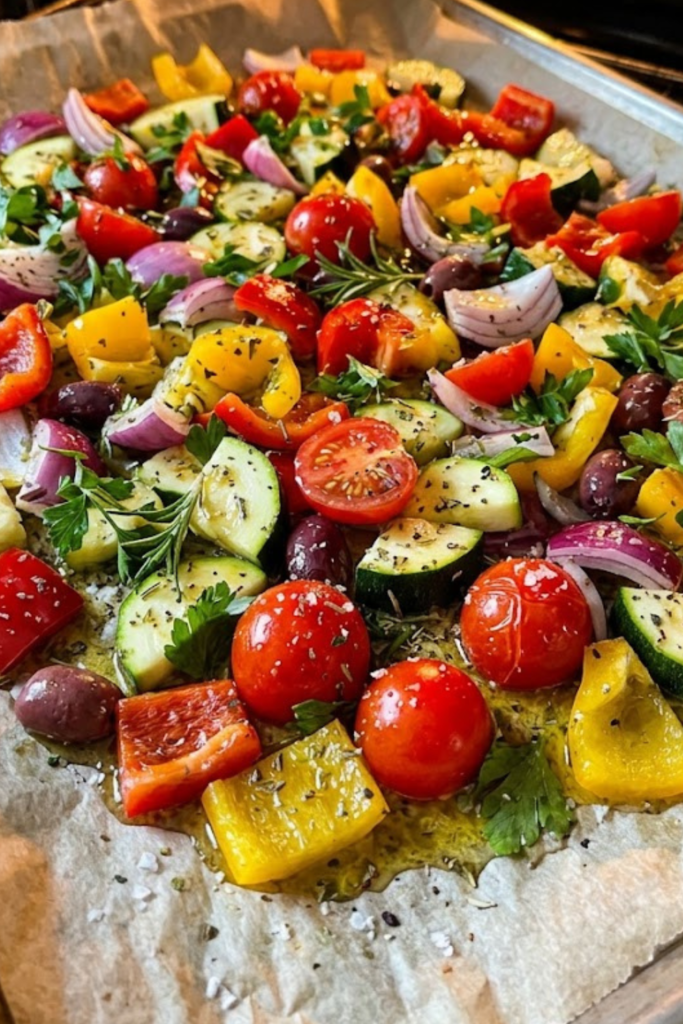
I usually stick with the classics like zucchini, bell peppers, and red onions. They hold up well in the heat and get really sweet as they cook down. If I have an eggplant in the fridge, I’ll toss that in too because it soaks up all the good oil.
Make sure you chop everything into similar sizes. If your zucchini is huge and your onions are tiny, the onions will burn before the zucchini is even soft. I try to keep them about an inch thick so they stay juicy.
Getting the Temperature Right
I always set my oven to 400 degrees Fahrenheit. It’s pretty much the magic number for roasting. If the heat is too low, the veggies just get soggy and sad.
One big mistake I used to make was crowding the pan. If the veggies are touching too much, they steam instead of roast. Give them plenty of space on the baking sheet so they can get those delicious brown, caramelized edges.
Simple Seasoning is Best
You don’t need anything fancy here. I just use a good glug of extra virgin olive oil and a heavy sprinkle of dried oregano and thyme. Sometimes I’ll add a little garlic powder if I’m feeling extra.
Toss everything together right on the pan with your hands. It’s messy, but it’s the best way to make sure every piece is coated. Roast them for about 20 to 25 minutes, and your kitchen will smell amazing.
Crafting the Ultimate Lemon-Herb Vinaigrette
I used to buy those expensive bottles of dressing at the store, but they always tasted a bit off to me. Too much sugar or weird stuff I couldn’t pronounce. Once I started making my own dressing for this Mediterranean Veggie Couscous Plate, I never looked back. It is so much better and takes like two minutes.
The Basic Ingredients
You really just need a few things from your pantry. Grab a good extra virgin olive oil and some fresh lemons. Don’t use the stuff in the plastic squeeze bottle; it just doesn’t taste the same. You also need a pinch of salt and some cracked black pepper.
I like to add a tiny bit of dijon mustard sometimes. It helps the oil and juice stay mixed together instead of separating on the plate. It makes the texture much smoother.
Getting the Balance Right
The biggest mistake I see people make is using way too much lemon juice. If you do that, it’ll be so sour it makes your face pucker up! I usually go with a three-to-one ratio. That means three tablespoons of olive oil for every one tablespoon of lemon juice.
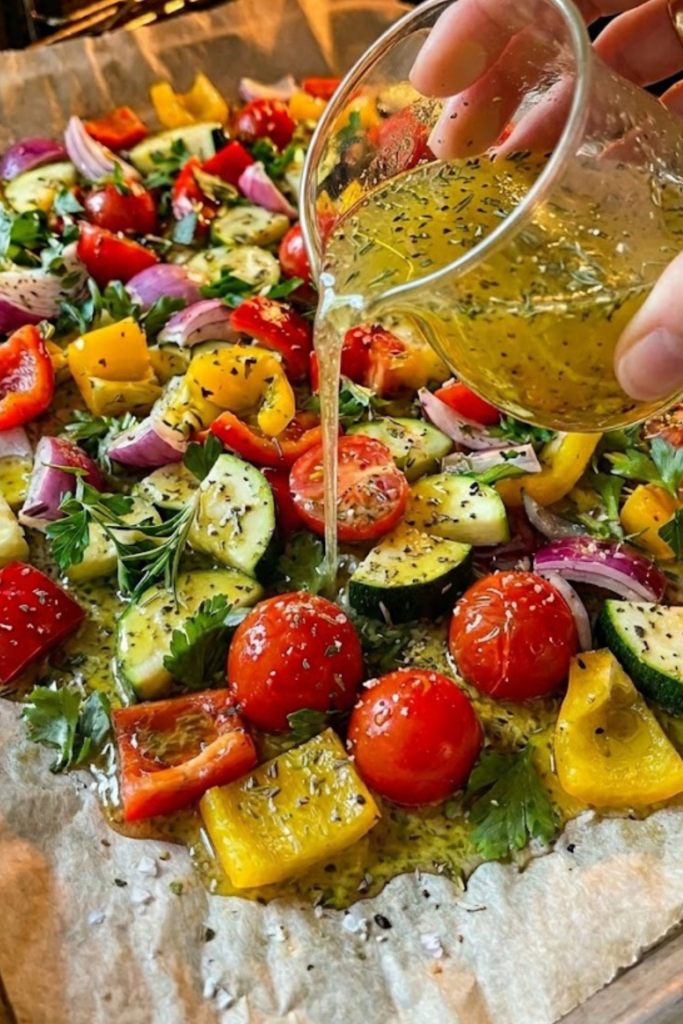
Give it a good whisk in a small bowl or just shake it up in a mason jar. Taste it with a little piece of your roasted veggie. If it feels too oily, add a tiny splash more lemon. If it’s too sharp, add a drop of honey or more oil. You want it to be bright but balanced.
Fresh Herbs Make the Difference
This is the part that really levels up your Mediterranean Veggie Couscous Plate. I always chop up a big handful of fresh parsley and mint. The mint might sound weird if you haven’t tried it in a savory dish before, but trust me, it’s amazing. It makes the whole meal feel light and fresh.
Stir those herbs right into the dressing at the very end. This way, they don’t get soggy. Pouring this over your warm couscous and veggies is the best part of the whole process. It really brings all those flavors together into one perfect bite.
Assembling and Serving Your Veggie Couscous Plate
Putting it all together is the best part! It’s like an art project where you actually get to eat the result. When I make a Mediterranean Veggie Couscous Plate for my friends, I like to lay it out so it looks as good as it tastes.
Layering for the Best Bite
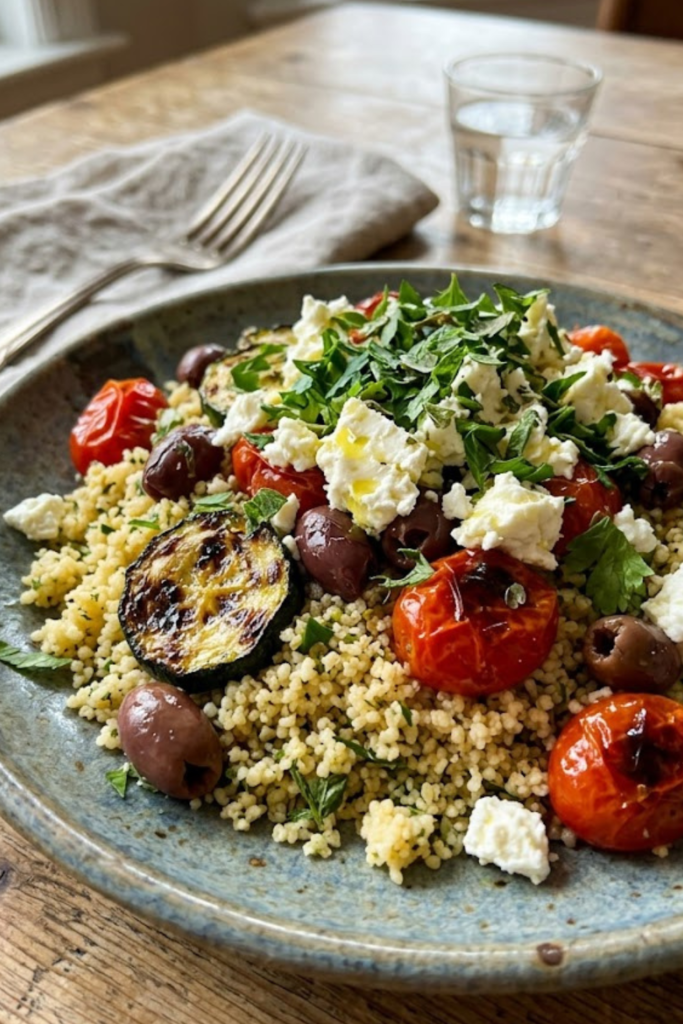
Start with a big bed of your fluffy couscous. I usually spread it out flat on a large plate or bowl. Then, I pile those roasted veggies right on top. Don’t worry about being too neat. A little mess makes it look more home-cooked and yummy. I try to make sure there is a bit of everything in every scoop.
Adding Some Protein
If you want to stay full for a long time, you need some protein. I really like adding roasted chickpeas because they get nice and crunchy in the oven. If I’m feeling fancy, I’ll grill up some halloumi cheese. It’s salty and chewy and goes so well with the veggies. It makes the meal feel a lot more substantial.
The Finishing Touches
Next, I add the “pops” of flavor. This means a big handful of crumbled feta cheese and some salty kalamata olives. I also love to throw on some toasted pine nuts for a little extra crunch. These small bits are what really make the dish feel complete.
Finally, I drizzle that lemon-herb dressing all over everything. I give it one last squeeze of fresh lemon right before I serve it. It’s a great meal for a busy Tuesday or a nice weekend lunch. I hope your family loves it as much as mine does!
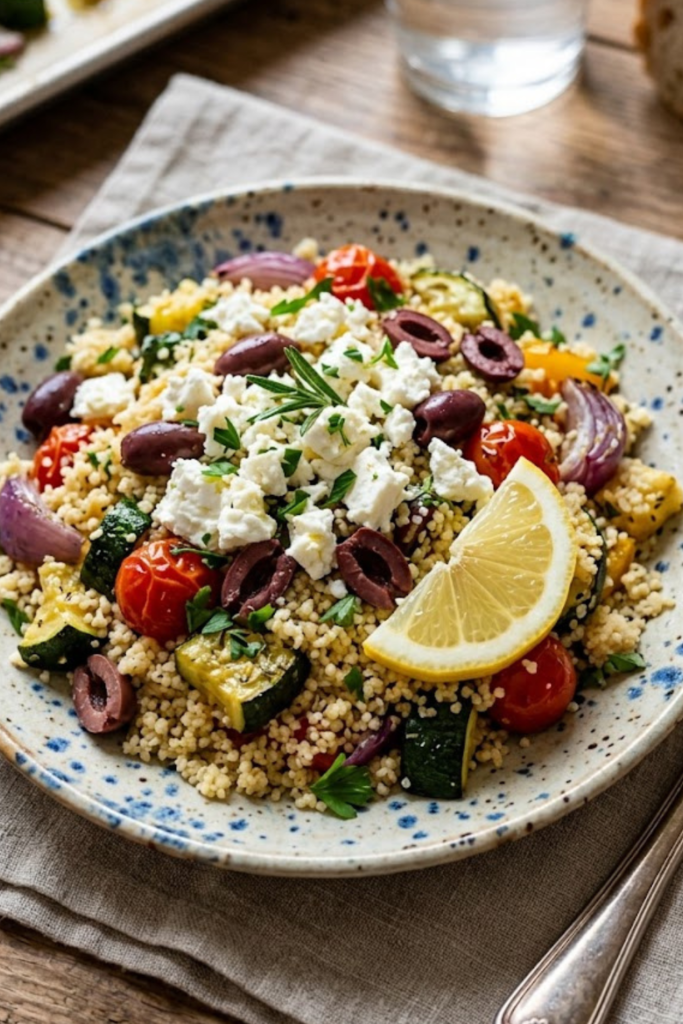
To wrap things up, throwing together this easy Mediterranean Veggie Couscous Plate is a surefire way to bring vibrant, healthy, and satisfying flavors to your dining table. It’s nutrient-dense, totally customizable, and honestly just so good!
I really hope you enjoy making this delicious vegetarian couscous recipe as much as I do. It’s been a staple in my kitchen for a long time, and it never gets old. If you loved this quick weeknight dinner idea, please pin this recipe on Pinterest to share the love with your friends!