I’ve spent years telling my students and my kids that eating healthy doesn’t have to be a huge chore, and this Mediterranean Veggie Couscous is the best proof of that. Honestly, I used to think couscous was just some kind of tiny rice until a few years ago, but once I realized it’s actually a quick-cooking pasta, it became my secret weapon for those busy weeknights. Here in 2026, we are all looking for ways to eat better without spending hours at the stove, and this dish really hits the spot because it’s full of fresh vegetables and bright flavors. It takes less than 20 minutes to make, which is perfect for those days when you’re exhausted but still want a real meal that tastes like you’re sitting at a cafe by the sea—plus, it’s way better than ordering takeout again.
Choosing Your Grain: Pearl vs. Moroccan Couscous
When you go to the store, you’ll see two main kinds of couscous, and it can be a little confusing if you don’t know the difference. The one I usually grab for this recipe is the Moroccan couscous. It’s really tiny—almost like coarse sand—and it cooks incredibly fast. If you’re in a hurry like I usually am after a long day of work, this is the one you want. Now, the other kind is called Pearl couscous, or sometimes Israeli couscous. These are much bigger and look like little white marbles. They have a chewy texture that’s more like traditional pasta.
Honestly, I think the tiny Moroccan grains give a more authentic Mediterranean feel because they soak up the lemon juice and olive oil way better than the big pearls do. I prefer the semolina-based ones because they just feel right for this dish. But here is my favorite little trick: before you add any liquid, put the dry grains in a pan with a splash of olive oil. Let them toast for just a minute or two until they smell nutty. It makes a huge difference in the flavor and helps stop them from getting too sticky. I learned this after making a few batches that were way too bland, and now I never skip this part. It’s such a simple way to make the meal taste like something from a fancy restaurant.
I should also mention that you might see whole wheat versions of both types. I tried the whole wheat Moroccan couscous last month because I wanted to be extra healthy, and honestly, it was pretty good! It has a slightly heartier taste that goes really well with roasted red peppers. When you’re looking for these in the grocery store, they aren’t always in the same aisle. Sometimes the Moroccan kind is with the rice, but the Pearl couscous is hidden over by the specialty pastas or the international foods. It can be a real headache trying to find them if you aren’t looking closely.
I also noticed that the Pearl kind takes about 10 minutes to boil, while the Moroccan kind just sits in the hot water, so don’t mix up the instructions on the back of the box. If you try to soak Pearl couscous without boiling it, you’ll just end up with hard little rocks. I usually keep a few boxes of both in my pantry because they stay good for a long time. It’s one of those staples that has saved my life when I realized I forgot to plan anything for dinner. Plus, if you have any leftovers, the Moroccan grains actually taste better the next day because they’ve had all night to drink up that lemon dressing. It’s almost like a cold pasta salad if you eat it straight out of the fridge for lunch the next morning.
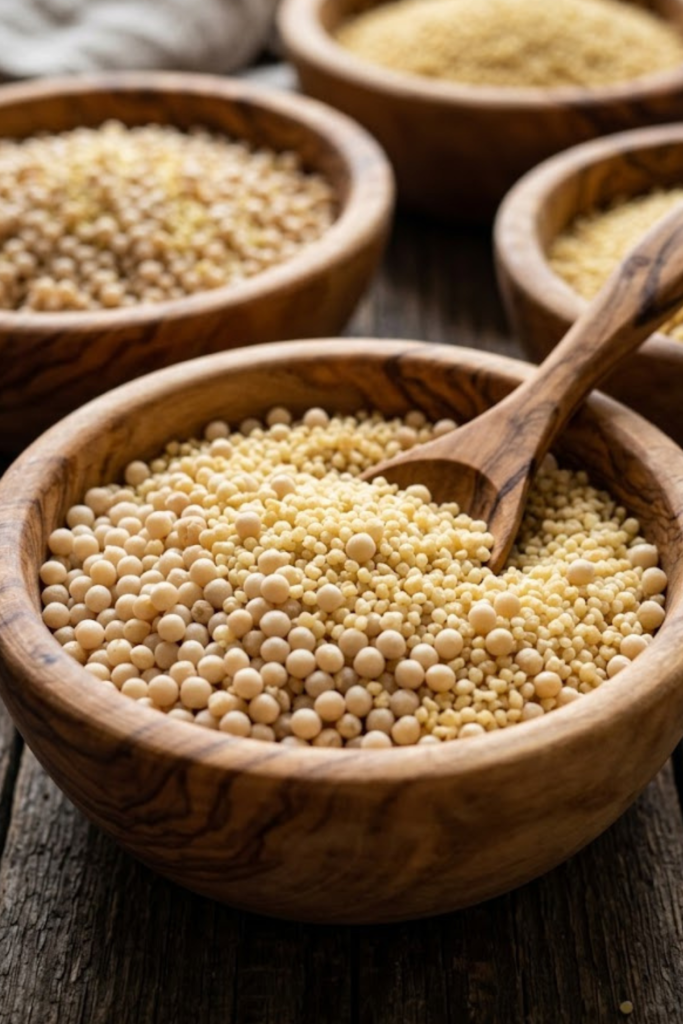
Essential Mediterranean Veggie Couscous Ingredients
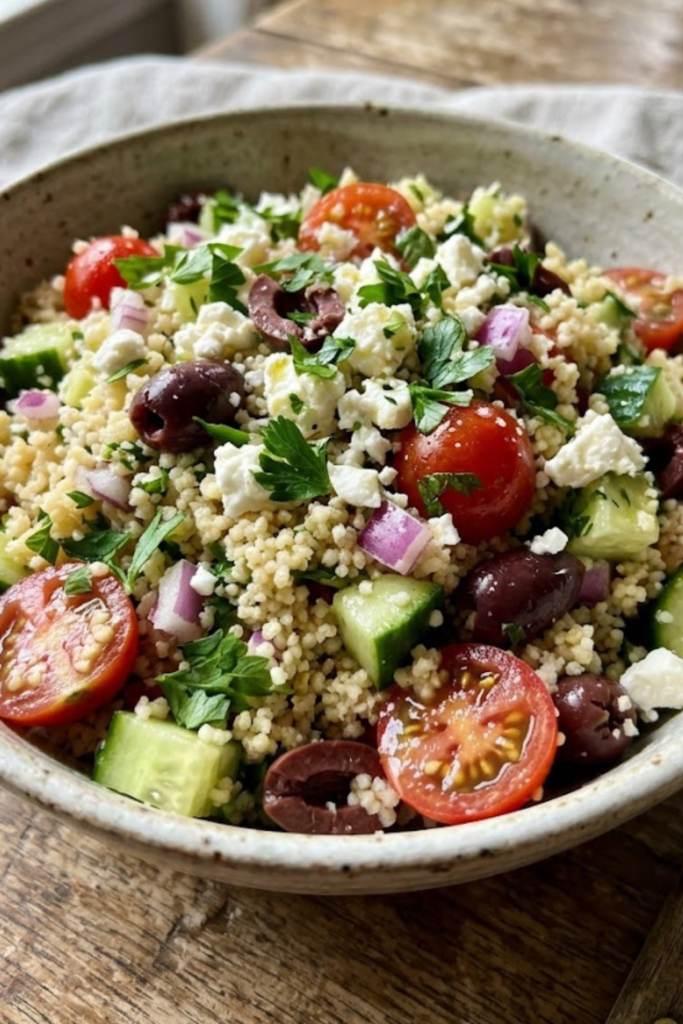
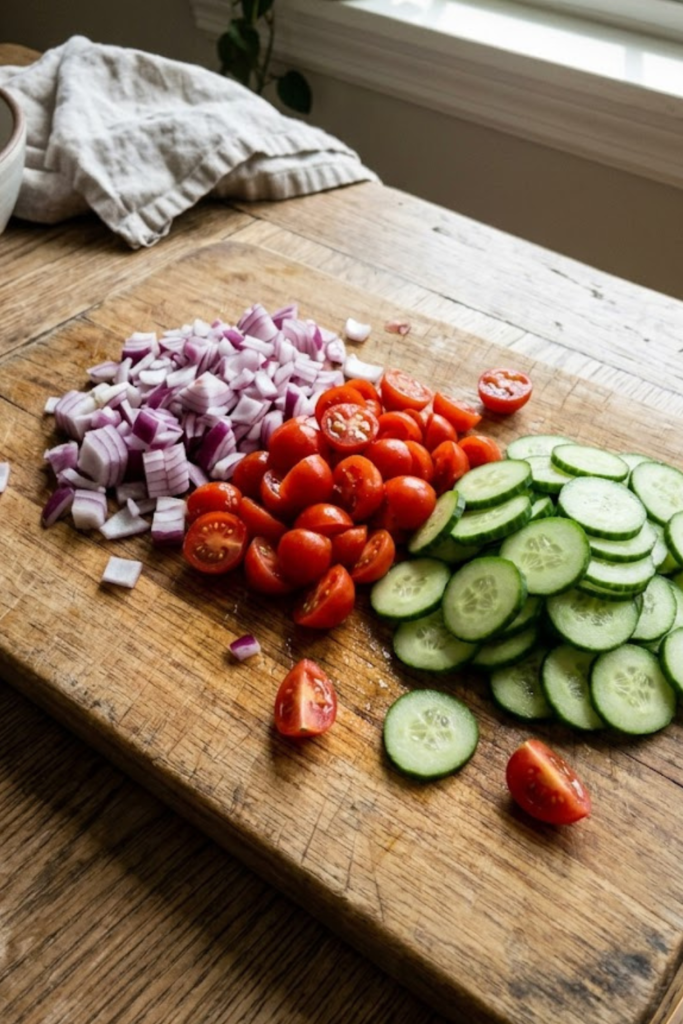
When you’re making this, the quality of your veggies really makes or breaks the whole dish. I call the combination of tomatoes, cucumbers, and red onions the “Holy Trinity” of Mediterranean cooking because they just work so perfectly together. I always try to find the firmest English cucumbers—the ones with the thin skin—because they don’t get watery and ruin the texture. And for the tomatoes, I’m a big fan of cherry or grape tomatoes sliced in half. They stay sweet and don’t turn into a mushy mess when you mix everything up.
To really give your Mediterranean Veggie Couscous that extra “pop” of flavor, you can’t skip the salty stuff. I always throw in a handful of pitted kalamata olives and a generous amount of crumbled feta cheese. If you can find the feta that comes in a block of brine, get that one! It’s way creamier than the pre-crumbled stuff in the plastic tubs. Also, since there’s no heavy sauce, your dressing is just high-quality extra virgin olive oil and fresh lemon juice. I learned the hard way that the cheap “vegetable oil” blends just taste greasy here. You want that peppery kick from a good olive oil and the bright zing from a real lemon to tie all those fresh ingredients together.
The Secret to Fluffy, Never-Mushy Couscous
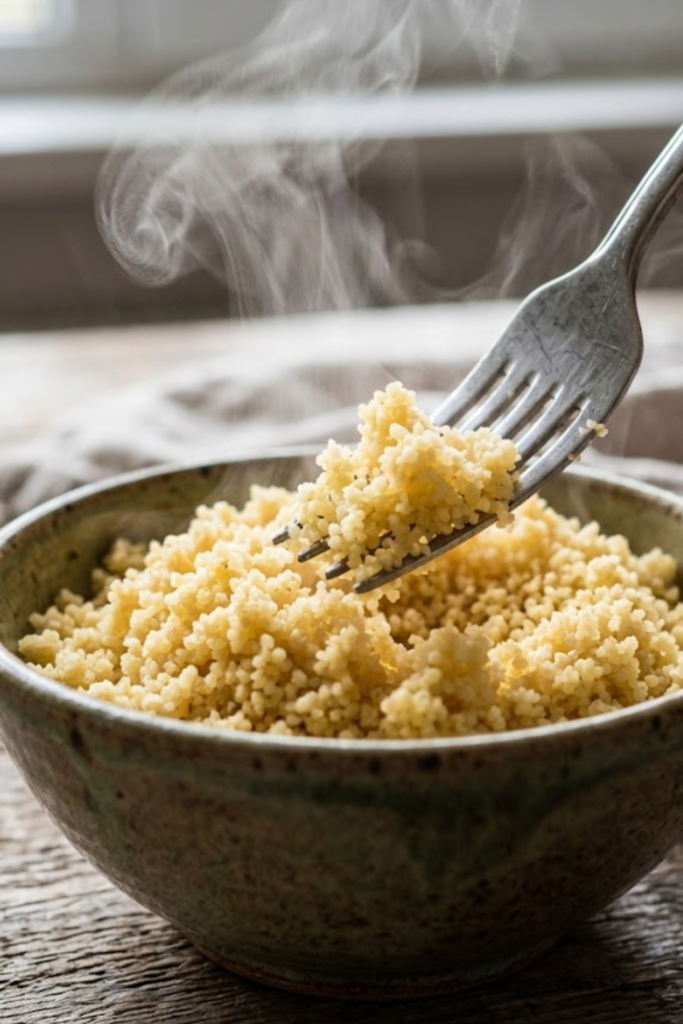
If there is one thing that ruins a good meal, it is soggy, clumped-up grains. I’ve had my fair share of kitchen fails where I ended up with something that looked like mashed potatoes instead of light, airy couscous. The secret really comes down to the 1:1 water-to-couscous ratio. If you use a cup of couscous, use exactly one cup of boiling water or broth. I like using vegetable broth because it adds more flavor than plain water. Once you pour the hot liquid over the grains, cover the bowl with a plate or a lid and just walk away for five minutes. Don’t touch it! It needs that steam to do the work.
After those five minutes are up, the most important part is “the fluff.” Do not use a spoon to stir it, or you’ll just smash the grains together. Take a fork and gently rake it across the top, breaking up any little clumps until every grain is separate and light. I used to think I could just stir it like oatmeal, but that was a big mistake. Also, remember that you aren’t actually boiling the couscous on the stove like you do with rice or pasta. If you keep it boiling over the heat, it gets mushy fast. Just let it soak, fluff it up, and you’ll have the perfect base for your veggies every time. It’s a total game changer for your weeknight dinners.
Modern 2026 Twists: Adding Protein and Crunch
In 2026, we’re all trying to get more out of our meals without adding a ton of work. I found that while this couscous is a great side dish, you can easily turn it into a full dinner by adding some protein. My favorite way is to throw in some roasted chickpeas. They give it a nice earthy flavor and make the meal feel much more filling. If I’m feeling a bit fancy or have friends over, I’ll grill up some halloumi cheese. If you haven’t tried halloumi, it’s this salty cheese that doesn’t melt when you heat it, so you get these beautiful brown grill marks on it. It’s so good that even my kids, who are usually picky about “healthy food,” will eat every bite.
Adding some crunch is another way to make the dish better. I usually toast some pine nuts or sliced almonds in a dry pan for a few minutes. You have to watch them like a hawk, though! I’ve burnt more nuts than I can count because I got distracted by a text message. A little bit of crunch makes the soft couscous much more interesting to eat. Also, I’ve started being really heavy-handed with the herbs lately. Instead of just a garnish, I treat the parsley and mint like they are a vegetable. I use way more than you probably think you need. It gives the whole thing a fresh, green taste that makes you feel energized instead of weighed down. It’s these little changes that keep the recipe feeling new even after you’ve made it a dozen times.
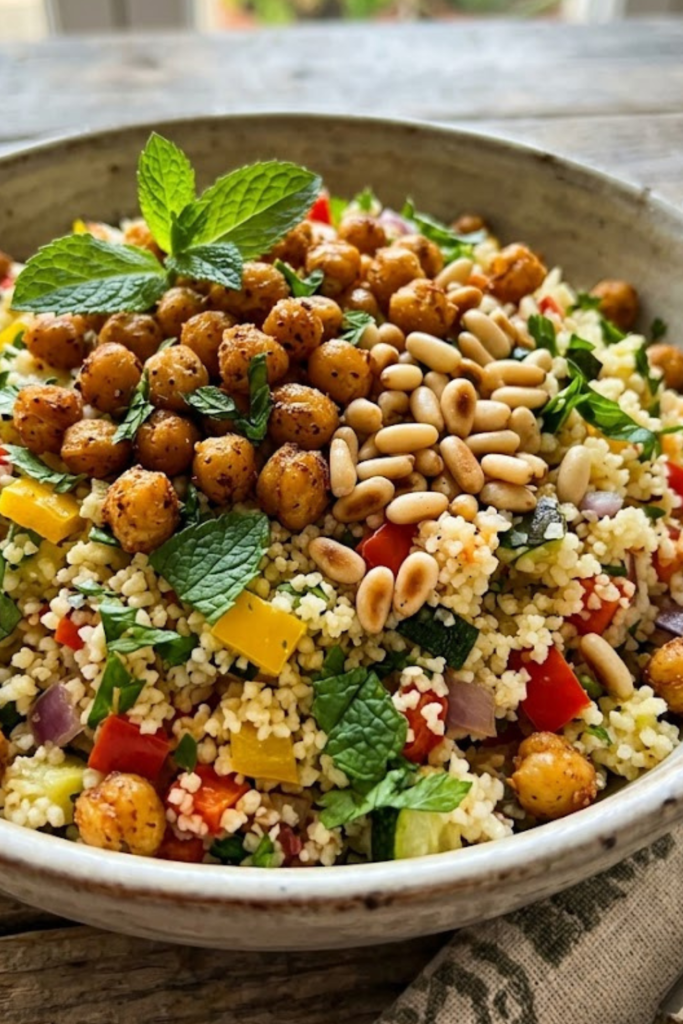
This Mediterranean Veggie Couscous really is the definition of fresh and fast eating for us here in 2026. It’s funny how something so simple can feel so much better than a complicated meal that takes all night to clean up. When you get that perfect mix of fluffy grains, salty feta, and crunchy cucumbers, you realize you don’t need a million ingredients to make something taste great. I’ve found that the more I cook, the more I appreciate these 15-minute recipes that actually make me feel good after I eat them.
Cooking shouldn’t feel like a chore or something you have to be a pro to do. Sometimes the most satisfying meals are the ones you can throw together while you’re catching up with your family or listening to a podcast. If you decide to give this recipe a try, I really hope it becomes one of your favorites like it did for me. Please save this post and share it on Pinterest so other people can find it and enjoy a little taste of the Mediterranean too! I’d love to hear how yours turned out in the comments.