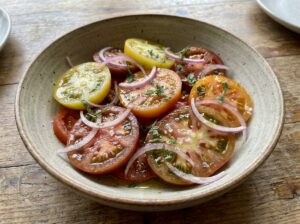
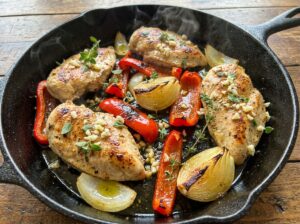
Did you know that studies suggest eating a Mediterranean-style diet can improve heart health and boost longevity? It’s pretty amazing what simple food can do! But honestly, I don’t cook this just for the health benefits; I cook it because it is absolutely delicious. I remember the first time I made a Mediterranean Vegetable Dinner Tray—I was rushing around on a Tuesday night, desperate to use up some wilting produce. I threw everything on a pan, prayed for the best, and wow! The result was a vibrant, sizzling masterpiece that smelled like a summer vacation in Greece. It’s savory, it’s effortless, and it has quickly become a staple in my kitchen. Let’s dive into how you can make this colorful, nutritious meal tonight!

Selecting the Freshest Produce for Roasting
You’d think picking veggies is easy, right? Just grab whatever looks colorful and throw it in the cart. I used to think that too, until I made my first Mediterranean Vegetable Dinner Tray and it turned into a soggy, sad soup. I remember standing in the kitchen, looking at my tray of mush, wondering where I went wrong. It turns out, the secret isn’t just in the cooking; it’s in the picking.
Pick Firm Over Flabby
The biggest mistake I see—and I’ve definitely made it—is choosing vegetables that are past their prime. When you roast at high heat, you need veggies that can fight back.
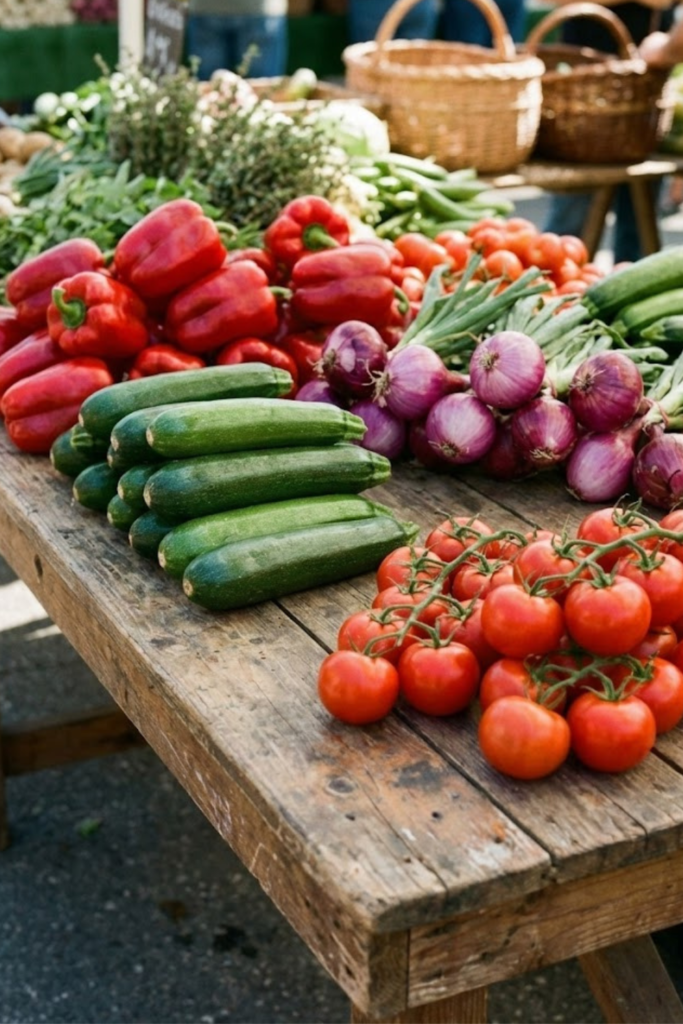
For this recipe, you want bell peppers that feel heavy for their size and have tight, shiny skin. If the skin is wrinkly, put it back.
The same goes for zucchini. I used to grab the biggest ones I could find, thinking I was getting more bang for my buck. That was a rookie move. Huge zucchini are mostly water and seeds, which leads to that dreaded sogginess. Stick to the small or medium ones; they stay firm and sweet.
The Onion Dilemma
Red onions are my go-to for this because they get incredibly sweet when roasted. But here is a tip I learned from a chef friend: peel off more layers than you think you need. The outer layers can get tough and leathery in the oven.
And honestly, if you only have a yellow onion, use it. It won’t look as pretty, but it still tastes good. Don’t stress too much about perfection.
Size Actually Matters
Once you get your haul home, the way you chop is just as important as what you bought. I used to chop things haphazardly—some big chunks, some tiny slivers.
The result? The tiny pieces burned to a crisp while the big chunks were still raw in the middle. It was a disaster.
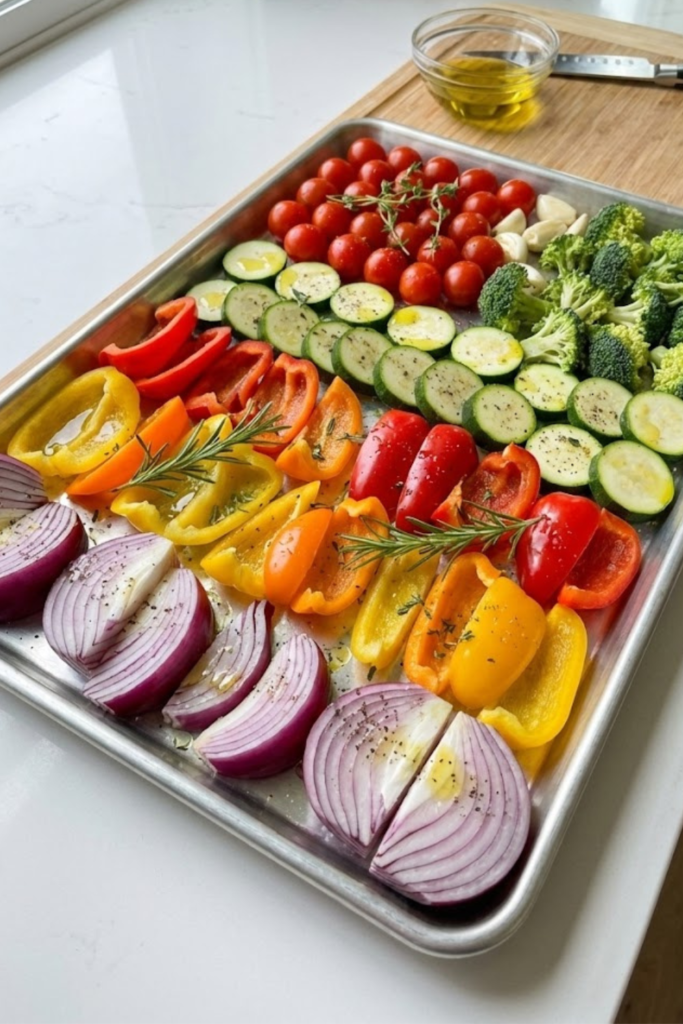
Now, I aim for uniform, one-inch pieces for everything. It takes a little more focus, but it guarantees that everything on your Mediterranean Vegetable Dinner Tray finishes at the same time.
If you are adding cherry tomatoes, leave them whole. If you cut them, they just spill their juice everywhere and steam the other veggies instead of roasting them.
Go With the Seasons
Since it’s 2026, we have access to pretty much anything year-round, but seasonal still tastes best. If it’s spring, I’ll sometimes swap the peppers for asparagus.
Just remember, if you change the veggie, you might need to adjust the cooking time. Cooking is all about experimenting and finding what you like best!
The Secret Herb and Olive Oil Marinade
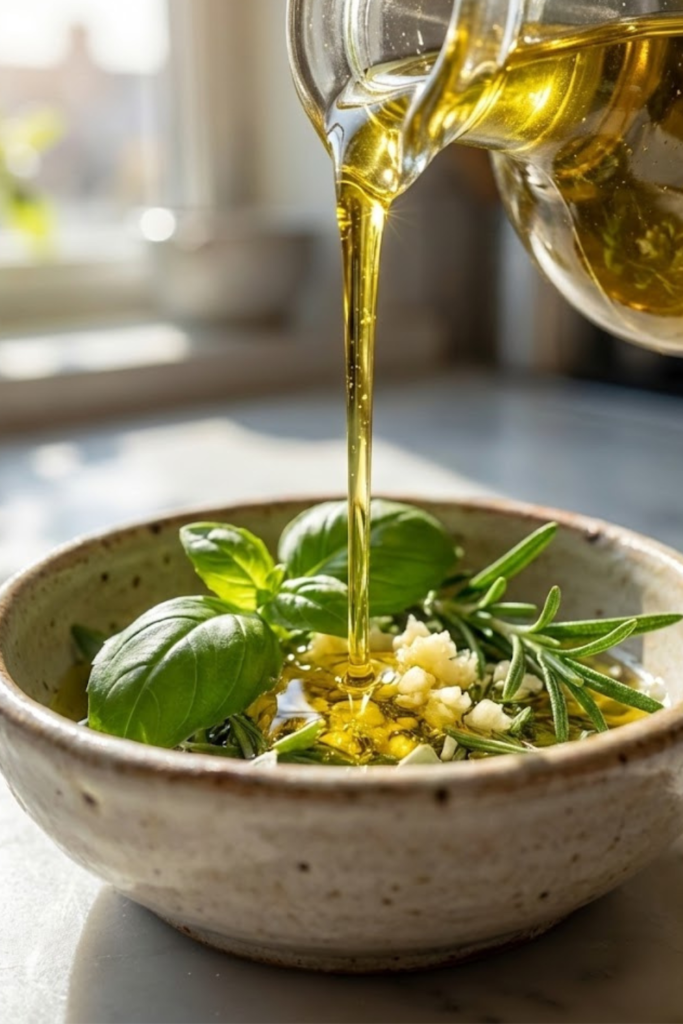
I used to think that oil was just oil. I’d grab the cheapest bottle on the shelf and wonder why my food tasted kinda flat. It wasn’t until I visited a small Italian deli that I learned the truth: the oil is an ingredient, not just a lubricant. For this Mediterranean Vegetable Dinner Tray, you really need a good Extra Virgin Olive Oil (EVOO). It doesn’t have to be the most expensive one, but it should smell like olives and grass, not like nothing.
Getting the Herb Mix Right
The flavor of this dish comes from a mix of dried and fresh herbs. I’ve tried using all fresh herbs, but they tend to burn in the hot oven. I’ve found that dried oregano and thyme work best because they stand up to the heat.
However, you have to use fresh garlic. I tried garlic powder once when I was in a rush, and it just wasn’t the same. It lacked that punch. Mince the garlic cloves really fine so they stick to the veggies and don’t fall to the bottom of the pan and burn.
The Acid Kick
Here is a little trick I missed for years. I would roast veggies with just oil and salt, and they were okay. But then I started adding a splash of acid.
Squeezing half a lemon or adding a tablespoon of balsamic vinegar to the marinade makes the flavors pop. It cuts through the oil and makes the vegetables taste brighter. It’s a small step that makes a huge difference.
The Bowl Method
Okay, this might seem like extra dishes, and I hate doing dishes. But please, don’t just drizzle the oil over the pan.
I used to do that to save time, but some veggies would drown in oil while others were dry as a bone.
Now, I toss everything in a big bowl first. It lets you coat every single piece of zucchini and pepper evenly with the oil and herbs. It takes two extra minutes, but it guarantees that every bite tastes amazing. Plus, you can use your hands to mix it, which is honestly kind of fun.
Step-by-Step Assembly and Roasting Guide
Putting this together is the easy part, but there are a few places where things can go wrong. I’ve made enough mistakes in my kitchen to know exactly what not to do. The goal is crispy, golden veggies, not a pile of mush.
Give Them Some Space
The number one rule for a good Mediterranean Vegetable Dinner Tray is: do not crowd the pan. I used to dump everything onto one small cookie sheet because I didn’t want to wash a second pan. Big mistake.
When the vegetables are piled on top of each other, they steam instead of roast. You end up with soft, wet veggies that taste boiled. Now, I spread them out in a single layer. If they don’t fit, I grab a second sheet pan. Trust me, washing one extra pan is worth it for food that actually tastes good.
Crank Up the Heat
Don’t be afraid of your oven dial. I used to bake everything at 350°F because I was scared of burning dinner. But 350 is just too low for roasting. You want the edges of the onions to get dark and the peppers to get blistered.
Set your oven to 400°F (about 200°C). That high heat is what caramelizes the natural sugars in the vegetables. That is where the flavor comes from! If you cook them low and slow, they just get soft without getting tasty.
The Halfway Shake
You can’t just put the tray in and forget about it. Set your timer for about 15 or 20 minutes. When it beeps, open the oven and give the veggies a flip. I usually just give the pan a good shake, but you can use a spatula if you want to be careful.
This makes sure one side doesn’t get burnt while the other side is still raw. It helps everything cook evenly.
Watch the Clock for Soft Stuff
If you are adding olives or maybe some cherry tomatoes, pay attention. Sometimes I throw the olives on right at the beginning, and they turn into little rocks. It’s terrible.
Now, I wait until the last 10 minutes of cooking to toss the olives on the tray. They just need to get warm, not cooked to death. The same goes if you are adding something delicate like spinach—save that for the very end.
Protein Add-Ins to Make It a Full Meal
I love a big plate of roasted vegetables, but sometimes—especially after a long day at school—I need a little more substance to keep me full. My family used to complain that they were still hungry an hour later. That’s when I started experimenting with adding protein right onto the sheet pan. It turns a side dish into a complete dinner without dirtying another pot.
The Cheese Factor
Feta is the classic choice here. But here is the thing: don’t crumble it on at the start. If you do, it kind of disappears into the oil. I like to take a block of feta, break it into big chunks, and nestle them in between the veggies for the last 10 minutes. It gets soft and warm but keeps its shape.
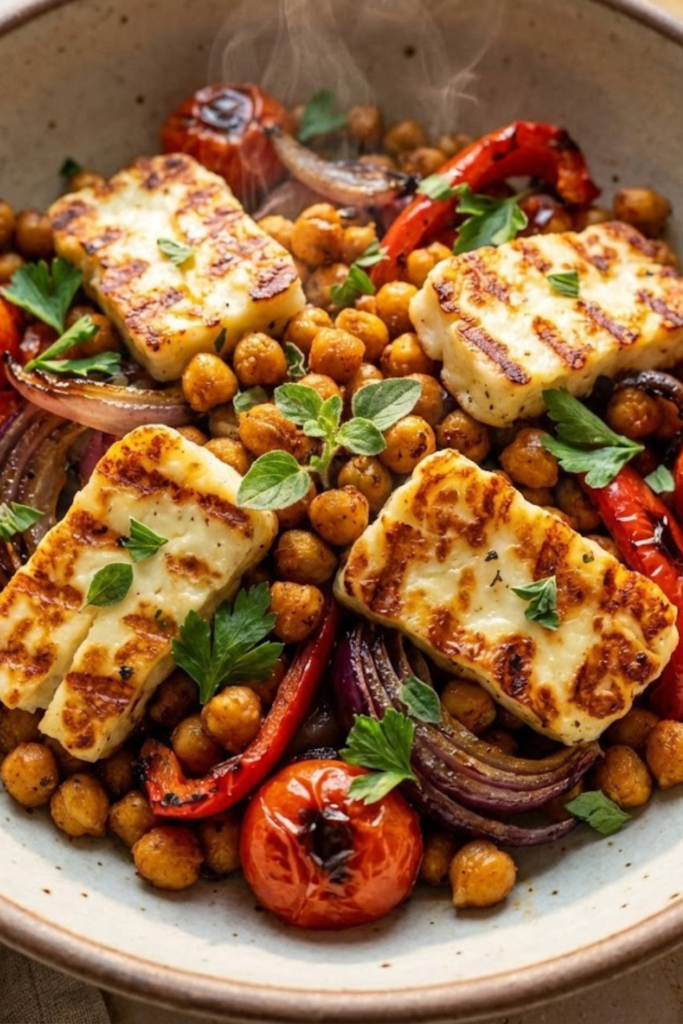
If you want to try something different, grab some halloumi cheese. It’s a firm, salty cheese that doesn’t melt. It gets golden brown and squeaky. It is so good, I sometimes eat it right off the pan before it hits the table.
Beans for the Win
If you want to keep it meat-free, chickpeas (garbanzo beans) are your best friend. I keep cans in the pantry for emergencies. Just drain them and rinse them well. Then—and this is important—pat them dry with a paper towel. If they are wet, they won’t get crunchy. Toss them on the tray right at the beginning with the veggies. They turn into these crispy, nutty little bites that are addictive.
For the Meat Eaters
Sometimes we need meat. I usually grab some pre-cooked chicken sausage from the store. Since it is already cooked, I just slice it into coins and throw it on the tray halfway through cooking. It browns up nice and quick.
Shrimp is another good one, but be careful. Shrimp cooks super fast. If you put it in for 20 minutes, it will taste like rubber. Only add shrimp for the last 5 or 6 minutes so it stays juicy.
What to Serve It With
Honestly, this tray is great on its own. But if I need to stretch the meal to feed more people, I’ll serve it over something. Couscous is the easiest because it takes like five minutes to make. Quinoa is good too if you want something healthier. Or, just warm up some pita bread and use it to scoop up the roasted onions and peppers. It’s messy, but it’s the best way to eat it.
Storage, Leftovers, and Meal Prep Ideas
I am a huge fan of cooking once and eating twice. As a teacher, my lunch break is short, and having a good meal ready to go makes the day so much better. This Mediterranean Vegetable Dinner Tray is actually one of those rare meals that tastes just as good the next day—if you store it right.
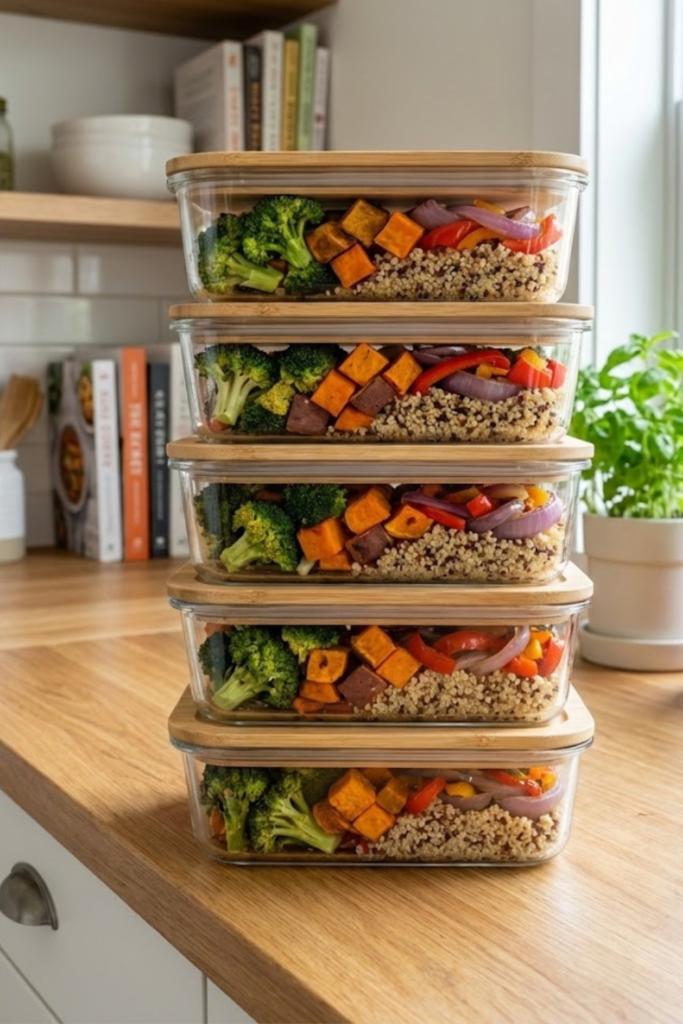
Keep It Fresh in Glass
I used to just throw leftovers in whatever plastic bowl I could find. But with roasted veggies, especially if there is tomato or oil involved, plastic containers get stained and greasy. Plus, they sometimes hold onto smells.
Now, I only use glass containers with the snap-on lids. They keep the air out, so the veggies stay fresh in the fridge for about 3 or 4 days. If I prep this on Sunday, I have lunch until Thursday.
The Reheating Rule
Here is the most important thing I can tell you: try to avoid the microwave if you can. I know, it’s fast. But microwaves turn roasted vegetables into a soggy, wet mess. The zucchini loses all its texture.
If you have an air fryer, use it! Pop the leftovers in for 3 or 4 minutes at 350°F. It wakes the vegetables up and makes the edges crispy again. If you don’t have one, a toaster oven works great too. If you must use the microwave, just do it for 30 seconds so they don’t turn to mush.
New Meals from Old Leftovers
I get bored eating the exact same thing every day. So, I like to switch it up.
- Breakfast: I’ll take a scoop of the leftover veggies and throw them in a frying pan with two eggs. It makes a fancy omelet in like five minutes.
- Pasta Night: If I don’t have much time for dinner later in the week, I boil some penne pasta and toss the cold roasted veggies in with a little extra olive oil and parmesan cheese. The heat from the pasta warms the veggies just enough.
To Freeze or Not to Freeze?
People always ask me if they can freeze this. Honestly? I wouldn’t.
Hard root vegetables like carrots freeze okay, but zucchini and peppers have way too much water in them. When you freeze them and then thaw them out, they turn into a watery soup. It’s just not appetizing. It is much better to just make what you can eat in a few days and enjoy it fresh.
Well, there you have it. This Mediterranean Vegetable Dinner Tray is one of those meals I keep coming back to. It is easy, it is healthy, and best of all, it doesn’t leave me with a sink full of dirty dishes. As a teacher, I need all the extra time I can get in the evenings, and I bet you do too.
I really hope you give this recipe a try. The mix of roasted veggies and that salty feta is just so good. It is a great way to get more vegetables into your diet without it feeling like a chore. It proves that healthy food doesn’t have to be boring or difficult.
If you make this and love it, please do me a huge favor and share it on Pinterest! It helps me out a lot and helps other people find this easy dinner idea. Happy cooking!