Picture this: It’s the middle of July, the sun is blazing, and the absolute last thing you want to do is turn on the oven to cook a heavy meal. I have been there a thousand times! Did you know that nearly 72% of home cooks actively seek out “no-cook” or minimal-heat recipes during the summer months? That is exactly why this Mediterranean Pasta Salad is about to become your new best friend. It isn’t just a side dish; it is a bowl full of sunshine, combining tangy feta, crisp cucumbers, and savory olives in a way that dances on your palette! Whether you are heading to a potluck or just want a quick lunch, this dish delivers big flavor with minimal effort. Let’s dive into the fresh ingredients that make this salad a timeless classic.
Essential Ingredients for Authentic Mediterranean Flavor
I have to be honest with you—my first attempt at making a Mediterranean pasta salad was a total disaster. I was in a rush for a neighborhood potluck and just grabbed whatever was in my fridge. I used spaghetti noodles (bad idea), those tasteless black olives from a can, and dried parmesan. Let’s just say, the bowl came back home completely full. Lesson learned the hard way! Over the years, I’ve realized that getting that fresh, zesty flavor isn’t about being a fancy chef; it’s about picking the right stuff at the grocery store.
The Pasta Shape Matters
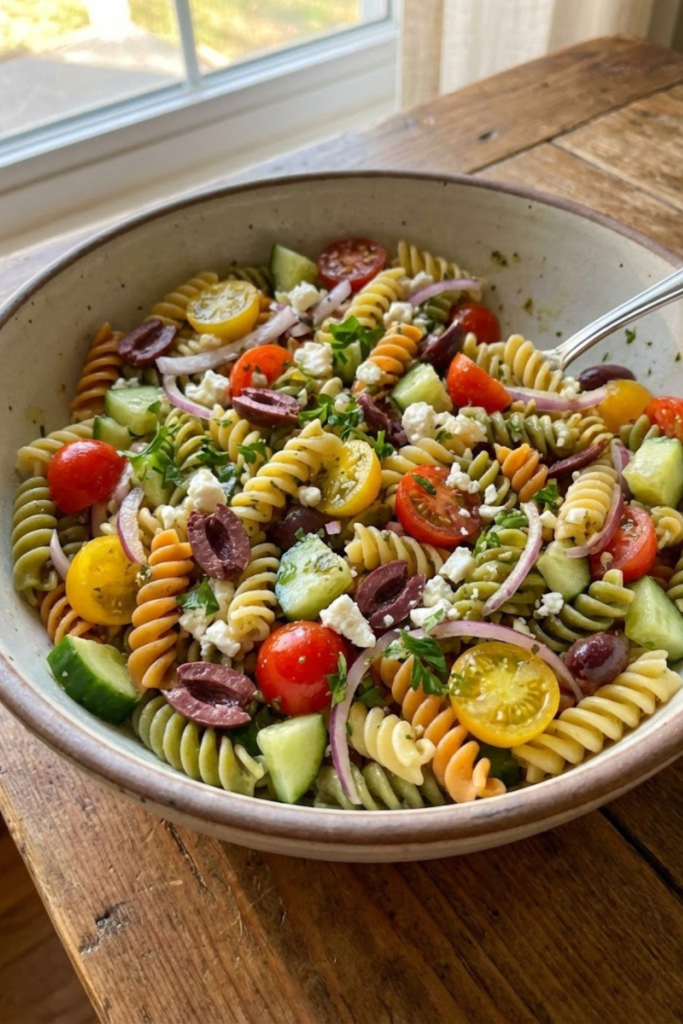
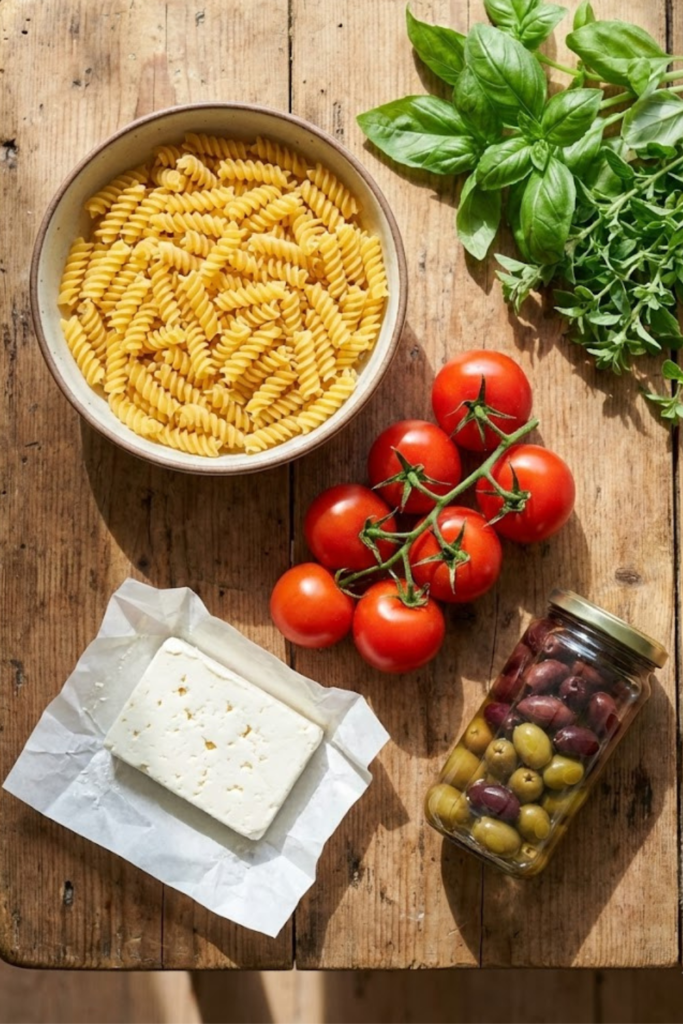
First off, put down the spaghetti. Serious. You need a pasta shape that has nooks and crannies to trap all that zesty dressing. I’ve tried penne, and it’s okay, but rotini or fusilli is the absolute best. The spirals hold onto the vinaigrette and the little bits of cheese like a champion. If you use a smooth noodle, all that flavor just slides to the bottom of the bowl, and you’re left with bland pasta. I usually grab the tri-color rotini just because it looks fun, but the regular kind works just fine.
Go for the Block Feta
Here is a hill I am willing to die on: stop buying pre-crumbled feta cheese! I know, I know, it saves time. But those pre-crumbled bits are coated in anti-caking agents (basically potato starch) that keep them dry and chalky.
For a really creamy, tangy Mediterranean pasta salad, you gotta buy the block of feta in the brine. It takes two seconds to crumble it with your hands, and the texture is miles better. Plus, it actually mixes with the dressing to create this slightly creamy coating on the veggies. Trust me on this one.
Crisp Veggies are Key
Soggy salads are the worst. When I’m shopping, I look for English cucumbers—the long skinny ones wrapped in plastic. They have fewer seeds and less water than regular cucumbers, so they stay crunchy for days. If you use regular cukes, you have to scoop the seeds out, or your salad turns into a watery soup by day two.
Also, don’t skimp on the tomatoes. Cherry or grape tomatoes are best because they are sweeter and firmer than cutting up a big beefsteak tomato. I like to cut them in half so the juices mingle with the oil and vinegar.
The Olive Debate
Okay, I know some people hate olives. My husband picks them out every single time. But for that authentic taste, you really need Kalamata olives. They have this rich, briny punch that those bland black olives in a can just don’t have. If you’re really against olives, you could try capers for that salty kick, but the Kalamata ones are the real deal for this recipe. Just make sure you get the pitted ones, nobody wants to crack a tooth at a picnic!
Crafting the Perfect Homemade Greek Vinaigrette
I used to be the person who would grab a bottle of generic “Greek Dressing” from the salad aisle and call it a day. I figured, why bother making my own? But honestly, once I actually read the label and saw how much sugar and weird preservatives were in there, I decided to give homemade a shot. And wow, what a difference. It tastes so much brighter, and you probably have everything you need in your pantry right now.
Finding the Right Balance
The base of any good vinaigrette is the relationship between the oil and the vinegar. If you use too much vinegar, your lips will pucker up like you just sucked on a lemon. If you use too much oil, the pasta just feels greasy.
I’ve found that the sweet spot for this Mediterranean pasta salad is about two parts oil to one part vinegar. You have to use Extra Virgin Olive Oil—don’t use the light stuff or vegetable oil, it just doesn’t have the flavor. For the acid, Red Wine Vinegar is the classic choice. It has that sharp tang that cuts through the starch of the pasta perfectly.
The Secret Ingredients
Okay, so oil and vinegar are the start, but the spices are where the magic happens. I always use dried oregano, but here is a little teacher trick: put the dried herbs in the palm of your hand and rub them together with your thumb before dropping them in. It wakes up the flavor.
You also need garlic. I stick to garlic powder for the dressing because raw fresh garlic can sometimes be too spicy and overpowering in a cold salad. Finally, my secret weapon is a teaspoon of Dijon mustard. You won’t really taste the mustard, but it helps the oil and vinegar mix together so they don’t separate immediately.
The Mason Jar Method
Forget about dirtying a bowl and a whisk. The easiest way to make this is to dump everything into a glass jar with a lid—I save old jam jars for exactly this purpose.
Pour in your olive oil, red wine vinegar, oregano, garlic powder, salt, pepper, and that dab of mustard. Screw the lid on tight and shake it like crazy for about 30 seconds. The mixture will turn creamy and cloudy. This is way easier than trying to whisk it while slowly pouring oil, which I always mess up anyway.
Let the Flavors Mingle
If you have the time, let the dressing sit in the jar on the counter for about 10 to 15 minutes before you pour it over the salad. This gives the dried herbs a chance to rehydrate a little bit and infuse the oil with flavor.
I usually make the dressing first, then chop my veggies while it sits. By the time I am ready to toss everything, the dressing is perfectly blended. Just give it one last quick shake before pouring, because it might separate a little if it sits too long.

Step-by-Step Instructions for the Best Pasta Salad
Honestly, making a pasta salad seems like the easiest thing in the world—you just boil noodles and throw stuff in a bowl, right? Well, yes and no. I have definitely messed this up before by rushing through the steps. There is nothing worse than bringing a big bowl of mushy, sticky pasta to a party. Over time, I’ve found a routine that works every time to keep things fresh and tasty.
Don’t Overcook the Noodles
This is the most important part. When you boil your water, make sure you add a good amount of salt. It should taste salty like the ocean. This is your only chance to flavor the actual pasta noodle itself.
Read the box for the cooking time, but here is my rule: take the pasta out one minute before the box says it’s done. You want it to be “al dente,” which just means it still has a little bite to it. If you cook it all the way until it’s soft, it will fall apart when you start stirring in the heavy veggies and dressing.
The Cold Water Shock
Now, my Italian grandmother might roll over in her grave for this one, but for pasta salad, you absolutely have to rinse your noodles. Usually, for a hot dinner, you never rinse pasta because you want the starch to help the sauce stick.
But for a cold salad, starch is the enemy. As soon as you drain the pasta, run it under cold tap water until it is completely cool. This does two things: it stops the cooking process immediately so they don’t get mushy, and it washes away the starch so the noodles don’t stick together in a big clump. Shake the colander really well to get all the water out—watery salad is a no-go.
Chop Everything the Same Size
While the pasta is draining, I get to work on the veggies. I try to cut everything—the cucumbers, the peppers, the red onion—into pieces that are about the same size as the pasta spirals and the cherry tomatoes.
It takes a few extra minutes to be precise, but it makes a huge difference. You want to be able to get a piece of pasta, a slice of olive, and a chunk of cucumber all on one fork. If the cucumber chunks are huge, they just fall off and end up at the bottom of the bowl.
The Final Toss
Get out the biggest mixing bowl you own. Dump the cooled noodles in first, then pile all the chopped veggies, olives, and feta cheese on top. Give the dressing one last hard shake in the jar and pour about three-quarters of it over the top.
Use a big spoon or a spatula to gently fold everything together. Don’t go crazy stirring it, or you will break the pasta and turn the feta into dust. I usually save a little bit of dressing to add right before serving, just in case the pasta soaks it all up in the fridge.

Customizations and Dietary Swaps
One of the best things about cooking for a family—or even just for myself—is realizing that a recipe is really just a suggestion, not a strict set of rules. I used to be scared to change anything, thinking I would ruin the dish. But honestly, this Mediterranean pasta salad is pretty tough to mess up. Over the years, I’ve had to tweak it for picky eaters, allergies, and sometimes just because I didn’t want to run to the store for one ingredient.
Turning it into a Main Dish
Usually, I serve this as a side dish with burgers or hot dogs. But in the summer, when it is hot and sticky outside, I often turn this salad into the whole dinner. It saves me from standing over a hot grill.
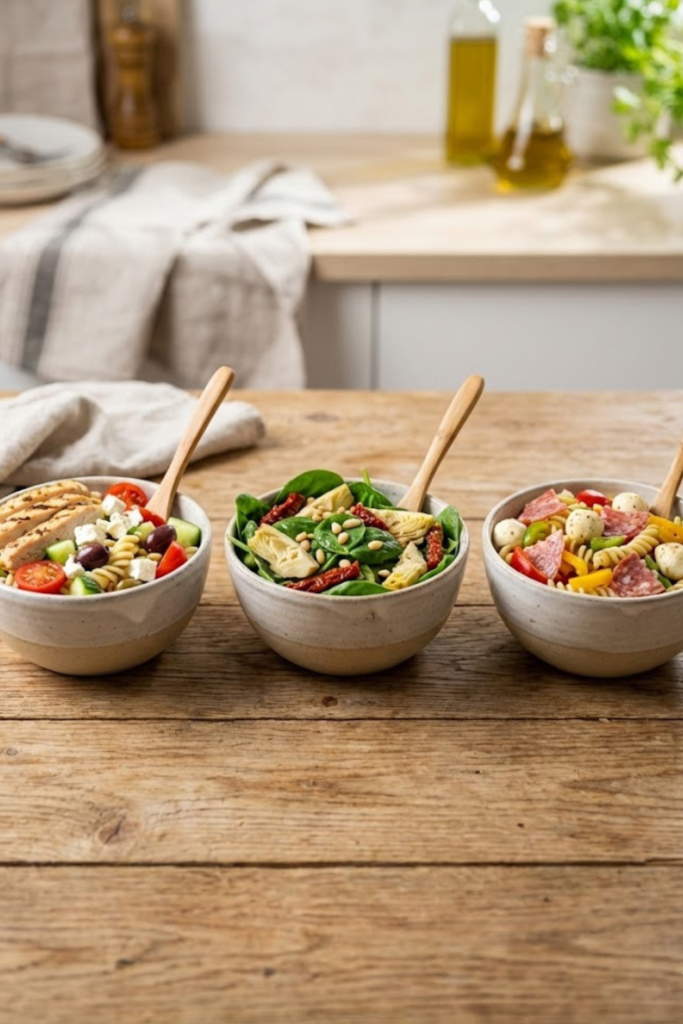
To beef it up (pun intended), I like to add some protein. Grilled chicken works perfectly. If I have leftover chicken breast from the night before, I just chop it into cubes and toss it in. Shrimp is also really good if you want to feel a bit fancy. I just quickly sauté the shrimp in a pan with some lemon juice and garlic before adding them. If you want to keep it vegetarian but more filling, a can of chickpeas (garbanzo beans) is a lifesaver. Just rinse them really well first so they aren’t slimy.
Gluten-Free Options that Actually Work
I have a few friends who can’t eat gluten, and I’ve learned the hard way that not all gluten-free pastas are created equal. Some of them turn into a sandy mush the second they hit the water.
If you need to make this gluten-free, look for a pasta made from brown rice or a corn-quinoa blend. Those tend to hold their shape better than the chickpea-only ones. And here is a big tip: watch that pot like a hawk. Gluten-free pasta goes from “uncooked” to “mush” in about thirty seconds. I always drain it a minute earlier than the package says and rinse it with cold water immediately to stop it from falling apart.
Dairy-Free and Vegan Ideas
If you are avoiding dairy, obviously the feta cheese has to go. You can buy vegan feta at most stores now, and some of it is actually pretty decent. But if you don’t want to buy a special cheese, my favorite trick is to use diced avocado.
I know it sounds weird, but the avocado adds that same creamy texture that the cheese usually provides. Just make sure you add the avocado right before you serve it, otherwise, it might turn brown and look a little unappealing, even though it still tastes fine.
Emptying the Vegetable Drawer
Finally, this salad is the perfect way to use up those random veggies sitting in your fridge. You know, that half-jar of artichoke hearts or the handful of spinach that is about to wilt. Throw it all in!
I love adding roasted red peppers from a jar for a sweet, smoky flavor. Fresh spinach is great too, just chop it up a little so you don’t get a huge leaf in one bite. I’ve even added chopped broccoli and cauliflower before. It’s a great way to sneak some extra vitamins onto my kids’ plates without them complaining too much.
Storage Tips and Serving Suggestions
One of the main reasons I keep making this Mediterranean pasta salad is because it holds up so well in the fridge. I am a busy person, and I definitely do not have the time (or the energy) to cook a fresh dinner every single night. Having a big bowl of this ready to go feels like money in the bank. Plus, since it is served cold, I don’t have to stand in line for the microwave at work during my twenty-minute lunch break, which is a huge win in my book.
Keeping it Fresh
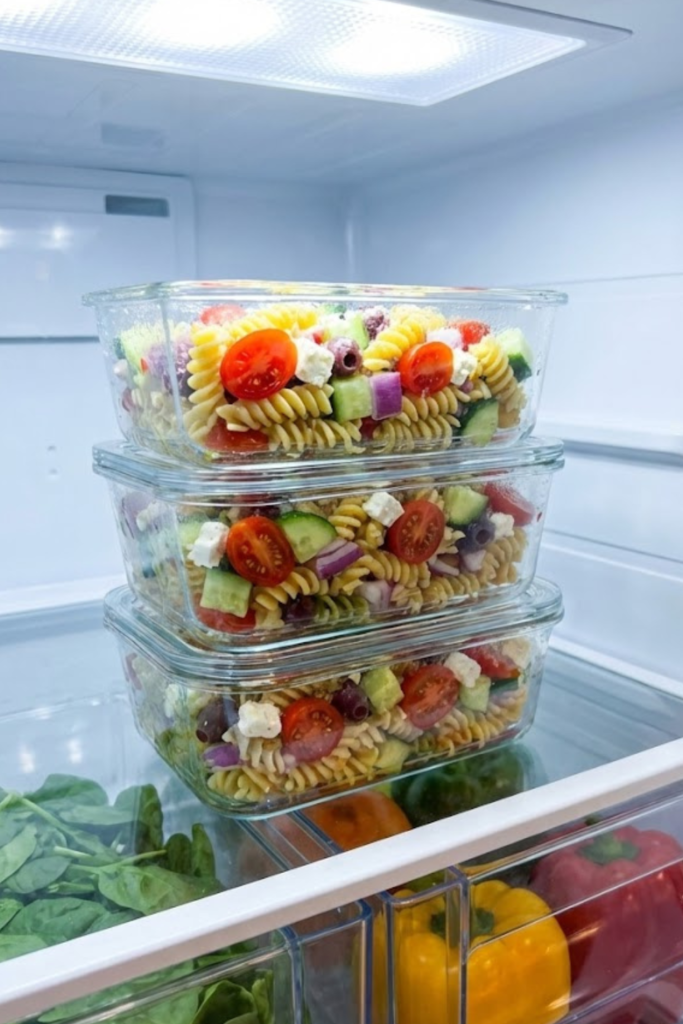
You really need a good container if you want this to last. I used to use those cheap, flimsy plastic tubs, but I found that the red wine vinegar and the tomatoes would stain them or leave a funky smell that never washed out. Now, I stick to glass containers with those snap-locking lids. They do a better job of keeping the air out, which keeps the cucumbers and peppers crisp.
If you store it properly in an airtight container, this salad will stay fresh for about three to four days. After day four, the cucumbers start to get a little bit soft and watery for my liking, but it is technically still safe to eat for maybe five days. I usually try to finish it by Wednesday if I made it on Sunday.
Why Tomorrow is Better
Here is a funny thing about this dish: it actually tastes better the next day. It’s true! When you first toss everything together, the dressing is just sitting on the surface of the noodles. But after it sits in the fridge overnight, that zesty vinaigrette has time to soak into the pasta spirals and the vegetables. The flavors really get to know each other. That is why I almost always make a huge batch on Sunday afternoon. It makes my weekday lunches a total breeze, and I actually look forward to eating it.
Help, It’s Dry!
There is one small thing you have to watch out for with leftovers. Because the pasta acts like a sponge, you might open your container on Tuesday and find that the dressing has basically disappeared. The salad might look a little dry and sad. Don’t worry, you didn’t mess anything up. This happens every time.
I always keep a little extra olive oil and vinegar handy for this exact reason. Just splash a tiny bit of each (or just oil) over your leftovers and give it a quick stir. It wakes everything right back up and makes it shiny and delicious again.
Perfect Pairings
Honestly, I have been known to eat this right out of the mixing bowl while standing in the kitchen. But if you want to make it a proper meal, it goes with almost anything. It is the perfect side dish for grilled chicken or steak because the vinegar acidity cuts through the heaviness of the meat. I also love serving it with a big piece of crusty bread to sop up any extra dressing left on the plate. If you are going to a BBQ, this is the dish that everyone will be asking you for the recipe for, I promise.
So there you have it—a vibrant, tangy, and filling Mediterranean pasta salad that is sure to be the star of your table in 2026. It is easy to make, packed with healthy ingredients, and customizable to fit any diet. Whether you are meal prepping for the week or hosting a backyard BBQ, this recipe covers all the bases.
I hope you give this a try and enjoy it as much as my family does. It has definitely saved me from ordering takeout on many busy nights. Don’t forget to save this recipe for later!
Call to Action: Did you love this recipe? Pin it to your Summer Recipes board on Pinterest so you never lose it!