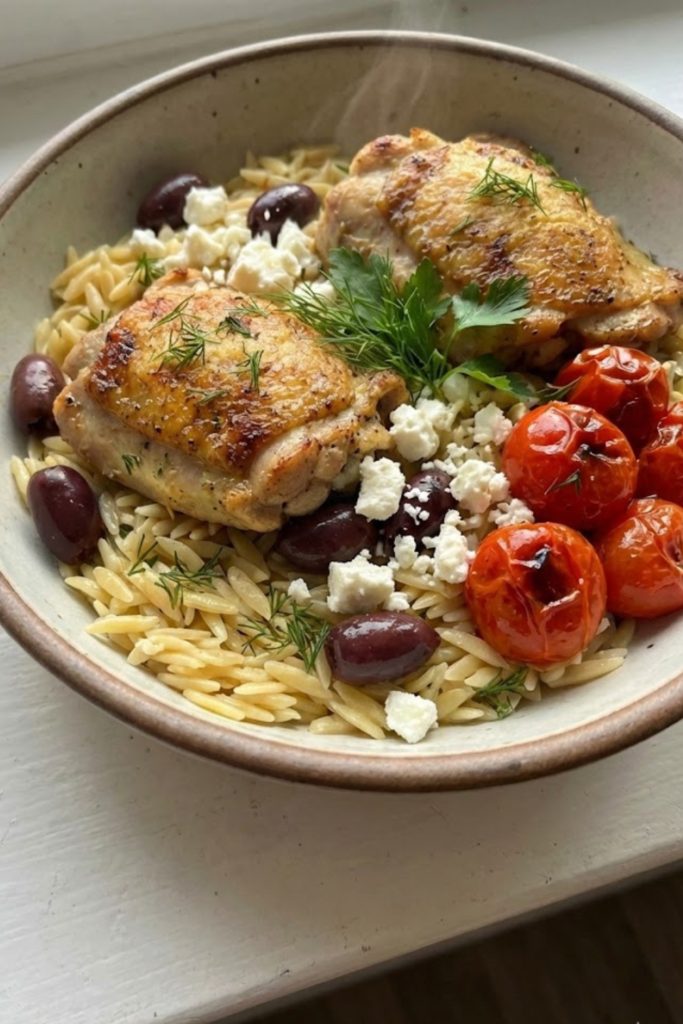
I remember the first time I tried to pull off a fancy meal on a busy weeknight; it was a total mess and we ended up eating cereal. That is exactly why I love this Mediterranean Chicken Orzo Dinner so much now. It is a total lifesaver when you are tired but still want a real meal. You basically just throw the chicken, veggies, and pasta into one skillet and let it do its thing. It tastes like something from a restaurant, but it is super easy to make at home. My family eats every bite, and I honestly love that there is only one pan to wash after. It’s healthy, filling, and saves me so much time.
Why You’ll Fall in Love With This One-Pan Wonder
You know those evenings when you get home and you’re just done? Like, your brain is fried and the last thing you want to do is tackle a mountain of dirty dishes. That is basically my life every Tuesday. I honestly can’t stand seeing a sink full of pots and pans staring back at me after I’ve cooked a meal. That’s why this Mediterranean Chicken Orzo Dinner became my go-to. It is not just about the food tasting good—though it really does—it is about saving my sanity on a weeknight.
There is something so satisfying about throwing everything into a single skillet and watching it turn into a real dinner. You don’t need to boil water in a separate pot for the pasta. You don’t need a colander. You just need one good pan and a spatula. It feels like a cheat code for cooking, but the result looks like something you spent hours making.
Less Mess, Less Stress
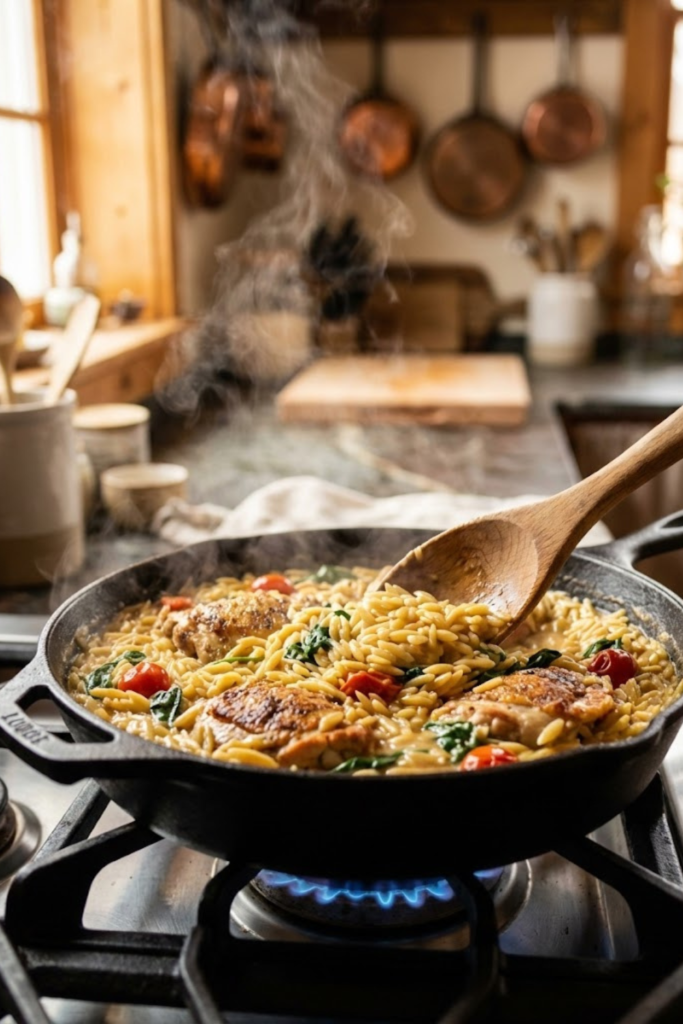
Let’s be real, the worst part of cooking is the cleanup. With most pasta dishes, you have the pot for boiling water, the strainer, the pan for the sauce, and maybe another pan for the meat. It adds up fast. With this recipe, everything happens in one spot. The chicken sears in the pan, the veggies sauté in those same juices, and the orzo cooks right in the liquid with everything else.
This actually makes the food taste better, too. Because you aren’t draining the pasta water away, the starch from the orzo helps thicken the sauce naturally. So you get this creamy, rich texture without adding heavy cream. Plus, when you are done, you only have one skillet to scrub. For me, that is a huge win.
Mediterranean Flavors That Pop
I used to think “healthy” meant boring salads or plain steamed vegetables. But this dish changed my mind. The Mediterranean way of eating is famous for being good for your heart, but I love it because it’s full of flavor. We are talking about salty kalamata olives, tangy feta cheese, and bright lemon juice.
When you cook the orzo with the chicken and these ingredients, the pasta soaks up all that goodness. It’s not bland white rice; every bite has a punch of flavor. It feels light enough that you don’t feel sluggish after eating, but it’s hearty enough to keep you full.
It Saves Your Evening
Time is super precious during the week. I timed myself making this the other day, and it took about 30 minutes from start to finish. Since you don’t have to wait for a huge pot of water to boil, you shave off a ton of time right there.
Once you get everything in the pan and the lid is on, you have about 10 or 15 minutes of downtime while it simmers. That gives me just enough time to wipe down the counters or set the table so that when we eat, the kitchen is already mostly clean. It’s a fast meal that doesn’t feel rushed, which is exactly what I need.
The Essential Ingredients Checklist
One of the things I absolutely hate is finding a “simple” recipe that asks for three different spices I have never heard of and will never use again. Who has money for that? I sure don’t. The best part about this Mediterranean Chicken Orzo Dinner is that you can find pretty much everything at your regular grocery store. You might even have half of this stuff sitting in your kitchen right now. I like to get everything out on the counter before I start cooking—it stops me from running around like a headless chicken later on.
Picking the Right Chicken
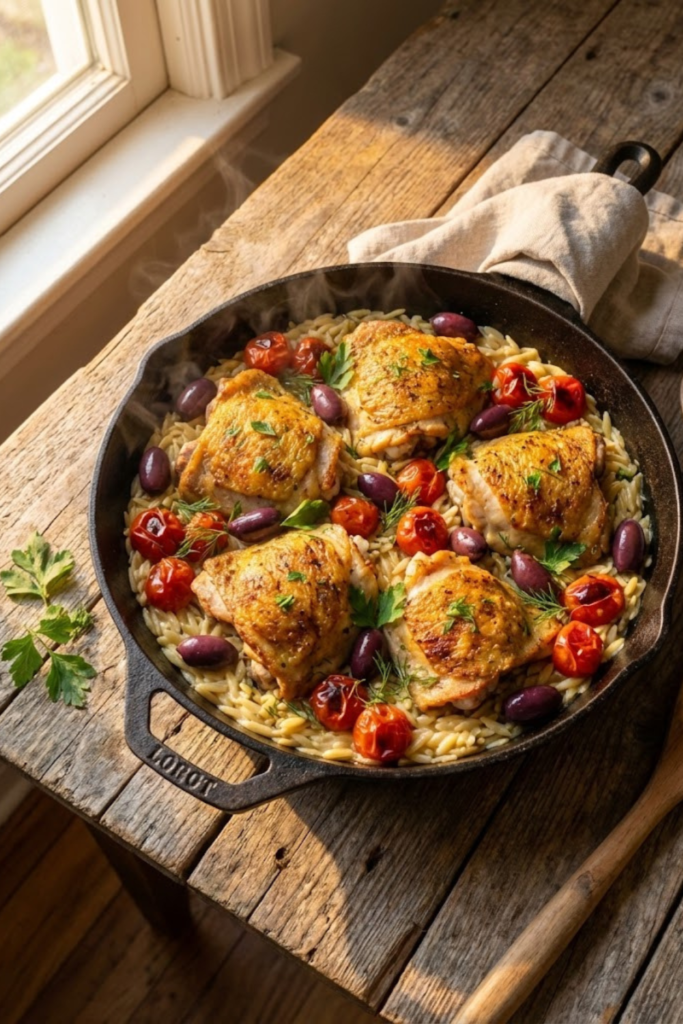
Okay, let’s talk poultry. I used to be a “chicken breast only” kind of person because I thought it was healthier. But for this recipe, I highly recommend using boneless, skinless chicken thighs. They have way more flavor and, more importantly, they stay juicy. Since we are cooking the chicken and then letting it simmer with the pasta, chicken breasts can sometimes dry out and get a bit tough. Thighs are much more forgiving.
If you really want to use breasts, just cut them into bigger chunks so they don’t cook too fast. But trust me, thighs are the winner here.
The Star of the Show: Orzo
If you haven’t cooked with orzo before, you are in for a treat. It looks exactly like rice, but don’t be fooled—it is actually a tiny pasta. This is important because you treat it differently than rice. Do not rinse it! You want that starchy dust on the outside because it helps make the sauce creamy.
I usually find it in the pasta aisle, usually on the top or bottom shelf. It cooks really fast compared to other shapes, which helps keep this dinner under the 30-minute mark.
The Mediterranean Flavor Boosters
This is where the magic happens. These ingredients take the dish from “okay” to “wow.”
- Fresh Spinach: I grab a bag of baby spinach. It looks like a lot when you put it in the pan, but it wilts down to almost nothing in seconds. I avoid frozen spinach here because it releases too much water and can make your sauce soupy.
- Kalamata Olives: These are the purple ones. They have a distinct, tangy taste that makes the dish pop. Please, double-check that you bought pitted olives! I once forgot and spent ten minutes slicing pits out of olives while my family waited. Not fun.
- Feta Cheese: Here is a little teacher tip for you: buy the block of feta, not the pre-crumbled stuff. The crumbled kind usually has a powder on it to keep it from clumping, which stops it from melting nicely. The block tastes fresher and melts into the sauce perfectly.
Pantry Staples
You will need some liquid to cook the orzo. I usually use chicken broth because it adds more savory flavor than water. If you are watching your salt, get the low-sodium kind so you can control the seasoning yourself. You’ll also need a fresh lemon. Do not use the stuff in the plastic squeeze bottle! Fresh lemon juice and a little bit of the zest (the yellow skin) brightens up the whole meal and cuts through the richness of the cheese. Add a little dried oregano and garlic, and you are good to go.

Step-by-Step: How to Make Mediterranean Chicken Orzo
I used to be intimidated by recipes that looked “fancy,” thinking I’d mess up the timing and ruin dinner. But this dish is honestly hard to mess up. It’s mostly just adding things to a pan in the right order. Think of it like a science experiment where the result is delicious food instead of a baking soda volcano. I’ll walk you through exactly how I do it so you don’t have to guess.
Getting That Golden Crust
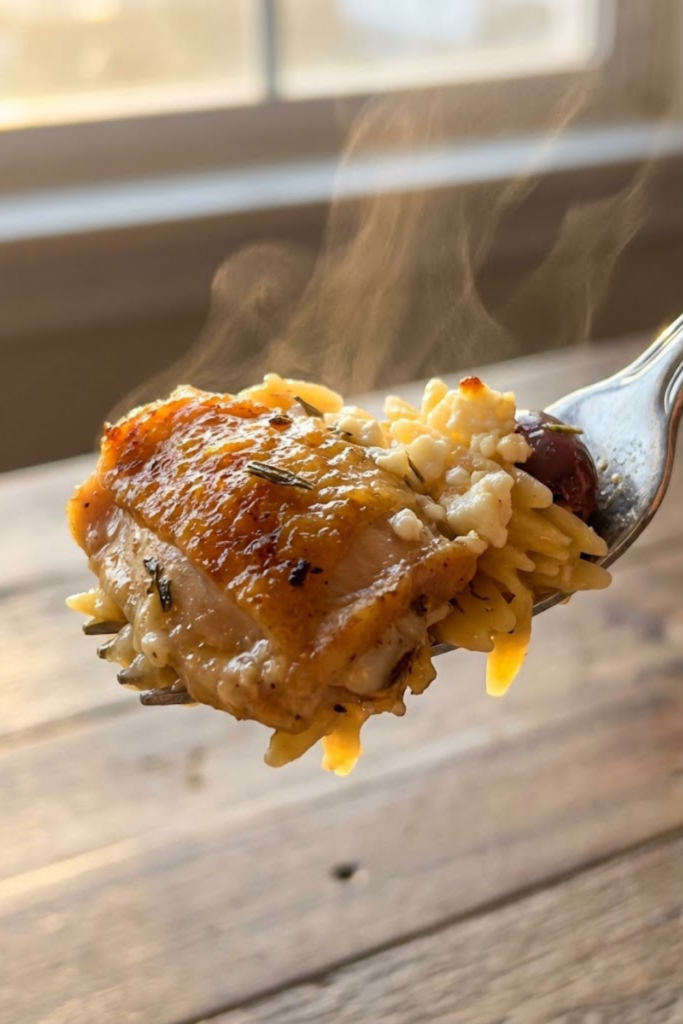
First things first, you need to sear the chicken. This is the most important part for flavor. I pat the chicken thighs dry with a paper towel before seasoning them. If they are wet, they steam instead of sear, and nobody likes gray, sad-looking chicken. I sprinkle salt, pepper, and oregano on both sides.
Heat up your olive oil in the skillet over medium-high heat. When you put the chicken in, you should hear a loud sizzle. If you don’t hear it, wait! Once the chicken is in the pan, do not touch it. I know it’s tempting to peek, but let it sit there for about 4-5 minutes. You want a nice golden-brown crust. Flip it, cook for another couple of minutes, and then take it out. It won’t be cooked all the way through yet, but that’s okay. We will finish it later.
The Secret Step: Toasting the Orzo
Now, you have a pan full of tasty chicken bits and oil. Don’t wash it! Throw in your chopped onions and let them soften up. Add the garlic right at the end so it doesn’t burn—burnt garlic tastes bitter and ruins everything.
Here is the trick that changed my orzo game: I add the dry pasta right into the pan with the oil and onions. I let it toast for about a minute or two. You will smell a nutty aroma, and the pasta might turn a little golden. This helps the orzo keep its shape so it doesn’t turn into mush later. It’s a small step, but it makes a huge difference in the texture.
The Simmer Down
Once the orzo is toasted, pour in your chicken broth. Use a wooden spoon to scrape the bottom of the pan to get all those brown bits (that’s pure flavor!) mixed into the liquid. Nestle the chicken thighs back into the pan, right on top of the orzo.
Bring it to a boil, then turn the heat down to low and put a lid on it. This is the part where you can relax for about 12 to 15 minutes. The liquid cooks the pasta and finishes cooking the chicken at the same time. I usually check it once halfway through and give the orzo a quick stir so it doesn’t stick to the bottom.
The Grand Finale
When the liquid is mostly absorbed and the pasta is tender, turn off the heat. Now comes the fun part. Stir in your fresh spinach, pitted kalamata olives, and crumbled feta. The residual heat from the pan will wilt the spinach and melt the cheese just enough. Finally, squeeze fresh lemon juice over the whole thing. It brightens up all the heavy flavors and makes the dish taste fresh and amazing. Serve it right from the skillet—it looks great and keeps the food warm.
Pro-Tips for Perfect Orzo Every Time
I have to be honest with you—orzo can be a little bit dramatic. One minute it is hard as a rock, and the next minute it is a mushy mess that looks like baby food. I have ruined my fair share of dinners by getting distracted or assuming I could treat it exactly like spaghetti. Over the years, I’ve picked up a few tricks that make this Mediterranean Chicken Orzo Dinner come out perfect pretty much every time. You don’t need to be a pro chef, you just need to keep an eye on things.
The “Mush Factor”
The biggest mistake people make is adding too much liquid. Orzo is tiny, so it absorbs water really fast. If you drown it, it gets gloppy. I usually start with the amount the recipe says, but I keep a cup of warm water or extra broth next to the stove just in case.
If the liquid is gone but the pasta is still crunchy, I add just a splash more—maybe a quarter cup—and stir it in. It is way easier to add more liquid than to try and fix a soup. Also, don’t rely on the time on the package. Since we are cooking it in a skillet with chicken and veggies, it might take a minute or two longer than boiling it in water. Taste a few grains to check. It should be soft but still have a little bit of chew to it.
Stop the sticking
Orzo loves to stick to the bottom of the pan. It’s like it has magnetic powers or something. If you just put the lid on and walk away for 15 minutes, you are going to end up with a layer of burnt pasta that is a nightmare to scrub off.
My rule is to lift the lid every few minutes and give it a good stir. Make sure you scrape the bottom of the skillet with your wooden spoon. This moves the pasta around so it cooks evenly and doesn’t glue itself to the cast iron. It also helps release the starch, which is what makes that sauce so creamy and delicious without needing heavy cream.
Making it Work for Picky Eaters
I know how it goes. You make this beautiful meal, and your kid takes one look at a black olive and refuses to eat. If your family is picky, this recipe is super easy to change up.
- No Olives: If the olives are a “hard no” in your house, try using capers instead. They give you that salty punch without the texture of olives. Or just leave them out and add a little extra salt.
- Veggie Swaps: If spinach isn’t your thing, kale works well too, but you have to cook it a little longer. You can also throw in some diced zucchini or bell peppers when you cook the onions.
- Cheese: Feta is strong. If you aren’t a fan, parmesan cheese is a great substitute. It won’t be exactly “Greek,” but it will still taste amazing.
Don’t Overcook the Chicken
Since the chicken cooks twice—once during the sear and once with the pasta—it can dry out if you aren’t careful. That is why I push for thighs over breasts. But even with thighs, don’t chop them too small. Bigger chunks stay juicier. And remember, the chicken will keep cooking for a few minutes after you turn off the heat because the pan stays hot. So if you take it off the stove right when it hits 165 degrees, it will be perfect by the time you serve it.
Storing and Reheating Leftovers
If you are anything like me, you cook dinner with tomorrow’s lunch in mind. There is nothing better than knowing you have a delicious meal waiting for you in the fridge so you don’t have to settle for a sad sandwich or expensive takeout. This Mediterranean Chicken Orzo Dinner actually reheats pretty well, but you have to know what you are doing. If you just shove it in the microwave as is, you are going to end up with a dry, rubbery block of pasta. Nobody wants that.
Fridge Life
This dish keeps really well in the refrigerator for about 3 to 4 days. You need to make sure you put it in an airtight container. I usually use those glass ones with the snapping lids because plastic containers tend to get stained by the tomato and oil, and I hate trying to scrub that orange tint out later.
One thing you will notice when you pull it out the next day is that it looks… solid. Like, really solid. Don’t panic! The orzo acts like a sponge. Even when it is sitting in the fridge, it keeps drinking up whatever moisture is left in the sauce. The chicken fat and the feta cheese also firm up when they get cold. It looks weird, but it totally comes back to life once you heat it up.
Bringing It Back to Life
Here is the secret to reheating pasta dishes like this: you have to add liquid. I cannot stress this enough. Since the orzo soaked up all the sauce overnight, you need to replace it.
If I am at home, I like to put the leftovers back in a skillet on the stove over medium-low heat. I pour in a splash of chicken broth or even just plain water. Stir it gently until the sauce loosens up and gets creamy again. It tastes almost as good as it did fresh.
But let’s be real, most of us are reheating this in a microwave at work. If that is the case, splash a tablespoon of water over the pasta before you zap it. I also like to cover the bowl with a damp paper towel. This creates a little steam bath for the chicken so it doesn’t dry out while the pasta warms up. Heat it in short bursts—like 45 seconds—and stir in between. It makes a huge difference.
To Freeze or Not to Freeze?
I get asked this a lot. Can you freeze it? The short answer is: yes, but it won’t be perfect. Creamy pasta dishes can sometimes separate when you freeze and thaw them, making the texture a little grainy. The orzo can also get a bit mushy because freezing breaks down the pasta structure.
If you absolutely have to freeze it, it’s safe to eat for up to 3 months. But honestly? I think it is way better fresh or from the fridge. If you know ahead of time that you are going to freeze a batch, try slightly undercooking the orzo (take it off the heat 2 or 3 minutes early). That way, when you reheat it later, it won’t turn into complete mush.
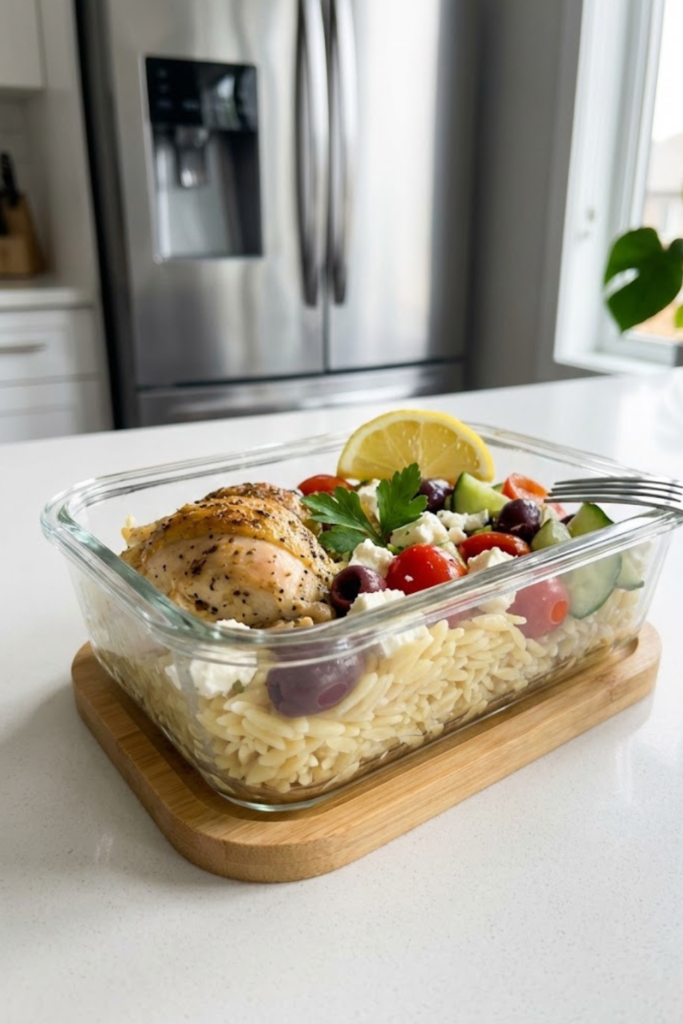
So there you have it. A dinner that looks fancy, tastes like a Greek vacation, but cooks in one pan in under half an hour. It really doesn’t get much better than that. Whether you are trying to feed a hungry family on a Tuesday night or you just want a meal prep recipe that doesn’t taste like cardboard by Thursday, this Mediterranean Chicken Orzo Dinner is a winner.
I really hope you give this a try. It has saved me from ordering pizza more times than I can count. It’s comforting, healthy, and the cleanup is a breeze. If you make it, do me a favor—Pin this recipe to your “Weeknight Wins” or “Healthy Dinner” board on Pinterest! That way, you’ll know exactly where to find it the next time you are staring at a package of chicken thighs and wondering what on earth to make. Happy cooking!