(Hook) Honestly, I used to think cauliflower rice was just sad, soggy broccoli’s pale cousin! But listen, this Mediterranean cauliflower rice completely changed my mind. It’s not just a low-carb substitute anymore; it’s actually something I crave. By adding bright flavors like lemon zest, salty feta cheese, and fresh herbs, we transform a boring vegetable into a vibrant bowl of goodness. It’s incredibly easy to make, too. Let me show you how to make this veggie-loaded dish that actually tastes amazing!

Mastering the Mediterranean Flavor Profile
I have to be real with you guys, my first few attempts at “healthy” vegetable rice alternatives were disasters. They were bland, colorless, and frankly, depressing. It wasn’t until I started treating the cauliflower like pasta or couscous—a blank canvas waiting for serious flavor—that things clicked. The “Mediterranean” label gets thrown around a lot, but for this recipe, it means specific, punchy ingredients that wake up your taste buds.
We aren’t just sprinkling some oregano around and calling it a day. You need to build layers.
The Holy Trinity of Flavor
In my kitchen experience, the success of this dish relies on three things: good fat, bright acid, and fresh herbs. You need quality extra virgin olive oil; don’t use the cheap stuff here because you will taste it. Then, you need acid to cut through the earthiness of the cauliflower. Fresh lemon juice is non-negotiable for me. Bottled lemon juice just tastes flat. Finally, fresh herbs like parsley or dill add a pop of color and freshness that dried herbs just can’t match.
Don’t Fear the Salt
Another mistake I used to make was under-seasoning. Cauliflower is naturally very mild. It needs salt. But here is the trick: get some of your saltiness from ingredients rather than just the salt shaker. Briny Kalamata olives and tangy feta cheese provide those salty pops that make this dish addictive. When you combine that salty feta with the bright lemon and rich olive oil, you suddenly have a side dish that steals the show from the main protein.

Gathering Your Essential Ingredients
Okay, let’s talk shop about what you actually need to buy. I’m a busy teacher and mom, so I am all about convenience, but sometimes taking a shortcut affects the final dish too much. Because this recipe relies on just a few key components, the quality of what you put in really matters. There’s nowhere for bland flavors to hide here. You need the right tools for the job, and in this case, the right ingredients make all the difference between a sad bowl of soggy veggies and a vibrant dinner that you actually look forward to eating.
Fresh vs. Frozen Cauliflower: The Great Debate
This is the big question I always get. Can you use frozen riced cauliflower? Yes, absolutely. I do it all the time when it’s a Tuesday night, grading is piling up, and I’m utterly exhausted. It is a massive time-saver.
However, you need to know what you are getting into. I have learned through sad experience that frozen cauliflower holds a ton of excess water as ice crystals. If you dump a bag of frozen cauliflower straight into a pan with oil, you end up steaming it instead of sautéing it, resulting in cauliflower soup instead of fluffy rice. If you use frozen, you usually have to cook it much longer on high heat to evaporate that liquid first.
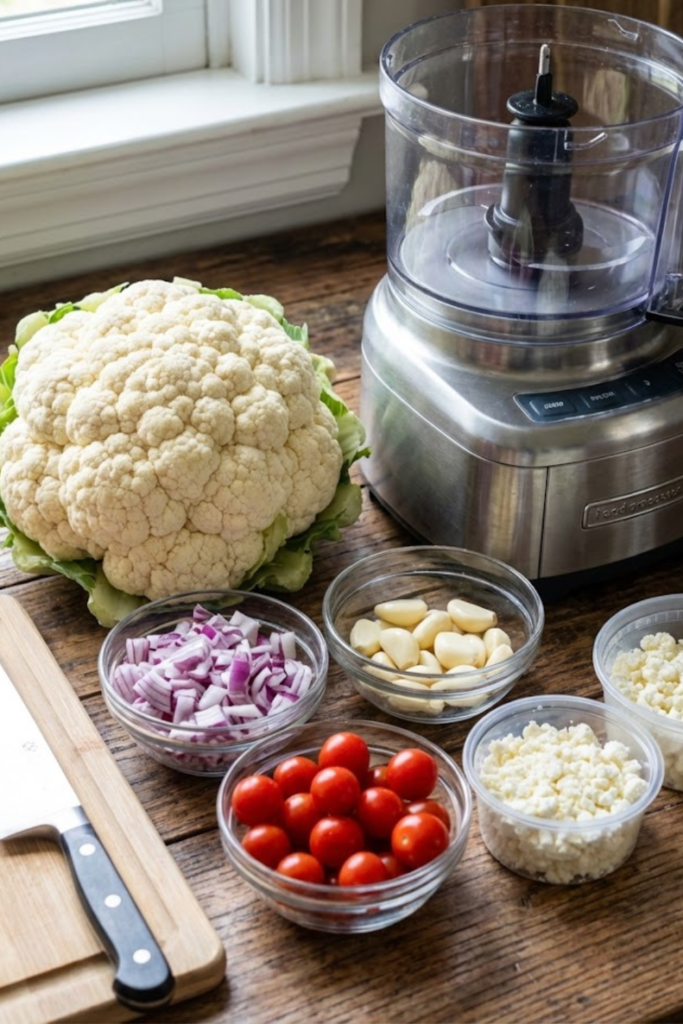
If you have the extra ten minutes on a weekend for meal prep, buying a fresh, firm head of cauliflower and ricing it yourself in a food processor yields a much better, crunchier final texture. It doesn’t get as mushy. It’s an extra step (and one more thing to wash), but sometimes it’s worth it for that perfect bite.
The Flavor Makers Checklist
Besides the cauliflower itself, here is your quick grocery list checklist for the mix-ins. Don’t skimp on these—they are the backbone of that vibrant Mediterranean vibe!
- Red Onion and Garlic: These aren’t just optional toppings; they are your aromatic base. You need to sauté the finely diced red onion first to bring out its natural sweetness and get some color on it. For the garlic, fresh cloves that you mince yourself will always taste punchier and better than the stuff in a jar.
- Cherry or Grape Tomatoes: I love halving these. You want them cut so their juices can release quickly. When they hit the hot pan, they burst slightly, caramelize a little bit on the edges, and create a rustic, sweet sauce that coats the cauliflower grains perfectly.
- Kalamata Olives: Please make sure they are pitted! I once forgot to double-check and nearly cracked a tooth on a pit. These bring that crucial salty, briny element that salt alone can’t provide. If you absolutely hate olives, a tablespoon of drained capers is a good substitute for that salty punch.
- Feta Cheese: This is my biggest tip: Get the block feta sold sitting in liquid brine if you can find it. It crumbles better, tastes significantly fresher, and has a much creamier texture than the pre-crumbled stuff sold in tubs, which is often coated in anti-caking agents that make it dry.
- Cucumber: Okay, this sounds weird to cook, right? That’s because we don’t cook it. I actually stir chopped, cool cucumber in at the very end, right when I take the pan off the heat just before serving. It stays crunchy and adds a refreshing, cool contrast to the warm rice and savory feta. Trust me on this one; don’t skip it. I prefer English or Persian cucumbers so I don’t have to deal with tough skins or large seeds.
Cooking Perfect Cauliflower Rice (No More Mush!)
This is the section where lives are changed. Seriously. The biggest complaint everyone has about cauliflower rice is the texture. It turns into mush so easily. I have made many bowls of soggy, sad cauliflower mush in my quest for this recipe.
Here is the secret I learned the hard way that makes all the difference: Moisture is the public enemy number one of fluffy cauliflower rice.
The “Dry Sauté” Technique
Whether you are using fresh cauliflower that you’ve just pulsed in the food processor, or a bag from the freezer, you need to get the water out before you add fat or flavor.
If I’m using fresh, I throw it in a large, dry skillet (no oil yet!) over medium-high heat for about 3-5 minutes. I just stir it around frequently. You will actually see steam coming off the pan. That’s good! We are evaporating the vegetable’s natural water content. This concentrates the flavor and ensures it can absorb the olive oil and lemon juice later without getting waterlogged. If you are using frozen cauliflower, you definitely need to do this step until it looks noticeably drier.
Don’t Overcrowd the Pan
Another major mistake? Trying to cook too much at once. If you heap a mountain of cauliflower into your skillet, it will trap its own steam instead of sautéing. Steaming equals mush every time.
If you are doubling the recipe, do yourself a favor and cook it in two batches. You want the cauliflower to have room to breathe and get some nice color on it, maybe even a few delicious browned bits. That is where the flavor lives! Once it’s tender-crisp (definitely not soft!), take it off the heat immediately. That is the exact moment to stir in your delicate herbs and feta so they warm through but don’t melt away completely.

Customizing Your Bowl with Tasty Add-Ins
The beauty of this Mediterranean cauliflower rice is that it’s a fantastic base for almost anything. While it’s a perfect side dish standing next to grilled fish or chicken kabobs, I often turn it into a main meal for myself when I’m home alone and want something quick but satisfying.
It’s super versatile, which is a lifesaver when you haven’t been to the grocery store in a few days and need to improvise dinner.
Pump Up the Protein
To transform this from a side dish into a full meal, you need protein. My go-to is usually leftover grilled chicken breasts chopped up into bite-sized pieces; just toss them in at the end to warm through.
But if you want to keep it vegetarian or vegan, chickpeas are amazing here. They fit the Mediterranean vibe perfectly. Just rinse a can of chickpeas, drain them well, and toss them in when you add the tomatoes. They add a nice creamy texture contrast to the cauliflower and boost the fiber so you actually stay full until bedtime.
Veggie Drawer Clean-Out & Swaps
This recipe is very forgiving if you have random veggies crisper drawer that need using up. I’ve added chopped fresh spinach at the very end, stirring until it just wilts into the warm rice. I’ve also used jarred roasted red peppers sliced thin when I didn’t have fresh cherry tomatoes on hand; they add a lovely smoky sweetness.
If you are dairy-free or following a Paleo or Whole30 plan, you can absolutely skip the feta cheese. It will still be delicious! You might just want to add a few extra chopped olives or a tablespoon of drained capers to make up for the missing salty punch that the cheese provides. It’s your bowl, so make it how you like it!
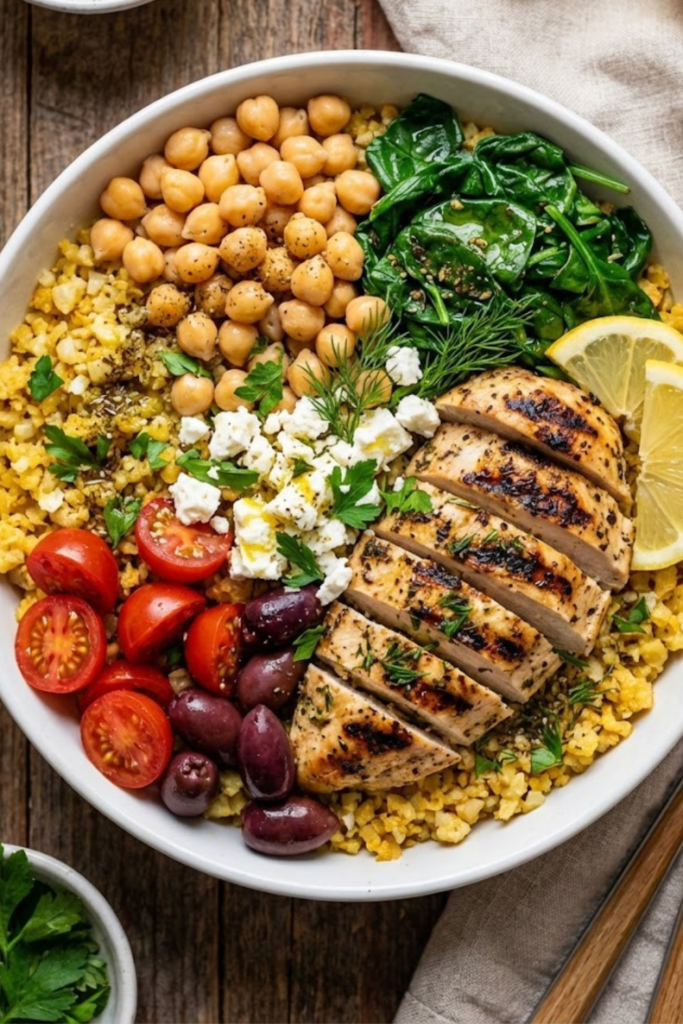
So, there you have it—my secret weapon for making vegetables exciting again. This Mediterranean cauliflower rice proves that eating healthy doesn’t mean sacrificing flavor. It’s vibrant, fresh, and honestly, just plain delicious.
Whether you need a quick side dish for a busy Tuesday night when grading papers is piling up, or a solid base for a healthy lunch prep for the week, this recipe delivers without much fuss. Give it a try this week and let me know what you think! If you enjoyed this recipe, I’d really appreciate it if you shared it to your favorite healthy eating board on Pinterest so others can find it too. Happy cooking!