I used to be absolutely terrified of cooking fish because I thought I’d ruin it and make my house smell like a bait shop, but this lemon dill salmon changed everything for me. It’s funny how many people think they hate salmon when really they just hate dry, overcooked fish that tastes like cardboard. I’ve made all the mistakes already—burning the skin, drying it out—so I can promise you this recipe is actually easy. It’s bright, buttery, and fast, meaning if you can handle boiling water, you can definitely get this dinner on the table without stressing out.
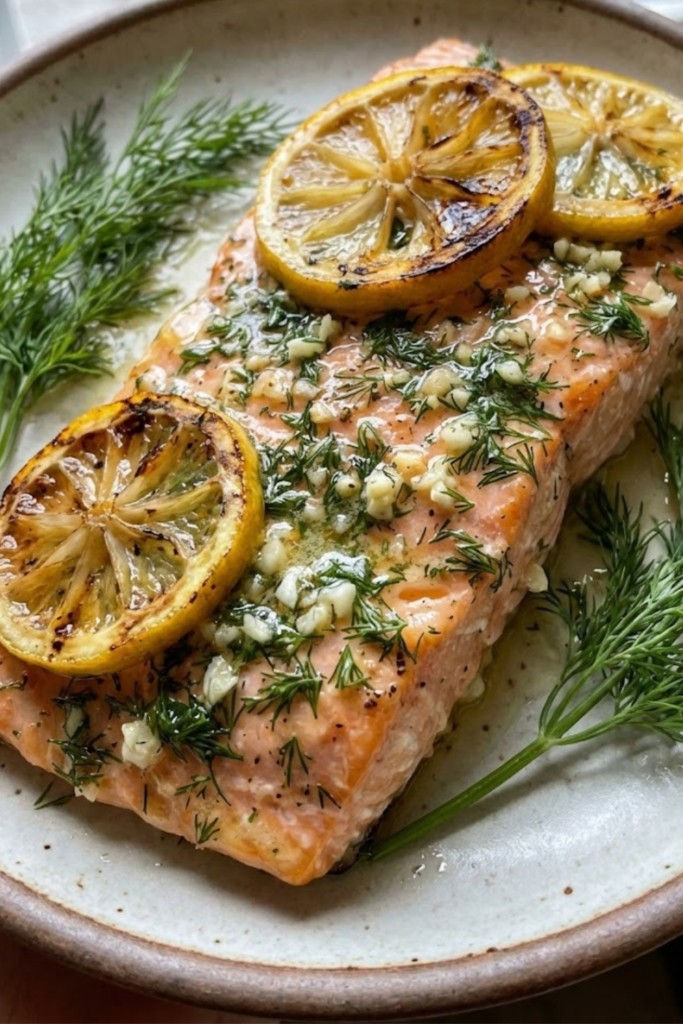
Why Lemon and Dill are the Ultimate Power Couple
Okay, let’s chat about flavor for a second. You might be wondering why every salmon recipe seems to call for lemon. It isn’t just because it looks pretty on the plate.
Here is the real deal: Salmon is a fatty fish. That is actually a good thing! That fat is where all the flavor and those healthy Omega-3s live. But sometimes, it can feel a little heavy on the tongue. That is where the lemon comes in. The acid in the lemon juice cuts right through that richness. It wakes the whole dish up.
Then you add dill. I love dill. It has this grassy, slightly anise-like taste that just works with seafood. I used to think dill was only for pickles, which was a huge oversight on my part. When you mix that bright citrus with the earthy herb and the rich fish? Magic happens. You don’t need a culinary degree to understand it; your tastebuds just know it works.
It also helps with the smell. A lot of people avoid making fish at home because they don’t want their kitchen to smell like the ocean for three days. The lemon zest actually helps neutralize that strong fishy odor while it cooks, so your house just smells fresh and buttery instead. I’ve tried using other herbs like rosemary or thyme, but honestly, they can be a bit too bossy. They take over the whole flavor. Dill is more chill. It works with the salmon rather than fighting against it. Plus, the little pop of green makes it look like you put in way more effort than you actually did, which is always a win in my book. It turns a boring Tuesday dinner into something that feels light, fresh, and actually enjoyable to eat.
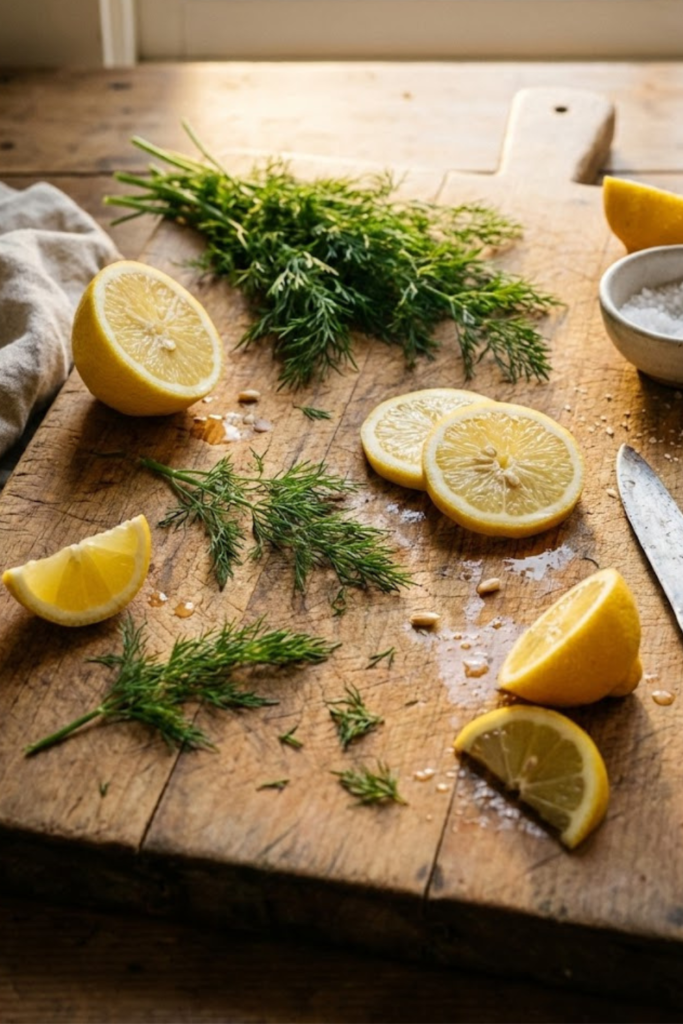
Ingredients You Actually Need
I am a teacher, not a millionaire, so I absolutely hate recipes that ask for twenty weird ingredients I’ll never use again that just end up gathering dust in my cupboard. For this lemon dill salmon, we are keeping it simple and efficient. Let’s talk about the fish first. Get the best you can afford, but personally, I usually grab Atlantic salmon. It is a bit fattier, which makes it way more forgiving if you leave it in the oven a minute too long while checking homework. Nobody likes dry fish, and that extra fat is your safety net here.
Next, there is the crucial matter of the herbs. Please, I am begging you, try to use fresh dill. Dried dill can work in an absolute emergency, but it really lacks that grassy “pop” that makes this dish shine. I have tried it with dried stuff out of laziness before, and the result was just… meh. For the fat to bind it all together, salted butter is my go-to. I know the fancy chefs on TV always say to use unsalted butter to “control the salt,” but I like living on the edge, and honestly, it just tastes better.
Finally, don’t ignore the little details. You really need actual fresh lemon juice. That stuff in the little yellow plastic bottle shaped like a lemon? Leave it at the store. It tastes like chemicals and ruins the whole vibe. For the garlic, obviously chopping it fresh yourself is best, but I have definitely used the jarred minced stuff when I was rushing around on a Tuesday night. I won’t tell anyone if you don’t.
One thing I almost forgot to mention is the lemon zest. Do not throw the peel away! Before you cut that lemon open to squeeze it, grab a grater and get that yellow zest off. That is where all the real flavor lives, and it makes the dish taste way fresher than just using juice alone. Also, keep some olive oil handy. I like to put a little bit on the baking sheet before laying the salmon down so the skin doesn’t stick. There is nothing worse than trying to serve dinner and leaving half the fish stuck to the pan. And if you are worried about wasting that big bunch of dill, don’t be. You can chop the leftovers and freeze them with a little water or oil. It saves money and keeps you from throwing food in the trash.
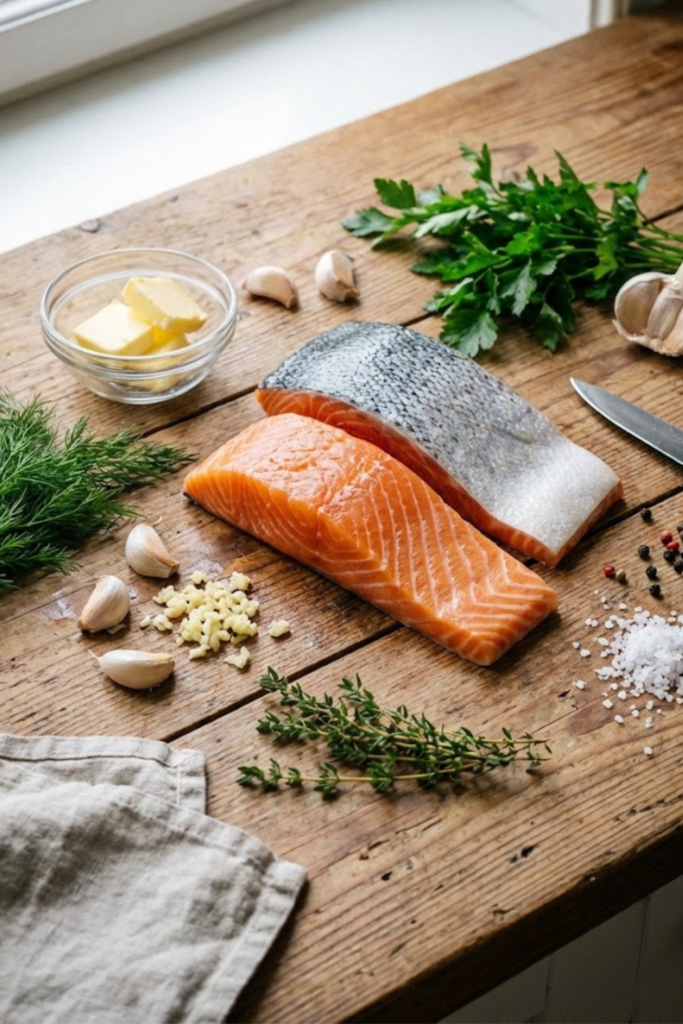
How to Cook Lemon Dill Salmon (Step-by-Step)
Alright, apron on. Let’s do this. I prefer baking this in the oven because frying it makes a mess of my stove, and I absolutely hate scrubbing grease off the backsplash on a school night. It is just cleaner and easier.
First, you have to dry your fish. This is the step everyone skips, and it drives me crazy! Take a paper towel and pat that salmon dry. If it is wet when it goes into the oven, it steams instead of baking, and nobody wants soggy, mushy fish. You want that butter to stick to the meat, not slide off a wet surface.
Next, in a small bowl, mix your softened butter with the chopped dill, minced garlic, and lemon zest. It should look like a green, chunky paste. Smear that paste all over the top of the salmon. Don’t be shy with it; you want every bite to have that flavor.
Pop it into the oven at 400°F (200°C). It usually takes about 12 to 15 minutes. Here is how I learned to check if it’s done without cutting it open and ruining the look: take a fork and gently twist the thickest part of the fillet. If it flakes easily and looks opaque—meaning it’s solid pink and not see-through jelly anymore—pull it out! It will keep cooking a little bit on the hot pan after you take it out. Trust me, it is way better to pull it out a minute early than a minute late.
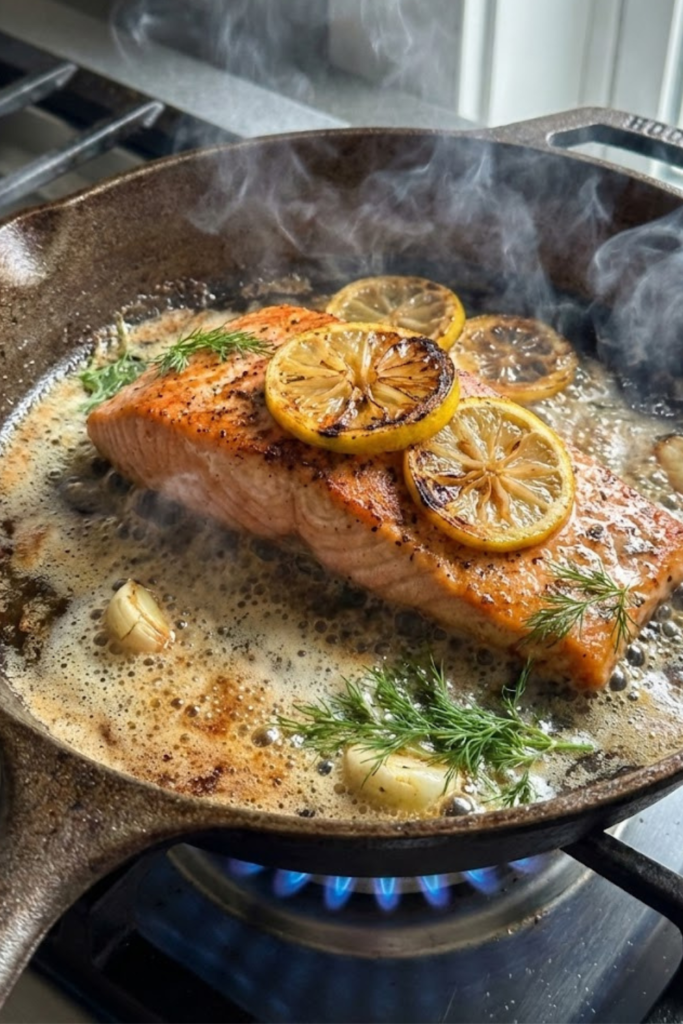
Common Mistakes That Ruin Salmon
I have ruined a lot of expensive fish in my life. It hurts the wallet and the ego. The biggest crime against salmon is overcooking. You know that white gunk that sometimes oozes out of the sides of the salmon? That is called albumin. It is just a protein, so it’s not dangerous, but it is a warning sign. If you see a ton of it, it usually means you cooked the fish too hard or too fast, and the muscles squeezed all the moisture out. A little bit is fine, but if your fish looks like it is covered in white foam, you definitely went too far.
Another mistake I made for years was cooking cold fish. If you take the salmon straight from the fridge and toss it right into the hot oven, the outside cooks way faster than the inside. That is how you end up with dry edges and a raw middle. I let my salmon sit on the counter for about 15 minutes while the oven preheats. It cooks way more evenly this way. It is a small trick, but it makes a huge difference.
Lastly, don’t be scared of salt. Fish needs salt. If you under-season it, it just tastes bland and kind of fishy. Make sure you sprinkle a little salt and pepper on the fillet before you slather on that butter mixture. It wakes up all the flavors.
One more thing I learned the hard way is ignoring the “rest” time. I know you are hungry and want to dig in right away, but you have to let the salmon sit for about 5 minutes after it comes out of the oven. If you cut into it immediately, all those delicious juices run out onto your plate, and the fish ends up dry anyway. Just let it chill on the pan for a bit. It finishes cooking gently and keeps the moisture inside where it belongs. Also, always run your finger down the center of the fillet before cooking to check for pin bones. Even “boneless” fillets sometimes have a sneaky bone left behind, and finding one with your teeth is never fun.
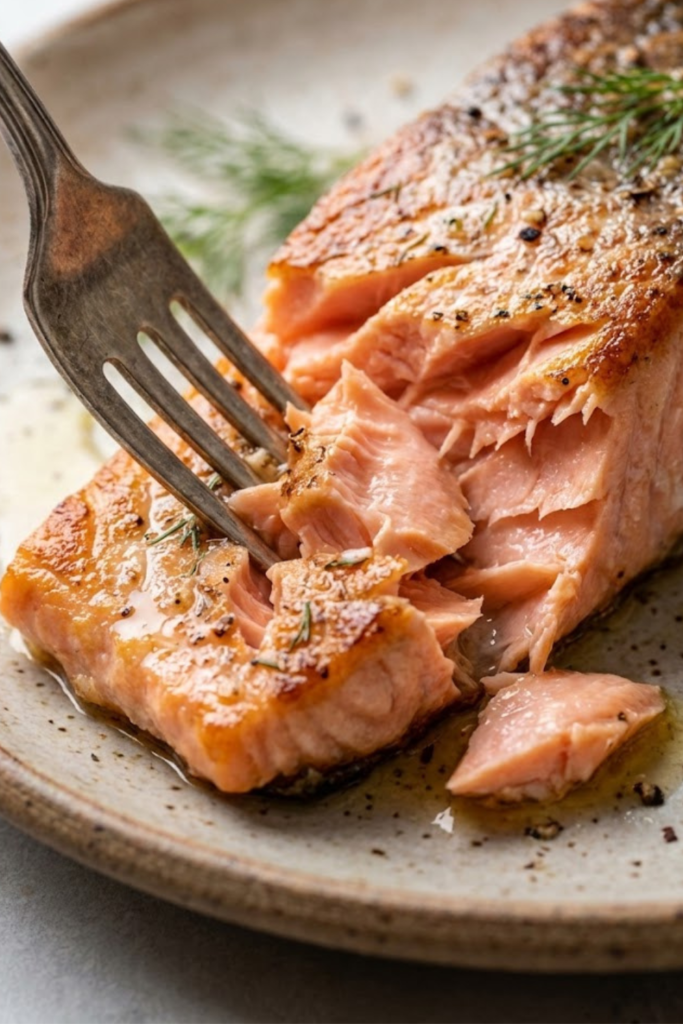
So, there you have it. You just survived cooking fish! This lemon dill salmon is a staple in my house because it feels fancy but takes zero effort. It’s perfect for those nights when you are exhausted but still want to eat like a real human being instead of having cereal again.
Serve this up with some roasted asparagus or just a big pile of rice to soak up that lemon butter. Give it a shot this week. I bet you’ll be surprised at how easy it actually is.
Pin this recipe for later—you’re going to want to make it again!