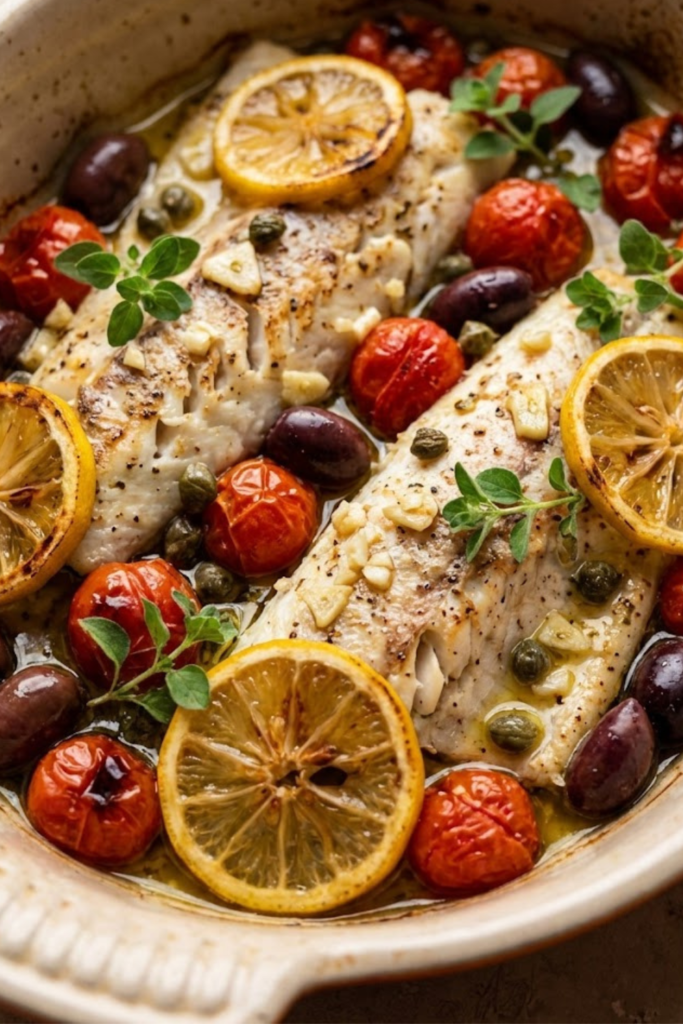
Did you know that eating fish just twice a week can significantly improve heart health? I still remember the first time I visited the coast of Greece—the scent of fresh oregano and saltwater in the air was absolutely intoxicating! That trip completely changed how I cook seafood. This Easy Mediterranean Baked Fish brings those vibrant, sunny flavors right into your kitchen without the expensive plane ticket. It is incredibly simple, yet it tastes like a gourmet meal! You are going to be obsessed with how the juices from the tomatoes and olives create the most delicious sauce. Let’s get cooking!
Why You Need This Easy Mediterranean Fish Recipe in Your Rotation
I’ll be real with you, for the longest time, I completely avoided making seafood on weeknights. I always thought it was way too fussy or that my house would end up smelling like a fish market for days. But then I stumbled onto this Easy Mediterranean Baked Fish method, and it was a total game changer for me and my family.
It’s Incredible for Your Heart
We all know we should be eating better, right? But sticking to a diet is hard when the food tastes like cardboard. The Mediterranean diet isn’t just some trendy fad; it’s actually backed by serious science.
Did you know that studies suggest people who eat fish twice a week can lower their risk of heart disease by significant margins? I read somewhere it could be up to 30%, which is a huge number. This recipe makes getting those heart-healthy fats and lean proteins actually enjoyable. You don’t feel like you are on a diet.
Faster Than Ordering Takeout
I’m a teacher, so by the time I get home, grade papers, and deal with life, my energy is usually at zero. The last thing I want is a complicated recipe with a million steps.
This Easy Mediterranean Baked Fish is prepped and in the oven in maybe 5 minutes flat. Seriously. You just dump the ingredients in a pan and let the oven do the heavy lifting. By the time you’ve set the table and poured a glass of wine, dinner is ready. It is literally faster than waiting for a pizza delivery.
No More “Rubber Fish”
I have to share a disaster I had a few years back. I tried to pan-sear some expensive halibut fillets on the stove. I didn’t get the pan hot enough, the fish stuck like crazy, and I ended up serving what looked like shredded rubber to my in-laws. I was so embarrassed.
Baking is so much more forgiving than pan-frying. The gentle heat of the oven, combined with the juices from the tomatoes and oil, keeps the fish moist. It is almost impossible to dry it out if you set a timer. If you are scared of ruining expensive seafood, this is the safest way to cook it.
Minimal Cleanup (My Favorite Part)
Let’s talk about the dishes for a second. I hate scrubbing pots and pans with a passion. With this recipe, you line one baking dish, toss everything in, and that’s it.
Once dinner is done, cleanup takes like two minutes. It’s a total lifesaver on busy Tuesday nights when the sink is already full of breakfast dishes I ignored.
It Works With Whatever You Have
Another reason I keep coming back to this dish is how versatile it is. You don’t need a specific fancy fish. I’ve made this Easy Mediterranean Baked Fish with cod, halibut, snapper, and even cheap tilapia fillets when the budget was tight.
The sauce created by the bursting tomatoes and salty olives covers up any “fishy” taste, making it great for picky eaters too. It just works, every single time.

Essential Ingredients for Authentic Mediterranean Flavor
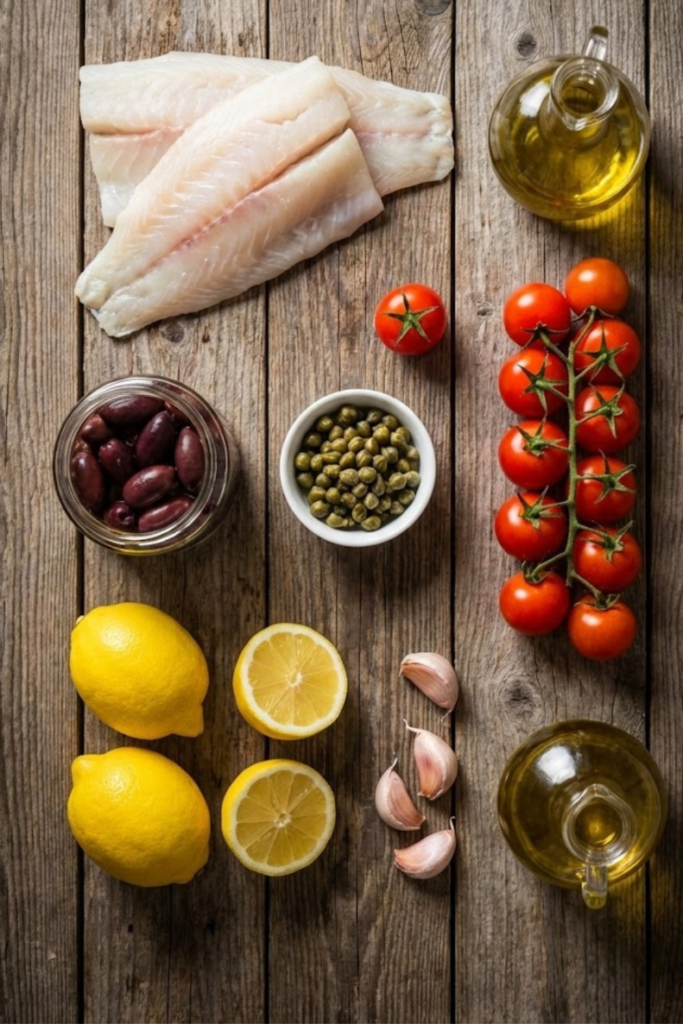
You can’t make good food with bad ingredients. That is something I tell my students about their projects, and it is true for cooking too. You don’t need the most expensive stuff, but you need the right stuff. Here is what I grab from the grocery store to make this Easy Mediterranean Baked Fish taste amazing.
White Fish Fillets
I usually go for cod or halibut because they are thick and hold up well in the oven. You want a white fish that is mild and flaky. Please, do not buy fish that smells “fishy.” Fresh fish should smell like the ocean, clean and salty. If it smells funky, put it back! I’ve made the mistake of buying the clearance fish before, and let’s just say we ordered pizza that night. Tilapia works if you are on a budget, but handle it gently because it breaks apart easier.
The Aromatics
Fresh garlic is non-negotiable here. None of that stuff in the jar that tastes like plastic. I like to slice my garlic cloves thin so they get soft and sweet while baking. I also use red onion for a bit of a bite and fresh lemon zest. The zest is where all the real lemon flavor lives, while the juice just adds the sour acid.
The Salty Kick
This is the secret weapon. Kalamata olives and capers add that deep, salty flavor you find in Greek food. I used to hate olives when I was a kid, but cooked in this sauce? They are totally different. Capers are those little green berries in vinegar—they add a nice pop of brine. If you are watching your salt intake, just rinse them off first.
Fresh Herbs & Spices
Dried basil is fine, but please try to get fresh parsley for the end. It brightens everything up. I also use plenty of dried oregano. It’s strong and earthy. If you have fresh oregano, that’s even better, but the dried stuff from your pantry works just fine.
Quality Olive Oil
Since there is no butter in this recipe, the flavor comes from the oil. Use Extra Virgin Olive Oil. It doesn’t have to be the $30 bottle, but it should taste good on its own. It pulls the sauce together and keeps the fish moist.
Step-by-Step Instructions for Perfectly Baked Fish
Okay, class is in session! Just kidding. But really, following the steps in the right order matters here. I used to just throw everything in a pan and hope for the best, but I learned that a little bit of order makes the difference between “meh” fish and “wow” fish. Here is how I do it.
1. Prep the Pan and Oven
First things first, turn your oven to 400°F (200°C). You want a hot oven. If the oven is too cool, the fish just steams slowly and gets kind of rubbery. While that heats up, grab a 9×13 baking dish. I like using a glass one or a white ceramic one because it looks nice enough to put right on the dinner table. Less dishes to wash!
2. Dry the Fish (Do Not Skip This!)
Please take a paper towel and pat your fish fillets dry. If the fish is wet, the oil won’t stick, and the seasoning slides right off. It creates a weird texture. Just give it a quick pat so it’s nice and dry before you put it in the baking dish. Place the fillets right in the center of the pan, not touching each other if possible.
3. Arrange the Veggies
Now, scatter your cherry tomatoes, garlic slices, olives, and capers all around the fish. I try to keep them mostly off the top of the fish so the fillets can roast, but it’s okay if things get messy. It’s supposed to look rustic.
4. Seasoning
Drizzle the olive oil over everything—the fish and the veggies. Use your hands to rub it gently onto the fillets if you need to. Then, sprinkle your dried oregano, salt, pepper, and lemon zest over the whole dish.
5. Baking Time
Pop the dish in the middle rack of your oven. It usually takes about 15 to 20 minutes. This depends on how thick your fish is. If you have really thick pieces of halibut, it might take 20. Thin tilapia might only take 12.
6. Visual Cues: Is it Done?
I see people overcook fish all the time because they are scared of eating it raw. Here is the trick: Take a fork and gently twist it into the thickest part of the fish. If the meat flakes apart easily and looks white (opaque) all the way through, it is done. Take it out immediately. If it looks shiny or translucent inside, give it another 2 minutes.
7. Finishing Touches
Right when it comes out of the oven, squeeze that fresh lemon juice over everything. The heat will release the lemon aroma and it smells heavenly. Scatter your fresh parsley on top for color, and you are ready to eat.
What to Serve with Mediterranean Baked Fish
Since the fish cooks so fast, you need sides that are just as quick. I used to make the mistake of planning complicated side dishes that took longer than the main course, and everything got cold. Now, I keep it simple. Here is what I usually serve to make it a full meal.
Fluffy Grains
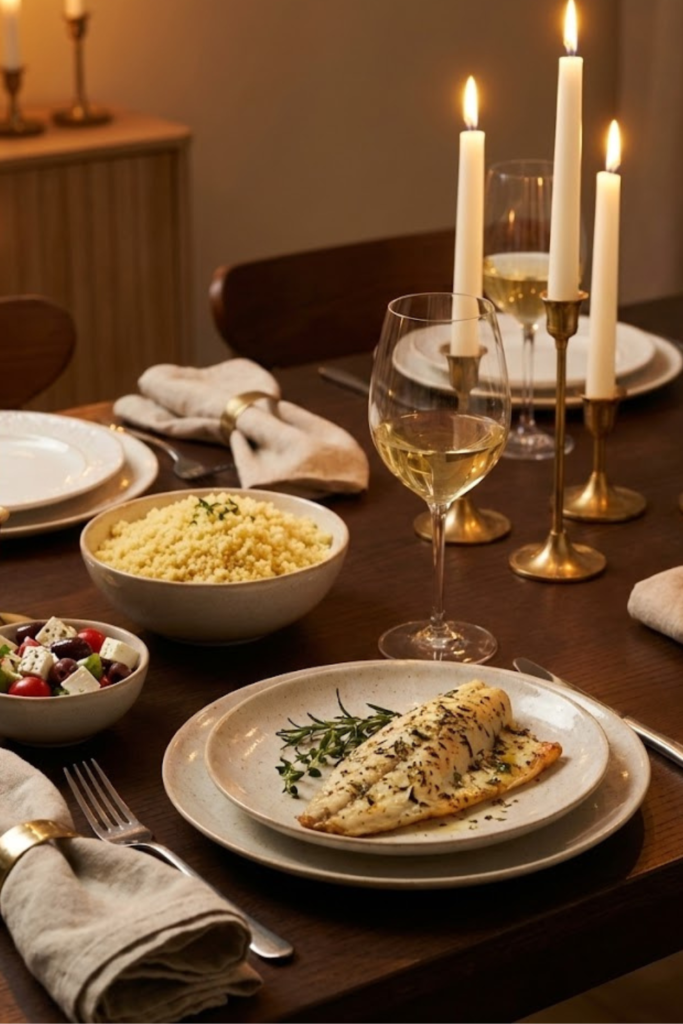
My absolute favorite thing to serve with this is couscous. It is the easiest grain in the world to cook—you literally just add hot water and let it sit. It soaks up the tomato and lemon juices from the fish beautifully. If I’m trying to be a bit healthier, I’ll do quinoa, but honestly, couscous tastes better here. A simple lemon-herb rice works great too if you have a rice cooker.
Roasted Vegetables
Since your oven is already hot at 400°F, use it! I often toss a sheet pan of asparagus or broccoli with a little oil and salt and slide it onto the bottom rack while the fish cooks on the top rack. They usually finish at the exact same time. It saves me from having to stand over the stove sautéing spinach while I’m trying to set the table.
A Crisp Greek Salad
If it’s summer and too hot to have the oven on for long, I skip the roasted veggies and just make a cold salad. I chop up cucumbers, green peppers, red onion, and throw in a big block of feta cheese. The cold, crunchy salad offers a nice contrast to the warm, soft fish.
Crusty Bread (Don’t Skip This!)
This is important. The sauce that forms in the bottom of the baking dish—the mix of olive oil, lemon juice, and tomato juice—is liquid gold. You need a piece of crusty French bread or garlic bread to mop it up. My husband says the bread dipped in the sauce is the best part of the meal.
Tips for Storing and Reheating Leftovers
I’ll be honest, fish is always best right when it comes out of the oven. But sometimes my eyes are bigger than my stomach and we have leftovers. There is a right way and a very wrong way to handle leftover fish. I learned this the hard way after ruining a perfectly good lunch.
How to Keep it Fresh
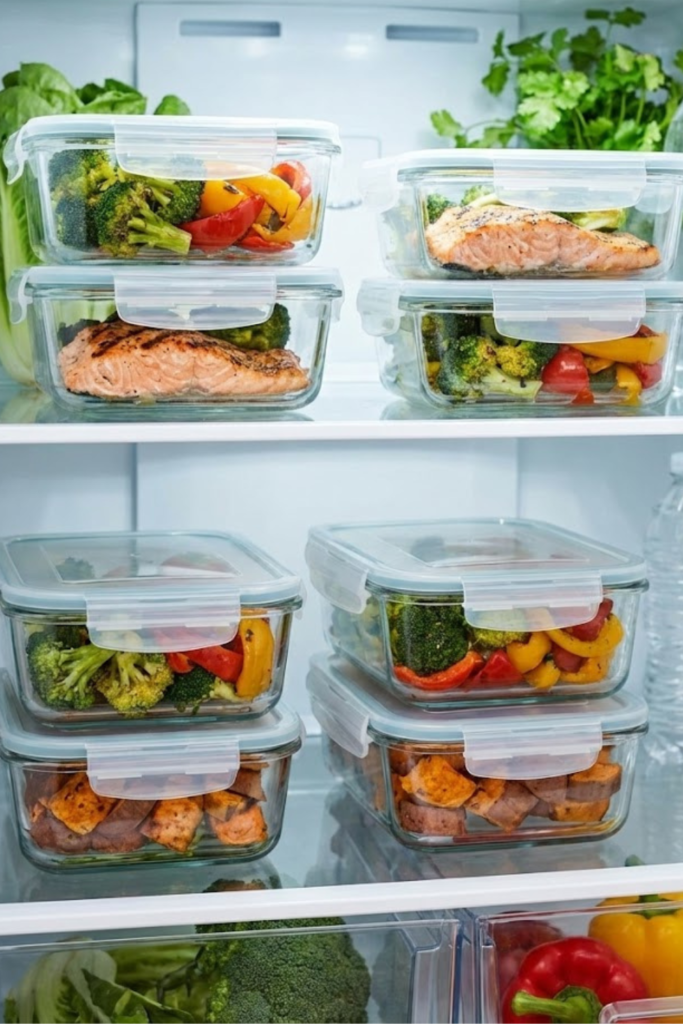
If you have leftovers, let them cool down first. Then, put them in a container with a lid that fits tight. You can keep this in the fridge for about 2 or maybe 3 days tops. After that, it starts to get a little sketchy, and I wouldn’t risk eating it.
Please, Do Not Microwave It!
Okay, this is a big one. If you take this to work, please do not zap it in the staff room microwave. Your coworkers will hate you. Microwaving fish makes it smell super strong and turns the texture into rubber.
Instead, I reheat mine in the oven or a toaster oven. I set it to a low temperature, like 275°F. Splash a tiny bit of water or stock on it, cover it with foil, and let it warm up for 10 or 15 minutes. It tastes almost as good as fresh this way. If I’m in a hurry, I just eat it cold over a salad. It’s actually pretty good cold!
Can You Freeze It?
People ask me this a lot. Technically, yes, you can freeze cooked fish. But should you? I say no. White fish like cod or halibut has a lot of water in it. When you cook it, freeze it, and thaw it out again, it turns into mush. It just falls apart and gets watery. I really suggest you just eat it within a few days or don’t cook more than you can eat.
Leftover Makeovers
If you are bored of eating the same thing two nights in a row, change it up. I like to flake the cold fish apart and put it in corn tortillas for fish tacos. Add some cabbage and salsa, and it’s a totally new meal. Or, toss it into some pasta with a little extra lemon juice.
So, that is really all there is to it. You don’t need to be a master chef to make a healthy dinner that actually tastes good. This Easy Mediterranean Baked Fish has saved me on so many busy school nights. It proves that you can eat good food without spending hours in the kitchen.
I really hope this recipe brings a little bit of sunshine to your table, just like it did for mine. If you give it a try, please let me know how it turned out! And if you want to find this recipe again when you are standing in the grocery store wondering what to buy, go ahead and pin this on Pinterest. It helps me out a lot, too. Happy cooking!