Did you know that people who follow a Mediterranean-style diet have a 30% lower risk of heart disease? That is a huge number! I honestly used to think that “healthy” meant “tasteless,” but then I discovered this Beginner Mediterranean Veggie Pasta. Wow! My first attempt was a bit of a disaster—I basically turned the zucchini into mush—but once I got the hang of it, this became my go-to Tuesday night lifesaver. It’s fast. It’s colorful. It’s exactly what you need when you’re tired but want something that feels fancy! Whether you are a total pro or just starting your cooking journey in 2026, you can totally do this.
The Essential Ingredients for Success
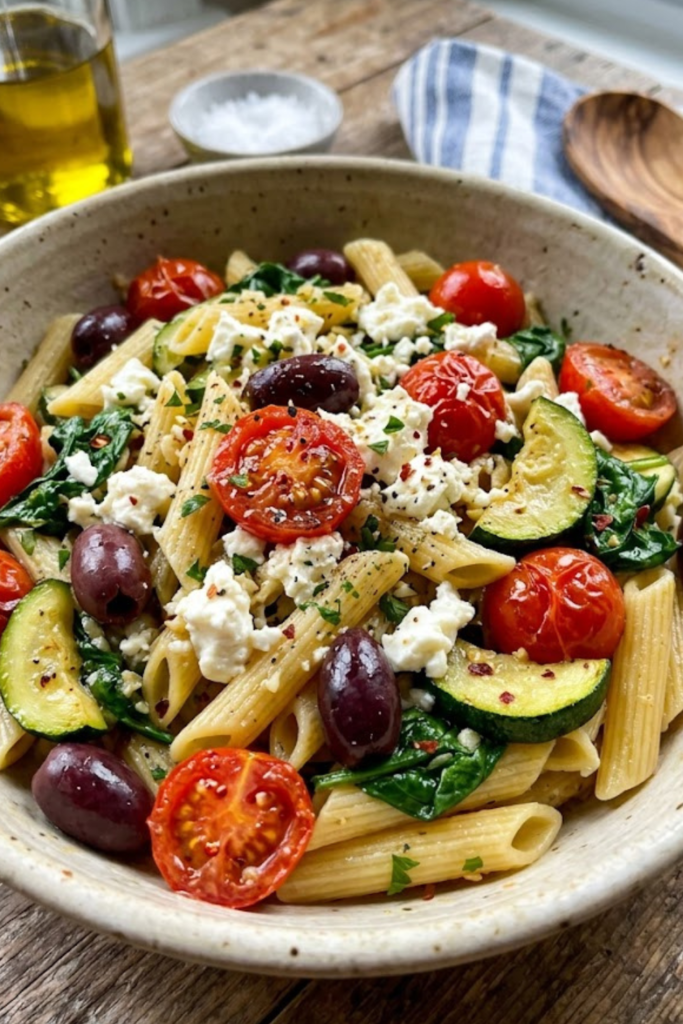
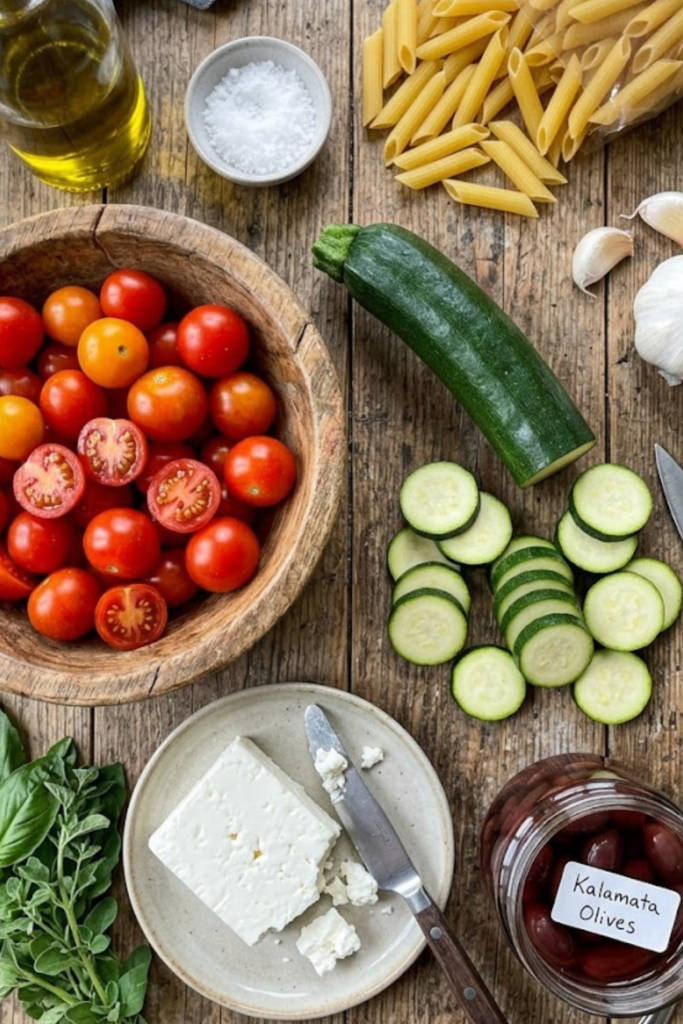
In my years of teaching, I’ve noticed that people usually fail at a recipe because they didn’t pick the right stuff at the store. For this Beginner Mediterranean Veggie Pasta, the ingredients are everything. I remember one Tuesday I was in such a rush, I grabbed some old zucchini from the back of my fridge. It was a mushy mess! Don’t do that. You want veggies that are crisp and bright.
The pasta choice really matters here too. I usually stick with whole wheat penne or even chickpea pasta if I’m feeling fancy. It has a nutty flavor that works great with the olive oil. If you use the cheap, thin white pasta, it just gets lost. You want something with some “heft” to it so it holds the veggies.
Then there’s the “flavor makers.” Kalamata olives and feta cheese are my best friends in the kitchen. I know some people think olives are weird, but in this dish, they provide the salt you need. And please, buy the block of feta cheese. The pre-crumbled kind is often dry and tastes like cardboard. Crushing a fresh block with your hands is actually pretty fun, too. I always tell my students that getting your hands a little messy makes the food taste better.
Lastly, don’t skimp on the garlic and oil. Use the good extra virgin olive oil. Since we aren’t making a heavy cream sauce, the oil is what carries all the flavor. It’s the glue that holds the whole meal together. Getting these basics right is the secret to making this dish taste like you spent hours on it, even though it only takes fifteen minutes. Just make sure your garlic is fresh—the stuff in the jar is way too sour for this.
Steps to Perfectly Sauté Your Veggies
Listen, I have a confession. I used to be the absolute queen of “soggy vegetable soup” when I was trying to make pasta. I would just throw everything in the pan at once and hope for the best. Big mistake! If you want your Beginner Mediterranean Veggie Pasta to actually taste like food and not baby puree, you gotta respect the sauté.
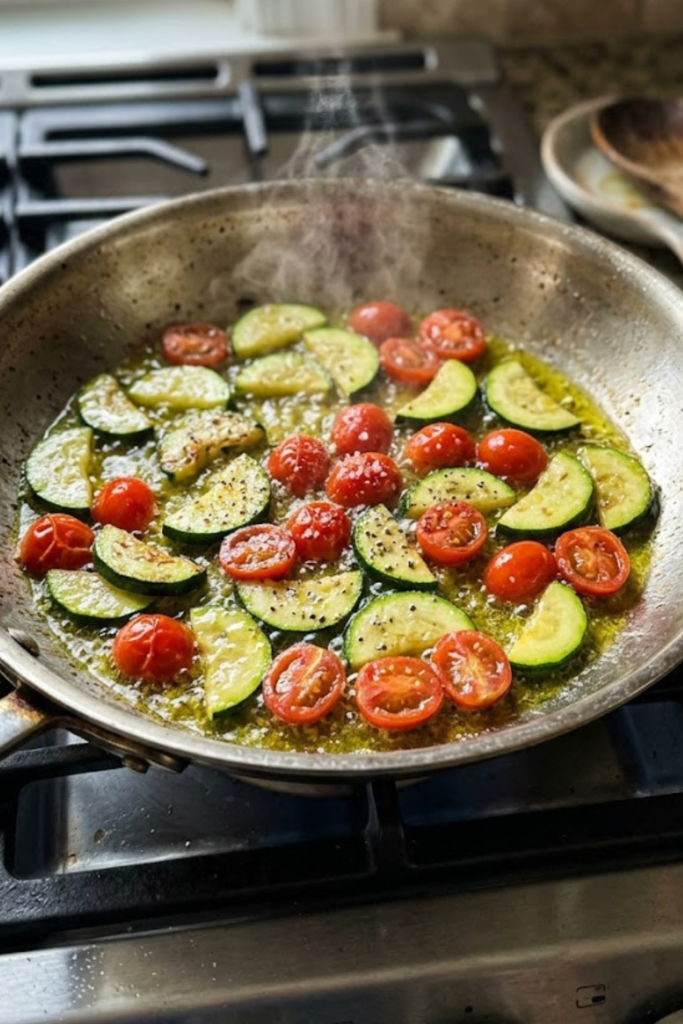
The first thing I learned the hard way? Don’t crowd the pan. I remember this one time I tried to cook for six people in a tiny 8-inch skillet. It was a total disaster! The veggies just steamed in their own juice instead of getting those nice brown edges. Now, I always use my big cast iron or a wide stainless steel pan. You want those zucchini slices to have their own little personal space, you know?
Getting the Heat Right
First, get that olive oil shimmering. I usually put it on medium-high heat. A little trick I use is dropping one tiny piece of onion in. If it sizzles right away, we are in business! If it just sits there looking sad, wait another minute.
The Sauté Order Matters
I always start with the firmer stuff. Toss in your zucchini first. I like to let them sit for about two minutes without touching them. This is how you get that golden color that looks so good on camera. I used to be so impatient and would stir them constantly, but then they never got that “char.”
Next, I add the cherry tomatoes. I wait until I hear them start to pop. It’s like a tiny delicious orchestra in your kitchen! Once they burst, they release all that sweet juice that acts as a base for your sauce.
Don’t Burn the Garlic!
Here is a pro tip: add the garlic last. I used to put it in at the start and it would turn black and bitter within seconds. Gross. Now, I wait until the last 60 seconds of cooking. Just toss it in, stir it around until you smell that amazing aroma, and then hit it with your pasta water. It makes a huge difference, trust me.
Honestly, it took me like twenty tries to get this right, so don’t be mad if your first pan is a bit wonky. Cooking is just a series of delicious mistakes until you find what works!
The Secret to a Light Mediterranean Sauce
I used to think a sauce had to come out of a jar or be made of heavy cream. But for a Beginner Mediterranean Veggie Pasta, you want something that feels light and fresh. The real trick is something I call “liquid gold.” It’s just the starchy water your pasta boiled in! Before you drain your noodles, scoop out about half a cup. When you toss that water into your pan with the olive oil and veggies, it creates a silky coating that sticks to the pasta perfectly. I remember the first time I did this; I was so surprised at how it turned a dry bowl of noodles into something that looked like it came from a fancy cafe.
This water has all that starch from the noodles, so it acts like a natural thickener. It basically marries the olive oil to the pasta so you don’t end up with a greasy puddle at the bottom of your plate. You want the pasta to look glossy, not wet. If you see the sauce is too thick, just add a splash more of that water until it looks just right. It’s much better than adding more oil, which can make the whole thing feel heavy on your stomach. It helps the flavors of the tomatoes and garlic coat every single piece of pasta instead of just sitting at the bottom of the bowl.
To make the flavors really pop, you need a lemon. I tell my students to use the zest, which is the yellow part of the skin, because it has all the oils and smells amazing. If you just use the juice, it can be a bit too sour, but the zest is just right. Throw in some fresh basil at the very end too. If you put the basil in too early, it gets all wimpy and brown, and we want it to stay bright and green! I usually just tear the leaves with my hands instead of cutting them with a knife. It keeps the edges from turning dark, and honestly, it’s just one less thing to wash. Plus, the smell of fresh basil hitting that warm pasta is probably the best part of the whole cooking process.
Lastly, you have to be smart about your seasoning. Don’t just dump all your salt in at the end. I add a little bit to the veggies while they sauté so they get tasty from the inside out. Then, I add a bit more after the pasta is mixed in. But you gotta remember—the feta cheese and olives are already pretty salty. I always take a bite first to see if it needs more. A good crack of black pepper adds a nice little bite that finishes everything off. If you like a tiny bit of heat, a pinch of red pepper flakes goes a long way here without being overwhelming. It’s these simple steps that make a huge difference in how the meal tastes. It’s all about building those layers so every forkful is perfectly balanced.
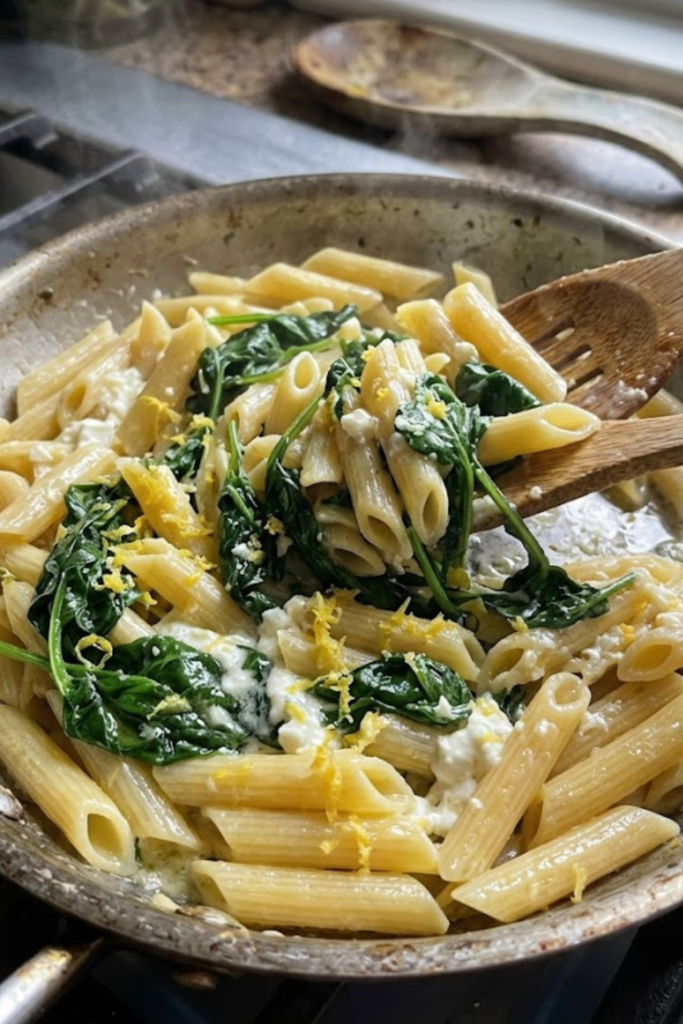
Wrapping up this Beginner Mediterranean Veggie Pasta always makes me feel like I’ve actually accomplished something big, even if it only took me fifteen minutes. I used to think that cooking healthy meals for my family had to be this huge production that left the kitchen a disaster. But honestly? It’s just about getting those fresh veggies in the pan and letting the flavors do the heavy lifting. I really hope you give this one a try, especially on those nights when you feel like you have zero energy left.
Just remember the big takeaways: pick the fresh stuff, don’t crowd your pan when you’re sautéing, and never, ever throw away that pasta water! That water is basically liquid gold. If you mess up the first time, don’t sweat it. I once burned an entire bag of pine nuts trying to be fancy, and we still ate the pasta anyway. It’s all part of the learning process.
I’d love to hear how yours turned out! Did you add extra feta? Maybe some red pepper for a kick? If you found this helpful and want to save it for later, please share this post on Pinterest! It really helps me out and lets other people find easy, healthy recipes too. Happy cooking!