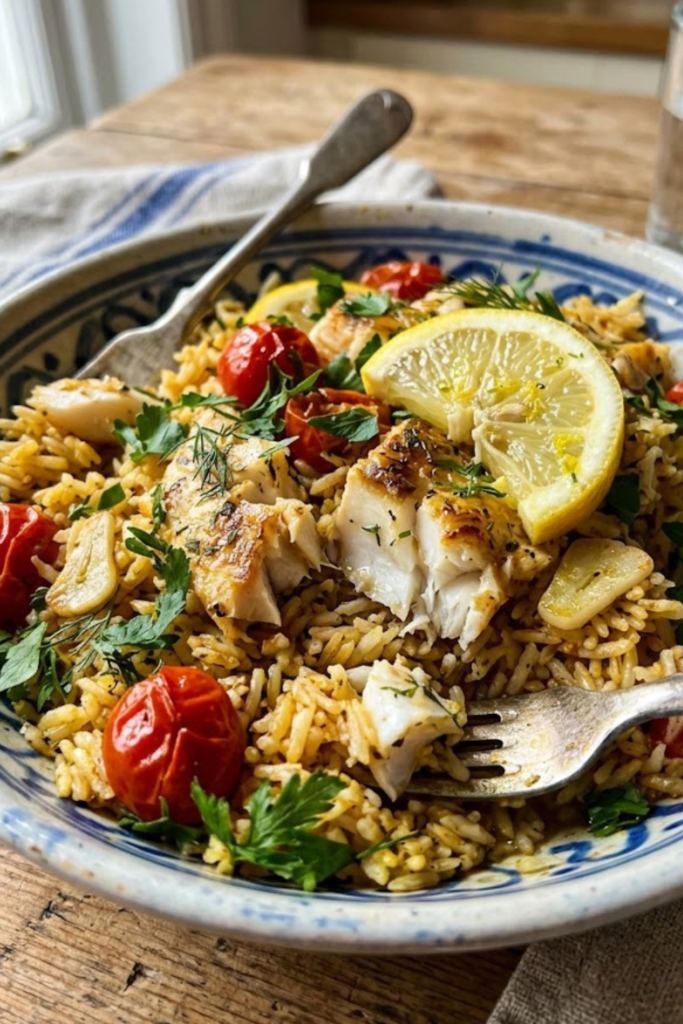
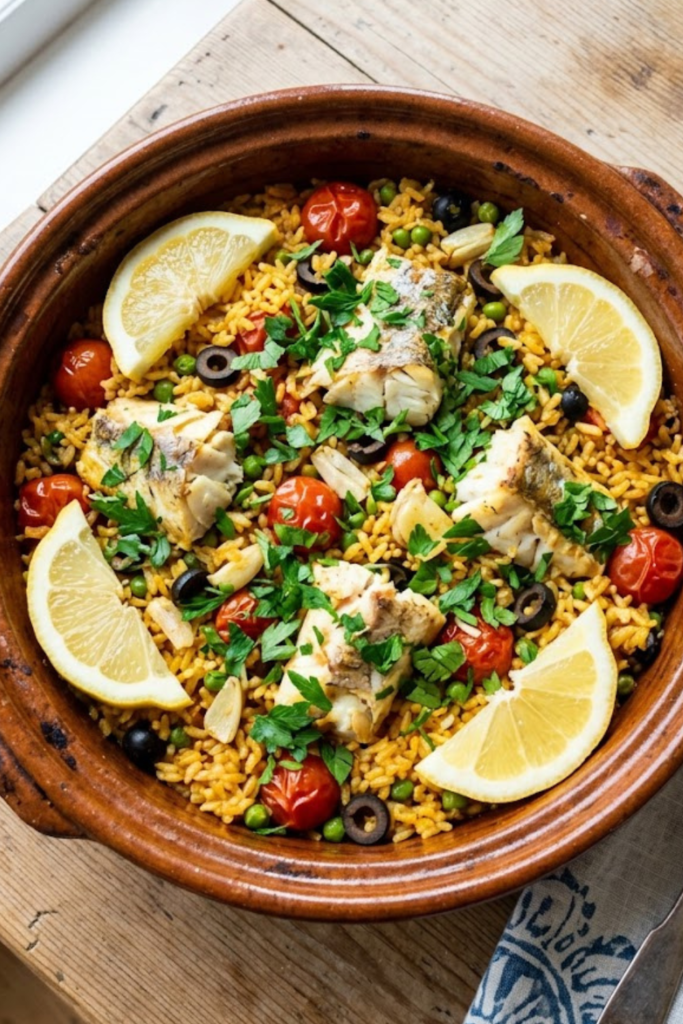
I once heard that “cooking is like love; it should be entered into with abandonment or not at all.” Well, I abandoned my fear of cooking seafood about five years ago, and I’ve never looked back! If you’re nervous about dry fish or bland grains, you are in the right place. This Beginners Mediterranean Fish Rice is the holy grail for anyone wanting a fancy-tasting meal without the professional chef stress. We are talking about fluffy rice soaked in tomato broth and tender flakes of fish that literally melt in your mouth! It’s healthy, it’s fast, and honestly, it makes the house smell like a seaside villa in Greece.
Choosing the Best Fish for Beginners
I’ve spent a lot of time trying different types of fish for this dish, and let me tell you, not all fish are the same when you’re cooking them with rice. If you are just starting out, you want a fish that isn’t going to fall apart into tiny mushy pieces the moment you stir the pot.
Opt for Firm White Fish
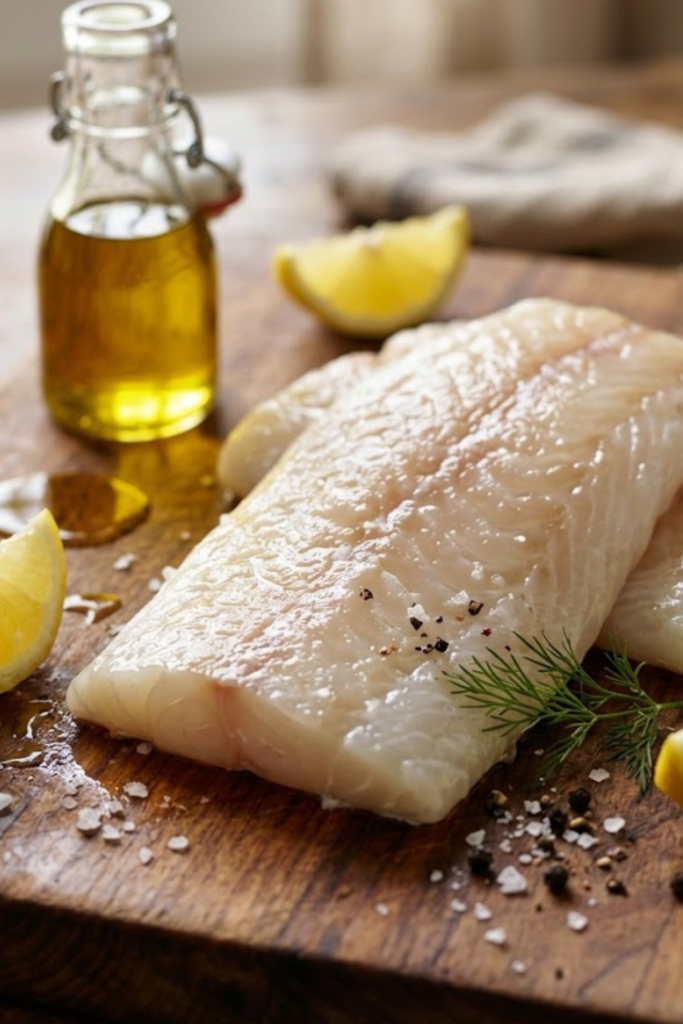
I usually tell my friends to go with something like cod, halibut, or even tilapia. These are what we call “forgiving” fish. They have a mild flavor thataks up all those Mediterranean spices, and they stay in nice, big chunks. Avoid super oily fish like salmon for this specific recipe, as it can make the rice feel a bit heavy. Cod is my personal favorite because it’s thick and stays really juicy.
Fresh vs. Frozen
Don’t feel like you have to spend a fortune at a fancy fish market. Frozen fillets are actually great and often fresher than the “fresh” fish at the grocery store since they are frozen right on the boat. The big secret here is to thaw them completely in the fridge overnight. If you try to cook them while they are still icy, they release too much water, and your rice will end up being a soggy mess instead of fluffy.
Pre-seasoning Tips
Before you do anything else, grab some paper towels and pat those fillets dry. If the fish is wet, the spices won’t stick, and it won’t sear right. I like to rub mine down with a little olive oil, salt, and maybe a dash of paprika before it even touches the pan. This helps the flavor get deep into the meat rather than just sitting on top. It’s a small step, but it makes a huge difference in the final taste!
The Secret to Fluffy, Flavorful Rice
I used to think that making good rice was just about the water-to-grain ratio, but I was so wrong. If you want that restaurant-style Mediterranean rice, you have to treat the grains like they are the star of the show, not just a side dish. Here is how I get it right every single time without it turning into a big sticky clump.
Toasting the Grains
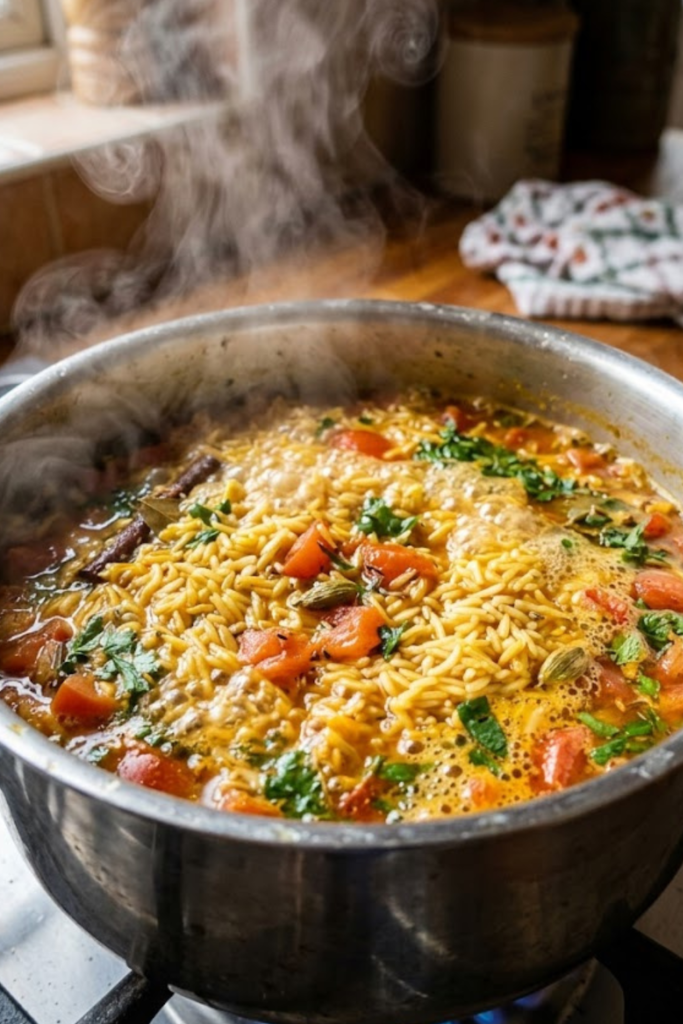
The biggest game-changer for me was learning to toast the rice. After you heat up some olive oil and sauté your garlic and onions, throw the dry rice right into the pan. Stir it around for about two minutes until the edges of the rice look a little translucent. This coats each grain in oil, which stops them from sticking together later. Plus, it gives the dish a nutty smell that is just incredible.
Liquid Ratios
For this recipe, I usually stick to a 1:2 ratio—one cup of rice to two cups of liquid. But don’t just use plain water! I always use a good vegetable broth and mix in a tablespoon of tomato paste. This gives the rice that beautiful orange-red color and a deep, savory taste. Make sure the liquid is warm when you add it to the pan so the temperature doesn’t drop too fast.
Herb Infusion
While the rice is simmering, I toss in a couple of bay leaves and a big pinch of dried oregano. You want these herbs to cook with the rice, not just sit on top at the end. The steam carries the herb flavor into the center of every grain. I also add a tiny pinch of turmeric sometimes; it’s not strictly traditional for every Mediterranean spot, but it makes the rice look so vibrant and healthy.
3. One-Pot Cooking Techniques and Timing
I’ve had my fair share of kitchen disasters, like the time I turned a beautiful piece of snapper into something resembling a pencil eraser because I didn’t understand heat. You don’t need a culinary degree to nail this Beginners Mediterranean Fish Rice, but you do need to respect the clock. Let’s talk about how to actually build this meal so it tastes like a million bucks.
Layering the Foundation
First off, don’t just dump everything in at once; that’s a recipe for blandness. Start by sautéing your onions and red bell pepper in a good glug of olive oil until they are soft and smelling sweet. I once rushed this part and ended up with crunchy onions in my soft rice—gross! Once the veggies are ready, stir in those Kalamata olives and capers so they can release their salty punch into the oil.
The “Tuck” Method
The biggest trick I learned for keeping fish moist is what I call the “tuck”. You let your rice simmer on its own for about 10 to 12 minutes first. When the water is mostly absorbed but the rice still looks a bit wet, that’s your cue. Use a spoon to make little nests and nestle your seasoned white fish fillets right into the rice. Cover it back up tight so the steam does all the hard work.
The Power of the Rest
I used to be so impatient and would dig in the second the timer went off. Don’t do that! Turn off the burner and let the pot sit, covered, for at least 5 to 7 minutes. This “carryover cooking” finishes the fish gently and lets the rice firm up so it’s not a pile of mush. Trust me, this wait is the difference between a “meh” dinner and a “wow” dinner.
Common Mistakes and How to Fix Them
Look, we all make mistakes. I remember one of my first attempts at this dish where I ended up with something that looked more like fish porridge than a nice Mediterranean meal. The good news is that most of these errors are really easy to avoid once you know what to look for.
Mushy Rice If you open the lid and the rice looks a bit too wet or mushy, don’t panic. This usually happens if you added a bit too much broth or didn’t let the rice toast long enough in the oil. To fix it, keep the lid off for the last few minutes of cooking on very low heat. This lets the extra moisture escape. Next time, just remember that the steam trapped inside the pot does a lot of the work, so you don’t need a swimming pool of liquid!
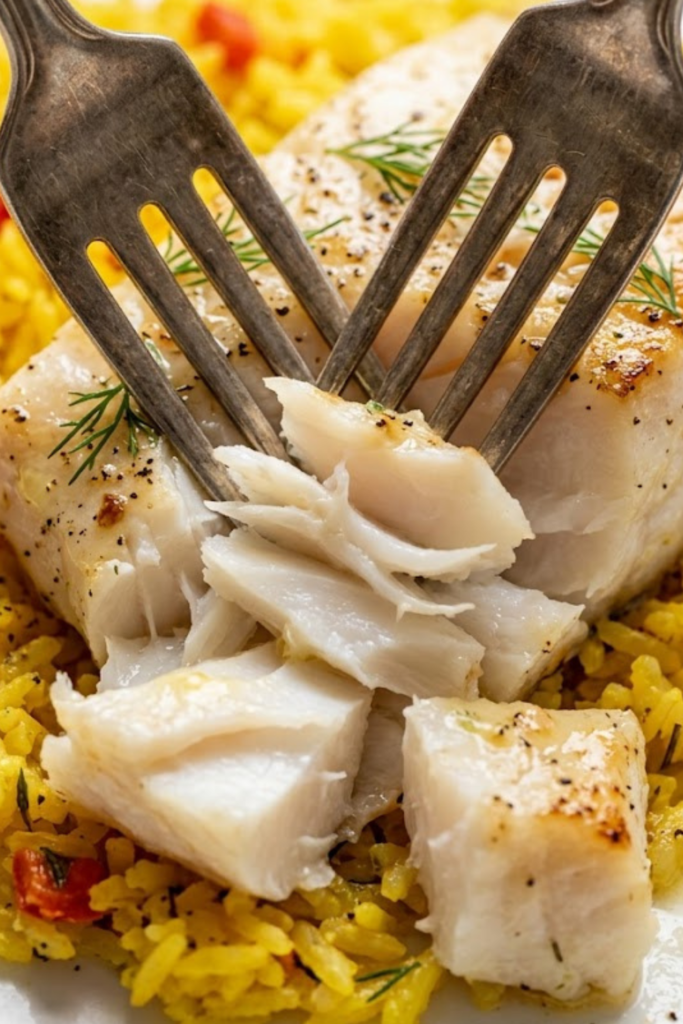
Overcooked Fish There is nothing worse than fish that feels like a rubber band. If you are worried the fish is getting too dry, check it with a fork. It should be opaque (not see-through) and flake apart easily. If it’s still tough, it needs a minute more. The “tuck” method I mentioned earlier really helps prevent this because the rice acts like a heat shield, gently steaming the fish instead of blasting it with direct heat.
Lack of Salt I can’t say this enough: season as you go! If you wait until the very end to add salt, the dish will taste flat. The rice needs salt while it’s soaking up the broth, and the fish needs it to bring out its natural flavor. If you get to the table and it tastes “missing something,” try a squeeze of fresh lemon juice before reaching for the salt shaker. Sometimes that hit of acid is all you need to wake up the flavors.
Cooking doesn’t have to be a chore, especially when you have a one-pot wonder like this Beginners Mediterranean Fish Rice in your back pocket! I hope this guide gives you the confidence to dive into the kitchen and try something new tonight. It’s a healthy, filling meal that feels special every time you make it.
I really believe that once you get the hang of steaming the fish right on top of the rice, you’ll start looking at weeknight dinners in a whole new way. You can even mix things up by throwing in some extra veggies like zucchini or swapping the cod for shrimp once you feel brave. There is no better feeling than sitting down to a hot, home-cooked meal that didn’t leave you with a mountain of dishes to scrub. It’s the kind of food that makes your body feel good and your kitchen smell like a vacation.
If you loved this recipe and want to help a fellow home cook out, please share this post on Pinterest! It really helps the blog grow and allows more people to find these easy dinner wins. Grab your favorite pot, put on some music, and let me know how your rice turns out!