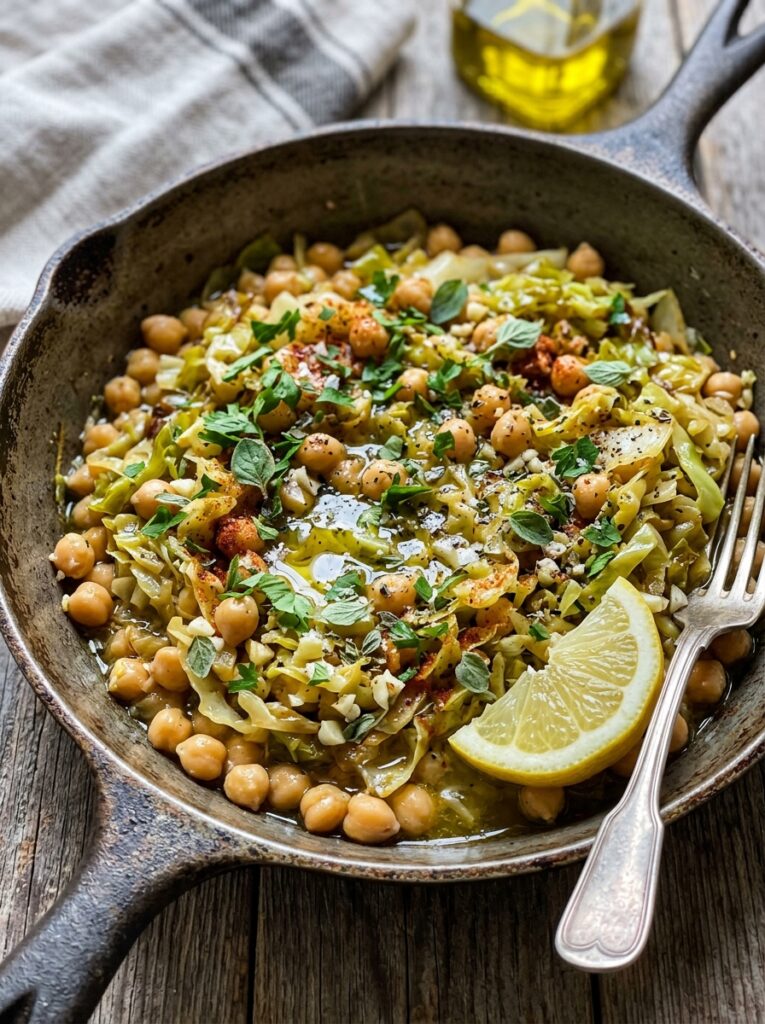
This Mediterranean cabbage and chickpea skillet with garlic and herbs recipe delivers a fast, flavorful one-pan meal that celebrates whole food simplicity. The dish combines tender cabbage, hearty chickpeas, and aromatic garlic with classic Mediterranean spices for a weeknight dinner ready in minutes. It is naturally vegan, rich in fiber, and requires minimal cleanup, making it ideal for busy cooks who want healthy eating without sacrificing depth of flavor. Serve this warm skillet as a standalone entrée or alongside your favorite grains for a complete, satisfying plate.
| Prep Time | Cook Time | Total Time | Servings | Difficulty | Cuisine |
|---|---|---|---|---|---|
| 15 minutes | 20 minutes | 35 minutes | 4 | Easy | Mediterranean |
Why This Recipe Works
This Mediterranean cabbage and chickpea skillet works because it layers textures and aromatics for balanced, vibrant flavor. I rely on garlic, oregano, and paprika to build a savory base that clings to every leaf and chickpea. The cabbage softens without losing bite, while chickpeas add protein and satiating fiber for a complete vegan meal. A finishing squeeze of lemon brightens the dish, tying the herbs and spices together with clean acidity.
I use a wide skillet for even heat distribution, which prevents steaming and encourages light caramelization. Olive oil creates a silky surface that carries garlic and herb flavors throughout the pan. Stirring at the right intervals keeps the cabbage tender-crisp while warming chickpeas thoroughly. The result is a cohesive, one-pan dinner that feels rustic yet refined, without complicated techniques or specialty ingredients.
This recipe suits weeknight cooking because it scales easily and reheats well for next-day meals. I prefer tasting and adjusting salt late to avoid over-seasoning, especially when using canned chickpeas. Fresh parsley adds a bright herbal note that contrasts with the deeper flavors of oregano and paprika. A final drizzle of extra-virgin olive oil enhances aroma and mouthfeel without overwhelming the natural sweetness of cabbage.
When you follow these steps, you get a reliable, repeatable skillet that fits a plant-forward lifestyle. It pairs beautifully with pita, rice, or couscous, making it flexible for different preferences. If you want a quicker path, use pre-shredded slaw mix or pre-washed chickpeas to save prep time. The technique remains the same, and the flavor stays consistent, which is why this method deserves a spot in your rotation.
Ingredients
| Ingredient | Quantity | Notes with alternatives |
|---|---|---|
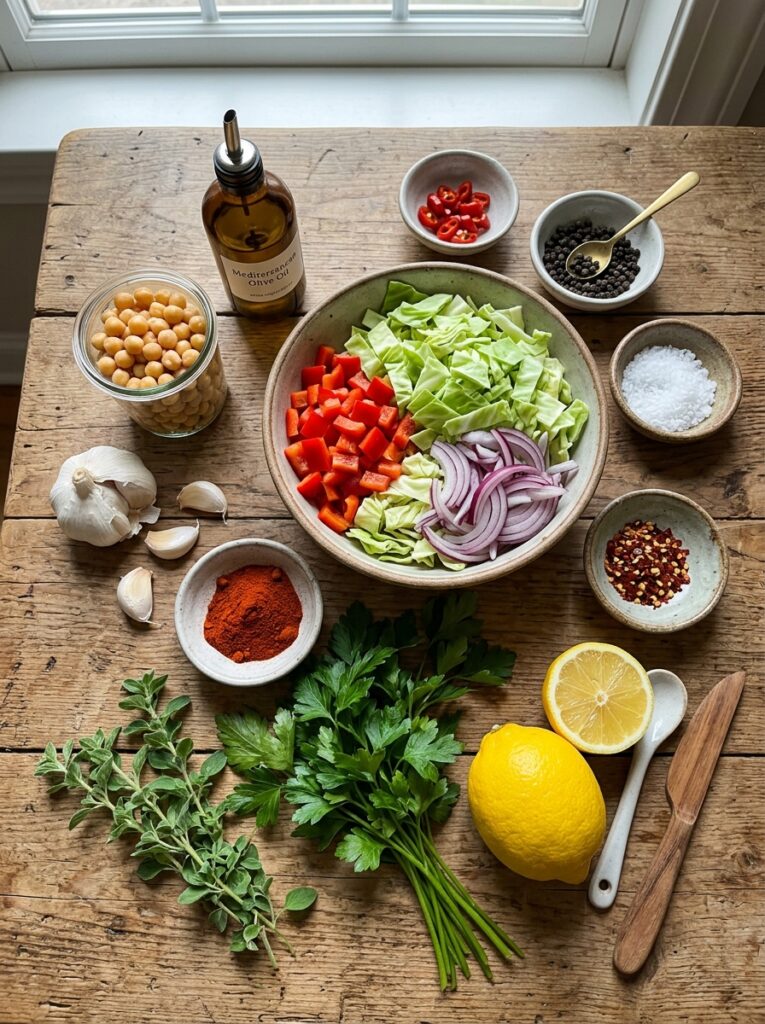
| Green cabbage | 1 medium head (about 6 cups shredded) | Use savoy for extra tenderness or red cabbage for color. |
| Chickpeas | 2 cans (15 ounces each), drained and rinsed | Substitute cooked lentils or white beans for a different texture. |
| Garlic | 5 cloves, minced | Use roasted garlic for mellow sweetness or garlic powder if fresh is unavailable. |
| Olive oil | 3 tablespoons extra-virgin | Avocado oil works but changes flavor and aroma. |
| Lemon | 1 large, juice and zest | Red wine vinegar or sherry vinegar can substitute for acidity. |
| Dried oregano | 1 teaspoon | Italian seasoning or thyme provide similar herbal character. |
| Sweet paprika | 1 teaspoon | Smoked paprika adds depth; use less to avoid overpowering. |
| Fresh parsley | 1/2 cup chopped | Cilantro or dill offer bright, alternative herb notes. |
| Salt | 1 teaspoon, plus more to taste | Adjust for low-sodium canned chickpeas or preferenced seasoning. |
| Black pepper | 1/2 teaspoon freshly ground | White pepper or Aleppo pepper can add heat variation. |
Step-by-Step Instructions
Prep the Vegetables
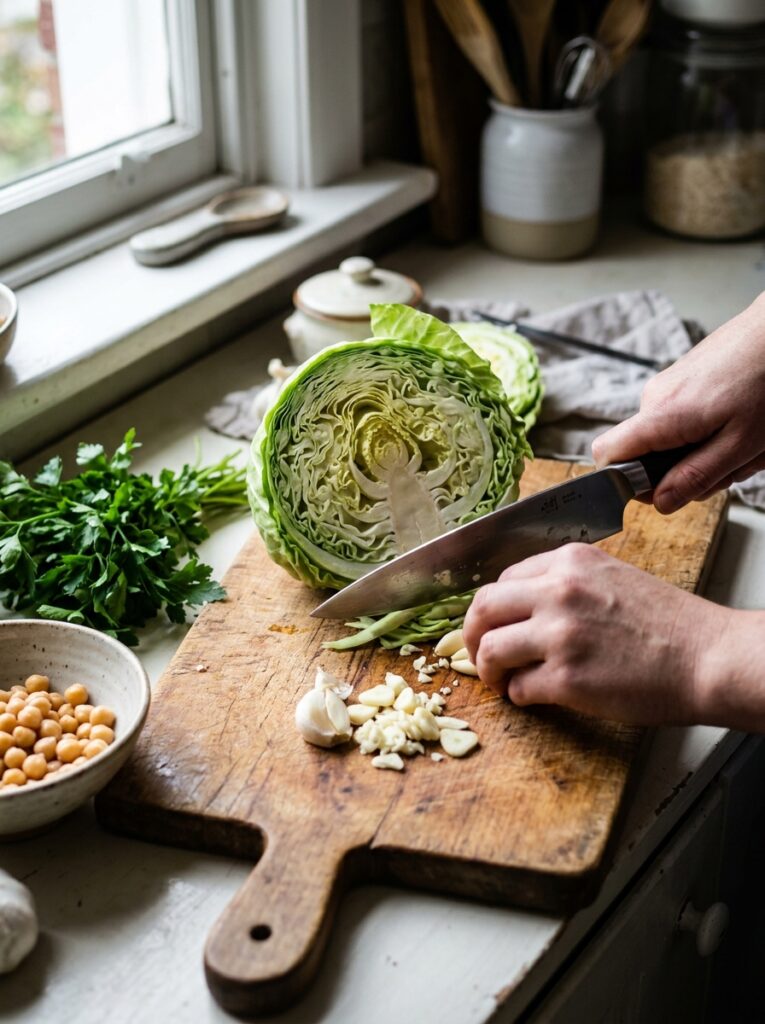
Wash and dry the cabbage, then remove the core and shred into thin ribbons for even cooking. Rinse and drain the chickpeas to remove excess brine and starch. Mince garlic finely so it blooms quickly without burning. Chop parsley and set aside with lemon ready for finishing.
Build the Aromatic Base
Heat olive oil in a large skillet over medium heat until shimmering but not smoking. Add minced garlic and stir until fragrant, about thirty seconds. Sprinkle in oregano and paprika to bloom the spices in the oil, then stir to combine. Season lightly with salt and pepper to start layering flavor.
Cook the Cabbage
Add shredded cabbage to the skillet and toss to coat with the seasoned oil. Cook, stirring occasionally, until the cabbage begins to wilt and edges lightly brown. This step should take five to seven minutes, depending on your heat and pan size. Avoid overcrowding so moisture can evaporate and flavor concentrates.
Stir in Chickpeas
Add drained chickpeas and increase heat slightly to warm them through evenly. Toss with the cabbage until every chickpea is coated with garlic and spices. Cook for five minutes so the chickpeas pick up caramelization and the mixture becomes cohesive. Taste and adjust salt and pepper as needed.
Finish with Lemon and Herbs
Squeeze fresh lemon juice over the skillet and add a pinch of lemon zest for brightness. Toss again to distribute acidity and balance the savory notes. Remove from heat and fold in chopped parsley for fresh herbal aroma. Drizzle a small amount of extra-virgin olive oil to add gloss and richness.
Chef Tips for Perfect Results
- Use a wide skillet with heavy bottom to distribute heat and reduce steaming of cabbage.
- Shred cabbage uniformly to ensure every bite cooks to tender-crisp perfection.
- Bloom garlic and spices in warm oil before adding cabbage for deeper, layered flavor.
- Add lemon at the end to preserve brightness and prevent bitterness during cooking.
- Reserve a bit of parsley for garnish to boost color and aromatic impact on the plate.
- Don’t rinse chickpeas under hot water; cold water keeps texture intact and flavor fresh.
Common Mistakes to Avoid
- Overcrowding the pan traps steam and makes cabbage soggy instead of tender-crisp; cook in batches if needed for better browning and flavor concentration.
- Burning garlic creates bitterness; add it after the oil warms and watch carefully or use minced garlic paste for more even distribution.
- Seasoning too early can over-reduce salt; taste after the cabbage wilts and chickpeas warm, then adjust in small increments for balance.
- Adding lemon too soon dulls acidity and can cause slight bitterness; finish with juice and zest just before serving for maximum brightness.
- Using a small pan causes uneven cooking; choose a 12-inch skillet for better surface area and moisture evaporation.
- Skipping the fresh herb garnish reduces aroma; parsley or cilantro adds color and a clean finish that lifts the entire dish.
Variations and Substitutions
| Ingredient | Substitution | Impact on Flavor |
|---|---|---|
| Cabbage | Savoy or red cabbage | Savoy is more tender; red adds color and a slightly peppery edge. |
| Chickpeas | White beans or lentils | White beans are creamier; lentils are earthier and slightly softer. |
| Olive oil | Avocado oil | Milder flavor with a clean finish; less pronounced fruity aroma. |
| Oregano | Italian seasoning or thyme | Italian seasoning adds complexity; thyme is woodsy and subtle. |
| Paprika | Smoked paprika | Deeper, smoky notes; use less to avoid overpowering the skillet. |
| Herbs | Cilantro or dill | Cilantro is bright and citrusy; dill adds a fresh, grassy profile. |
Serving Suggestions and Pairings
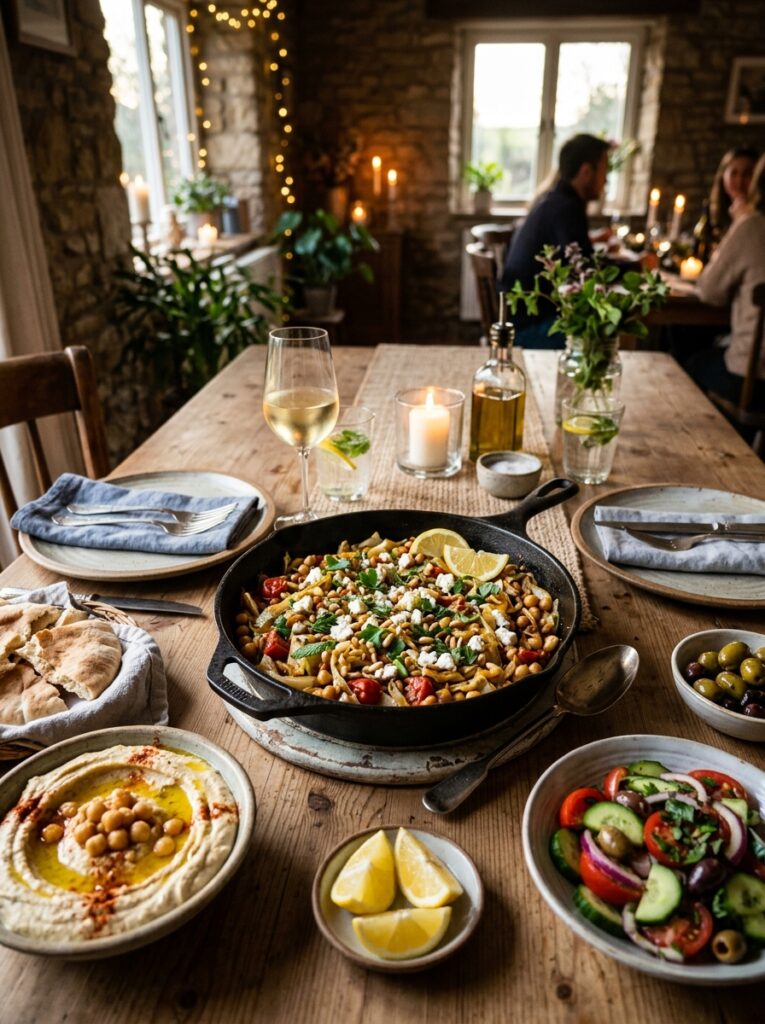
Serve the skillet warm as a hearty vegan main with pita bread or fluffy couscous on the side. Pair with a crisp cucumber-tomato salad for extra freshness and a contrasting texture. Add a dollop of hummus or a drizzle of tahini sauce for creaminess without dairy. For gatherings, present the skillet family-style with lemon wedges and extra parsley for guests to customize.
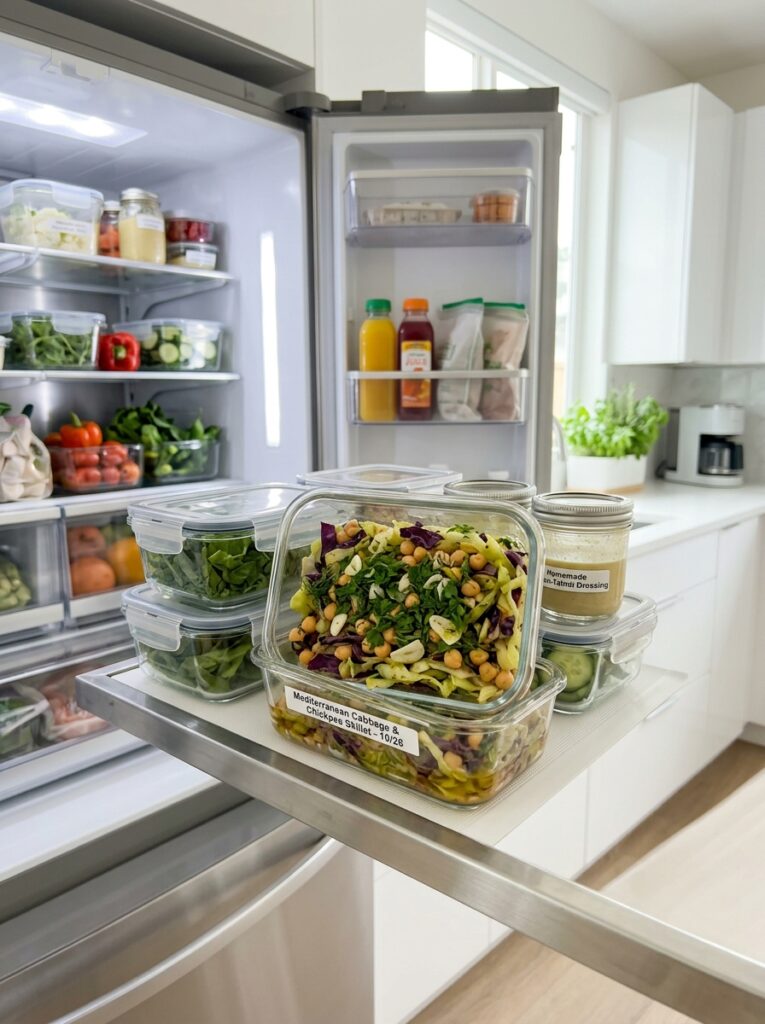
Weeknight dinners benefit from this dish’s quick turnaround, while casual meal prep containers hold up well for lunch. Enjoy with mint tea or sparkling water with lemon for a refreshing, non-alcoholic pairing. This Mediterranean cabbage and chickpea skillet suits simple occasions, from plant-based potlucks to light, restorative dinners after busy days.
Storage and Reheating
| Method | Duration | Instructions |
|---|---|---|
| Refrigerator | 3 to 4 days | Cool completely, store in airtight container, reheat gently on stovetop. |
| Freezer | 1 month | Freeze in sealed containers; texture may soften slightly upon thawing. |
| Stovetop Reheat | 5 to 7 minutes | Warm over medium heat, add a splash of water to loosen and prevent sticking. |
| Microwave | 2 to 3 minutes | Heat in intervals, stir between, and finish with a squeeze of lemon. |
Nutritional Information
| Nutrient | Amount per Serving |
|---|---|
| Calories | 290 (approximate) |
| Protein | 11 g (approximate) |
| Fat | 12 g (approximate) |
| Carbohydrates | 38 g (approximate) |
| Fiber | 10 g (approximate) |
| Sugar | 7 g (approximate) |
| Sodium | 520 mg (approximate) |
Frequently Asked Questions
Can I substitute kale or spinach for the cabbage in this Mediterranean skillet?
Yes, you can substitute kale or spinach for cabbage in this Mediterranean skillet. Kale requires a slightly longer cooking time and more moisture, while spinach wilts very quickly and should be added near the end. Expect a different texture, with spinach becoming softer and kale staying toothsome.
How do I know when the cabbage is perfectly cooked?
Cook the cabbage until it wilts and turns translucent at the edges while retaining a gentle crunch in the center. It should sizzle lightly and release some moisture that evaporates quickly in a wide pan. Taste a strand to confirm a tender yet slightly firm bite before adding chickpeas.
Why does my garlic sometimes taste bitter?
Bitter garlic usually occurs when it cooks too long or at excessively high heat. To fix this, add garlic after the oil warms and sauté for only thirty seconds until fragrant. Using finely minced garlic or a quick bloom in warm oil prevents burning and bitterness.
Can I make this Mediterranean cabbage and chickpea skillet ahead of time?
Yes, you can make this skillet ahead and store it for 3 to 4 days in the refrigerator. The flavors meld beautifully after resting, though the cabbage softens slightly. Reheat gently on the stovetop and finish with fresh lemon and parsley to revive brightness.
Is this recipe suitable for a gluten-free diet?
This recipe is naturally gluten-free when served as written without pita or couscous. All listed ingredients, including chickpeas and spices, are free from gluten. Choose certified gluten-free brands if you are sensitive or cooking for someone with celiac disease.
What can I serve with this skillet to make it a complete meal?
Serve with pita bread, couscous, quinoa, or brown rice to add satisfying carbohydrates. A simple cucumber-tomato salad and a small bowl of hummus complement the skillet’s flavors well. Lemon wedges and extra parsley provide fresh garnish options at the table.
Can I use dry chickpeas instead of canned chickpeas?
Yes, use dry chickpeas soaked overnight and cooked until tender before adding them to the skillet. This option gives you control over texture and sodium levels, and you can season the cooking water with salt. Add already-cooked chickpeas at the end to warm through with the cabbage.
How can I lower the sodium in this dish?
Choose low-sodium canned chickpeas or rinse them thoroughly under cold water. Season gradually and finish with fresh lemon, herbs, and a touch of extra-virgin olive oil to boost flavor without extra salt. You can also use less salt and rely on oregano and paprika for depth.
What is the best way to reheat leftovers without making them soggy?
Reheat leftovers in a skillet over medium heat with a small splash of water to loosen and prevent sticking. Stir occasionally to ensure even warming and to restore light caramelization on the cabbage. Avoid the microwave on high, which can overcook and make the texture watery.
Can I freeze this Mediterranean cabbage and chickpea skillet?
Yes, you can freeze the skillet for up to one month in airtight containers. The texture of cabbage softens after freezing, but flavor remains excellent. Thaw overnight in the refrigerator and reheat gently on the stovetop, finishing with fresh herbs and lemon for best results.
Conclusion
This Mediterranean cabbage and chickpea skillet with garlic and herbs recipe brings vibrant flavor and simple technique together for a dependable plant-based dinner. The cabbage provides tender-crisp texture, while chickpeas deliver satisfying protein and fiber that keep you full longer. Fresh garlic, oregano, paprika, and lemon create a balanced profile that highlights the best of Mediterranean cooking. Try it once, and it will become a weeknight favorite you can make with pantry staples and fresh herbs.
Print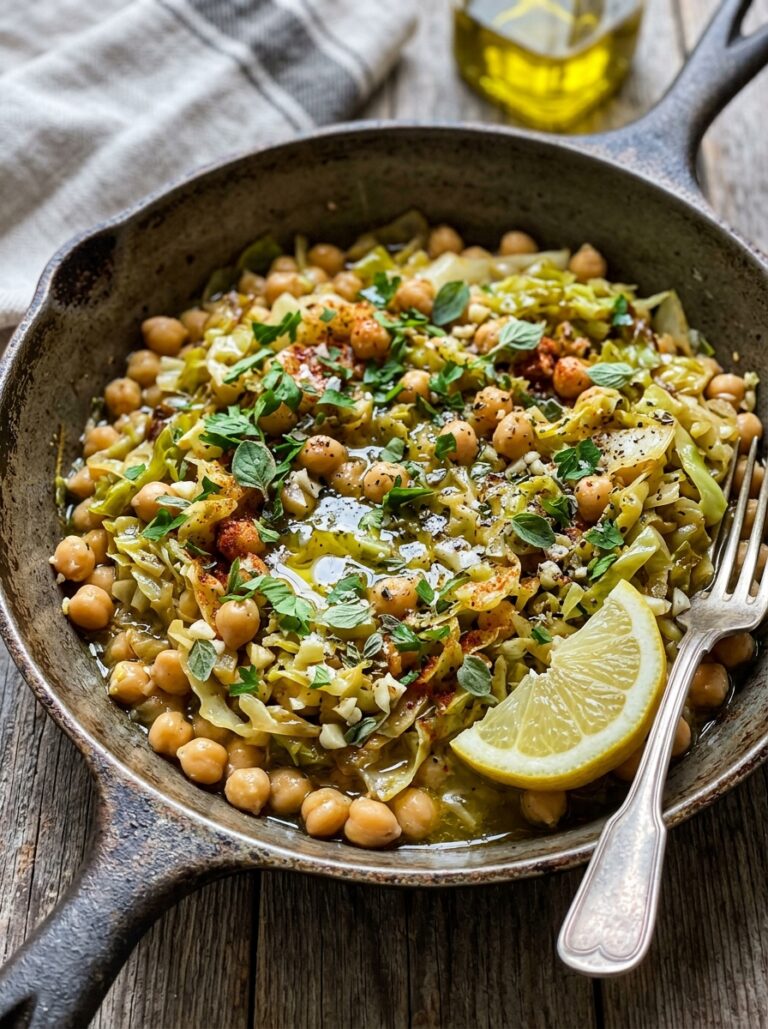
Mediterranean Cabbage and Chickpea Skillet with Garlic and Herbs
A vibrant, plant-forward one-pan meal combining tender cabbage, protein-rich chickpeas, and aromatic herbs for a healthy, flavorful dish. Serve as is or with grains for a filling Mediterranean-inspired meal.
- Total Time: 35
- Yield: 4 servings 1x
Ingredients
2 cups shredded green cabbage
1 cup canned chickpeas, drained and rinsed
3 garlic cloves, minced
2 tablespoons olive oil
1 teaspoon dried oregano
1 teaspoon dried parsley
1 teaspoon smoked paprika
1 tablespoon fresh lemon juice
Salt to taste
Black pepper to taste
Optional: 1/4 teaspoon garlic powder
Instructions
Heat olive oil in a wide skillet over medium heat
Sauté garlic and spices until fragrant (1-2 minutes)
Add cabbage and sauté until tender-crisp (6-8 minutes)
Stir in chickpeas and simmer for 10 minutes
Season with lemon juice, salt, and pepper
Taste-adjust (especially salt) and drizzle with more olive oil if desired
Serve warm, optionally over quinoa or couscous
Notes
Chickpeas and cabbage can be cooked separately if preferred
Use red cabbage for a deeper color and slightly sweeter flavor
Store leftovers in airtight containers for 3-4 days
Reheat gently to maintain texture
Fresh herbs can be used in place of dried
- Prep Time: 15
- Cook Time: 20
- Category: Mediterranean Basics
- Method: Sautéing
- Cuisine: Mediterranean
- Diet: Vegan
Nutrition
- Serving Size: 1 serving
- Calories: 175
- Sugar: 3g
- Sodium: 230mg
- Fat: 9g
- Saturated Fat: 1g
- Carbohydrates: 25g
- Fiber: 6g
- Protein: 6g
- Cholesterol: 0mg