Listen, I used to think cauliflower was the most boring vegetable on the planet. It’s white, it’s bland, and it smells like a wet basement if you boil it. But then I discovered Mediterranean Roasted Cauliflower, and my life changed!. Did you know that cauliflower consumption has jumped by nearly 40% in recent years? People are finally waking up!.
I’m going to show you how to turn this “ghost broccoli” into a caramelized masterpiece using olive oil, garlic, and warm spices. We’re talking about those crispy, dark brown bits that you’ll want to steal right off the baking sheet. Trust me, I’ve burnt enough batches to know exactly what works and what doesn’t. Let’s dive into the world of roasting and make something truly tasty!.
Choosing the Best Head of Cauliflower for Roasting
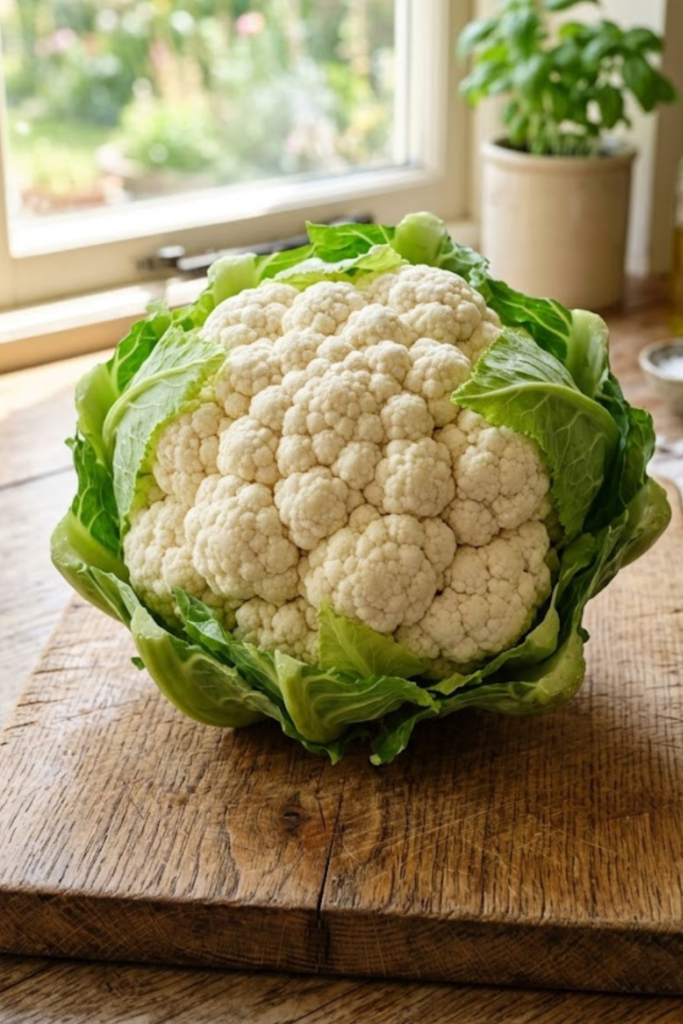
Choosing a good head of cauliflower is basically the most important part of this whole thing. I remember one time I grabbed a head that was on sale because I was trying to save a few bucks. It looked okay at first glance, but once I got home and really looked at it, I noticed it was kind of soft. When I roasted it, the flavor was just… meh. It didn’t get that nice crunch I love, and it tasted a bit bitter. It was a total waste of my time!
Here is what you should look for when you are at the store. First, check the color. You want the top to be creamy white. If you see brown spots or little black fuzzy bits, just leave it there. That’s a sign it’s starting to go bad. Also, look at the leaves at the bottom. They should be bright green and crisp. If they look wilted or yellow, the cauliflower has been sitting on the shelf for way too long and won’t taste fresh.
Another trick I learned from a friend who cooks a lot is to pick it up and feel the weight. A good cauliflower should feel heavy for its size. If it feels light, it’s probably dried out inside. Think of it like a sponge that has lost all its water. You want it full of moisture so it stays tender while the outside gets crispy in the oven.
I call the old, light ones “zombie cauliflower” because they are basically dead inside. They won’t taste good no matter how much olive oil or spices you use. So, take an extra minute to dig through the pile at the grocery store. It might feel a bit silly to be so picky about a vegetable, but your dinner will thank you for it!
The Secret Spice Blend for Authentic Mediterranean Flavor
I’ve tried a lot of different spice mixes over the years. Honestly, some were pretty bad. I once bought a pre-mixed Mediterranean seasoning that tasted like nothing but dried oregano and dust. It was so disappointing! That’s when I started playing around with my own blends in my kitchen.
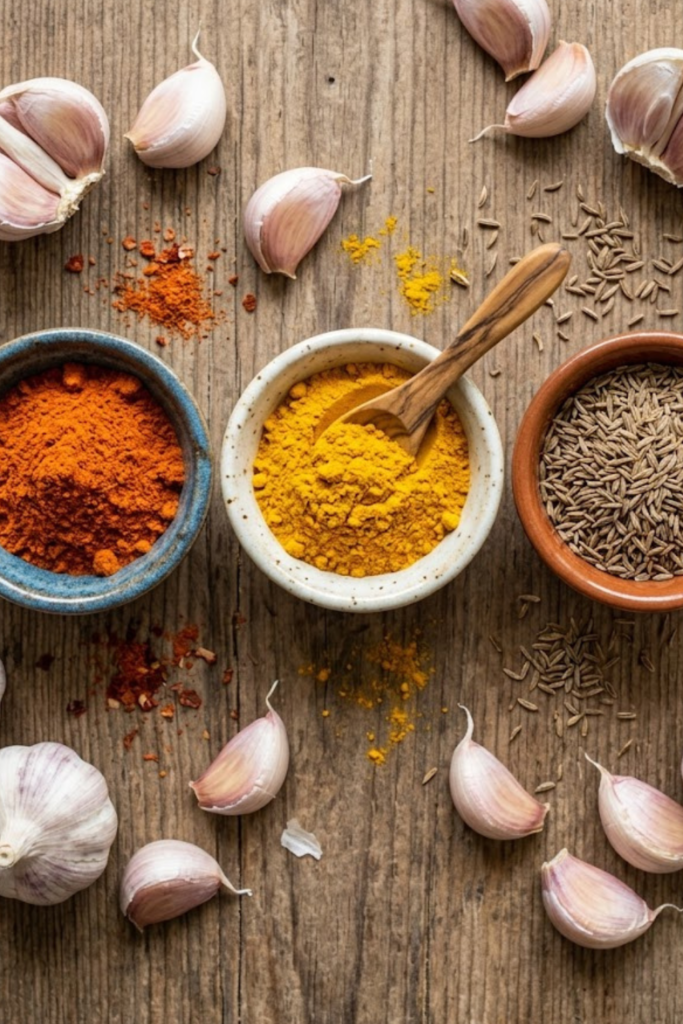
The “Holy Trinity” for this dish is definitely cumin, coriander, and smoked paprika. Cumin gives it that earthy smell, coriander adds a little citrus kick, and smoked paprika makes it look and taste amazing. I also like to add some turmeric. It doesn’t have a super strong flavor, but it makes the cauliflower turn a beautiful golden color. It looks like it spent a day at the beach!
Here is a little secret I tell people: add a tiny pinch of cinnamon. Just a tiny bit! It sounds weird, but it adds a warmth that folks can’t quite put their finger on. They’ll keep eating and wondering why it tastes so good. It’s my favorite pro teacher tip for making a simple dish taste like you spent hours on it.
I usually prefer fresh garlic, but you gotta be careful. If you chop it too small, it might burn in the hot oven and get bitter. That’s a mistake I made way too many times when I was first learning to cook. Sometimes I just use garlic powder if I’m in a rush. It still tastes great and coats the florets really well. Just make sure you mix the spices with the oil in a bowl before you pour it over the veggies. This helps every single piece get covered in flavor. If you just sprinkle the spices on top of the pan, some pieces will be way too spicy and others will be totally plain.
You don’t need a fancy or expensive spice rack to do this right. Just get the basics and play around with the amounts until it tastes right to you!
The Perfect Roasting Technique for Crispy Edges
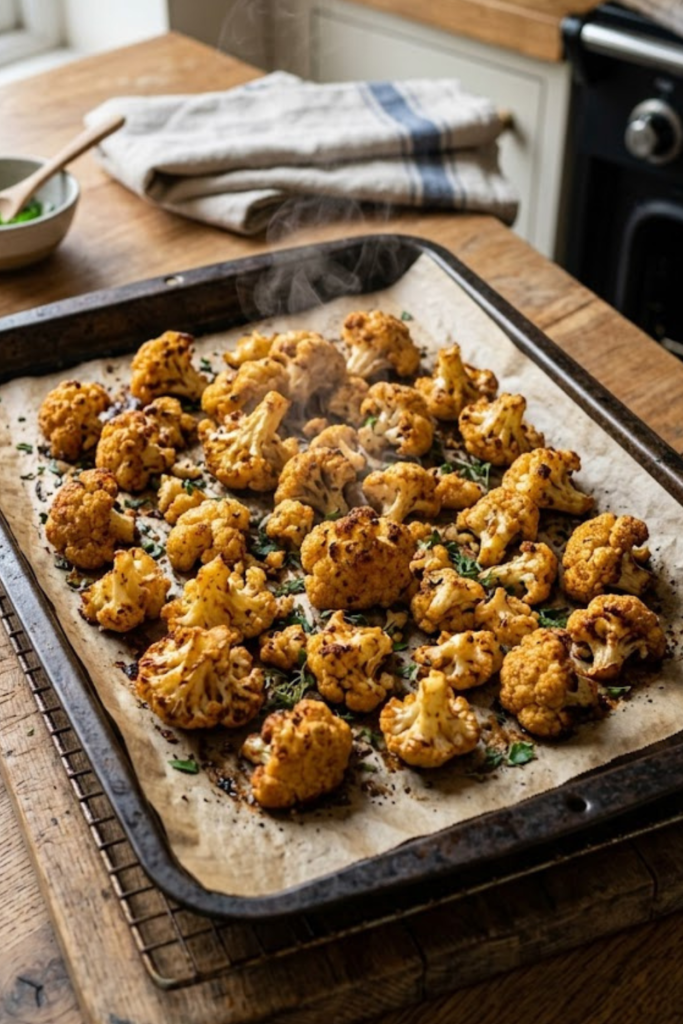
If you want those crispy, dark brown edges that everyone fights over, you have to get the temperature right. For a long time, I was roasting my veggies at 350 degrees because I was afraid of burning them. But all I got was soft, sad cauliflower. It tasted okay, but it didn’t have that “crunch” that makes Mediterranean Roasted Cauliflower so good. Now, I always crank my oven up to 425°F. You need that high heat to get the natural sugars in the vegetable to caramelize.
The biggest rule I teach my friends is “don’t crowd the pan.” I made this mistake so many times! One year, I was hosting a big dinner and tried to squeeze two whole heads of cauliflower onto one baking sheet. I thought I was being smart and saving time. Instead of roasting, the cauliflower just steamed because all the moisture had nowhere to go. It ended up being a soggy mess and I felt so embarrassed. Now, I use two pans if I have to. Every piece needs its own little bubble of space so the hot air can move around it.
About halfway through the cooking time, you need to get in there and flip them. I usually set a timer for 15 minutes. Use a spatula to toss them around so the side touching the pan changes. This helps them brown evenly. If you don’t flip them, one side will be black and the other side will be totally white.
I also have a bit of a debate with myself about parchment paper. Some people love it because it makes cleanup easy. But if you want the absolute best char, I think putting the florets directly on the metal pan is better. The direct heat from the metal makes those edges extra crispy. Just make sure you use enough oil so they don’t stick. Cleaning the pan later is a bit of a chore, but for that perfect flavor, it’s worth it! Just don’t forget to wear your oven mitts—that pan gets real hot.
Garnishing for That Extra “Wow” Factor
When the cauliflower comes out of the oven, it looks good, but it’s missing that final “pop” that makes it look like a fancy meal. I remember the first time I made this for my sister. I just put the pan on the table and she was like, “Oh, roasted cauliflower again?” I felt a bit deflated! So I grabbed a lemon and some herbs, threw them on, and her eyes lit up. It’s funny how a little bit of green can change everything.
The biggest game changer is fresh lemon juice. You have to add it right when the pan is still hot and sizzling. The acid cuts through the oil and makes all those spices wake up. If you forget the lemon, the dish can feel a bit heavy. I always keep a few lemons on my counter just for this reason. Don’t use the stuff from the plastic bottle—it just doesn’t taste the same.
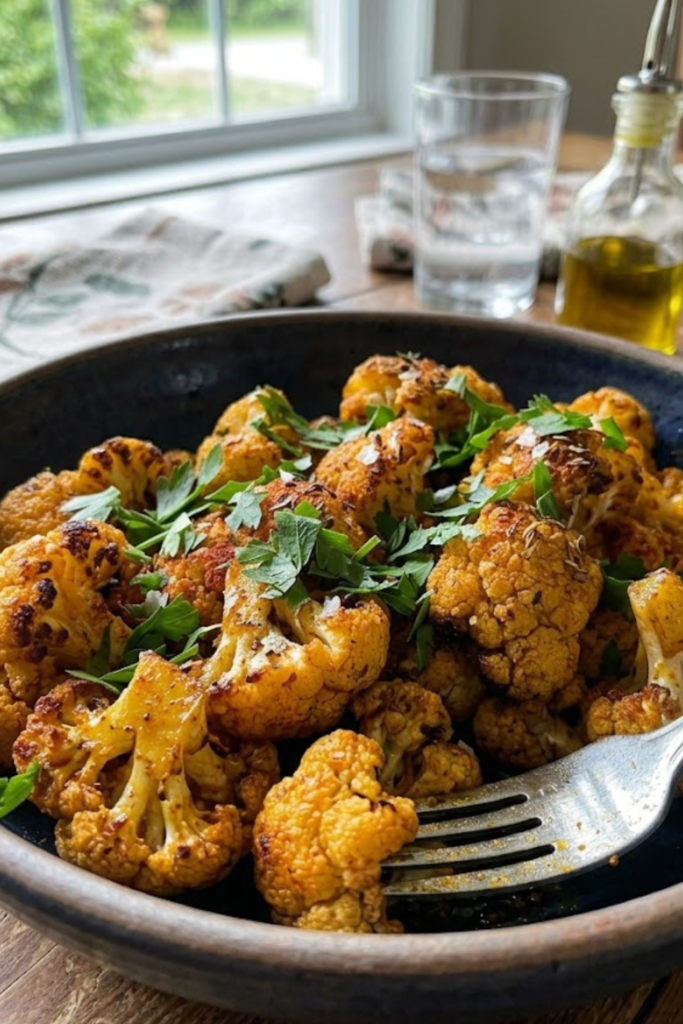
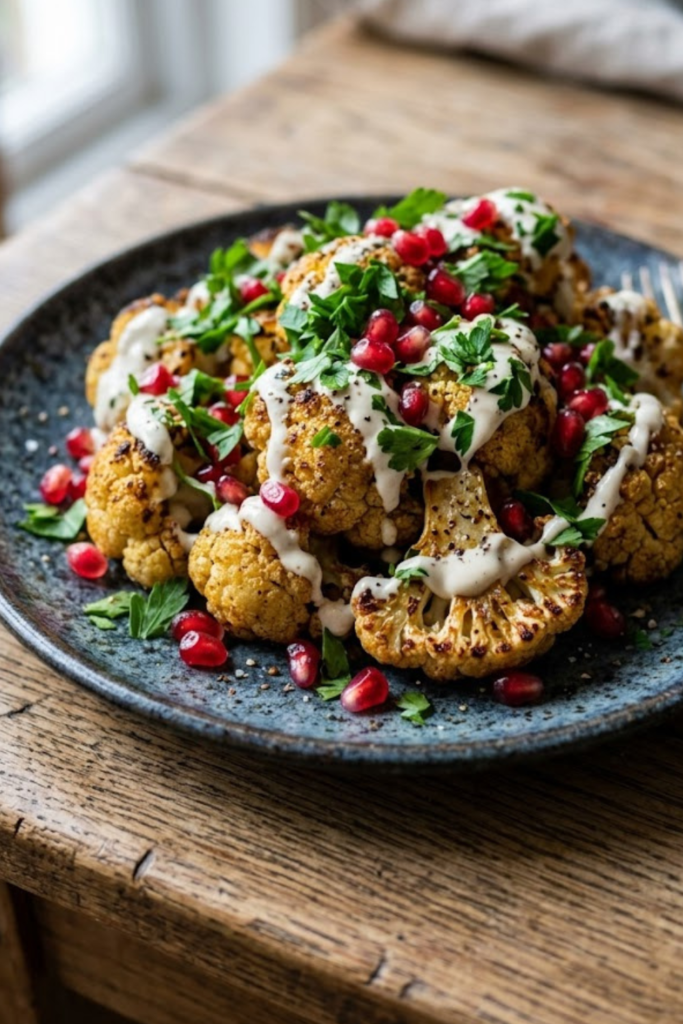
I also love using a lot of fresh parsley. I don’t just use a tiny bit for decoration. I chop up a big handful and sprinkle it all over. It adds a nice freshness that balances the roasted flavor. One time I tried using dried parsley because I was out of fresh, and honestly? It was pretty boring. It didn’t add that bright color I wanted. If you want to get really fancy, you can add some pomegranate seeds or toasted pine nuts for a little crunch. My kids call them “jewels” because they look so pretty on the plate.
Another thing I do is drizzle a little bit of tahini on top. Tahini is just ground-up sesame seeds and it’s super creamy. If you don’t have that, a dollop of Greek yogurt works too. It makes the Mediterranean Roasted Cauliflower feel like a real main course instead of just something on the side. I used to be afraid of making my food look “too much,” but now I realize that we eat with our eyes first! Plus, it makes me feel like a professional chef even if I’m just in my pajamas in my own kitchen.
So, are you ready to get roasting? Making Mediterranean Roasted Cauliflower is honestly one of the easiest ways to get your family to actually eat their veggies without complaining. It’s cheap, it’s super healthy for you, and it tastes like a million bucks when you do it right. I know I talk about it a lot, but remember my big rules: get that oven screaming hot, give the florets their own space on the pan, and don’t you dare forget the lemon at the end!
I really hope this guide helps you feel more confident in your kitchen. I’ve made so many mistakes with vegetables over the years—soggy pans, burnt garlic, you name it—but that’s how we learn, right? If your cauliflower comes out a bit too dark the first time, don’t even sweat it. Those dark, crispy bits are actually the best part and they have the most flavor. My husband usually picks them all off the tray before I can even get the food to the table!
This dish is a total winner for 2026 because it’s simple and doesn’t use any weird ingredients you can’t find at the local shop. It’s just good, honest food that makes you feel great. I’m so glad I could share my experience with you.
If you liked this recipe and found it helpful, please pin it to your favorite Pinterest board! It helps other home cooks find these tips, and it really helps me out too. I can’t wait to hear how your roasted cauliflower turns out. Happy cooking!