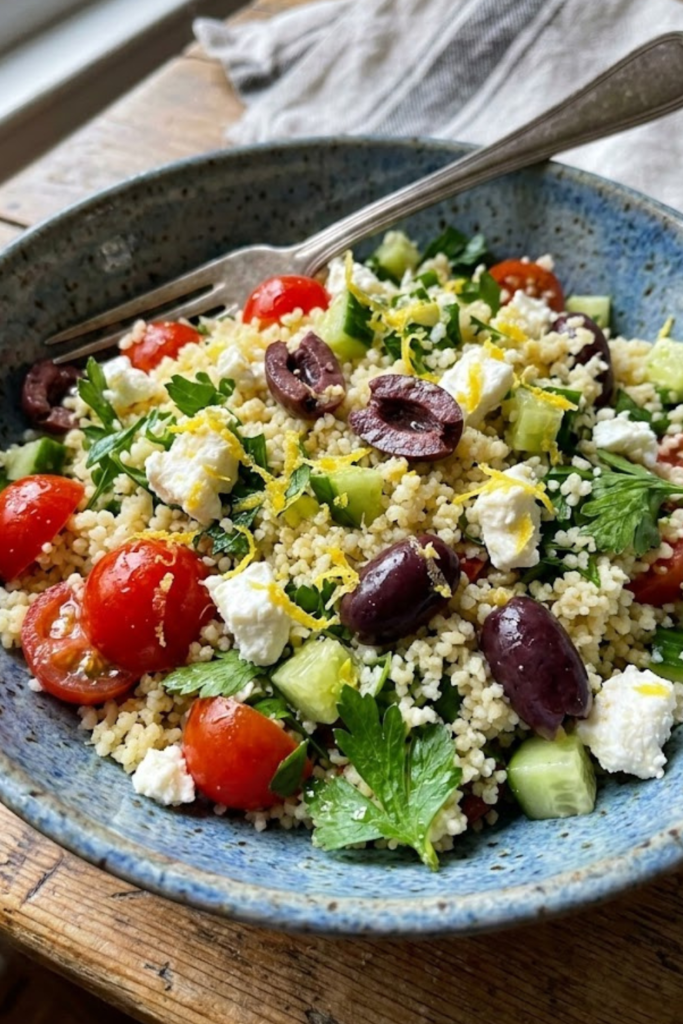
Did you know that couscous isn’t actually a grain, but a tiny pasta? It’s true! I used to think I was being all “whole-grain healthy” until I learned the truth, but honestly, it’s so delicious I didn’t even care! If you’re looking for a meal that feels fancy but takes about as much effort as making toast, this Beginner Mediterranean Veggie Couscous is your new best friend. We’re talking vibrant colors, zesty lemon, and a texture that’s light as a cloud.
I remember the first time I whipped this up for a last-minute lunch when my fridge was looking pretty empty. I was totally shocked at how something so fast could taste so fresh and expensive! It’s one of those “dump and stir” kind of meals that makes you look like a pro, even if you’re still figuring out how to use a chef’s knife. Plus, if you have leftovers, they actually taste even better the next day after the flavors have had some time to hang out together in the fridge. It’s a total lifesaver for those busy weeknights when you just can’t deal with a sink full of dirty pots and pans. Let’s get cooking because your dinner routine just got a serious upgrade!
Master the Fluff: The Art of Cooking Couscous
Listen, I’ve spent plenty of time in the kitchen and I’ve seen way too many people treat couscous like it’s regular spaghetti. They throw it in a big pot of water and just boil the life out of it. Big mistake! If you want it to be light and airy—which you definitely do—you gotta treat it right.
First thing you need to know is the ratio. This is where most folks get tripped up. You want exactly one part couscous to one part liquid. I usually go with one cup of each. If you use too much water, you end up with a soggy mess that nobody wants to eat. If you use too little? Well, it’s like chewing on tiny sand pebbles.
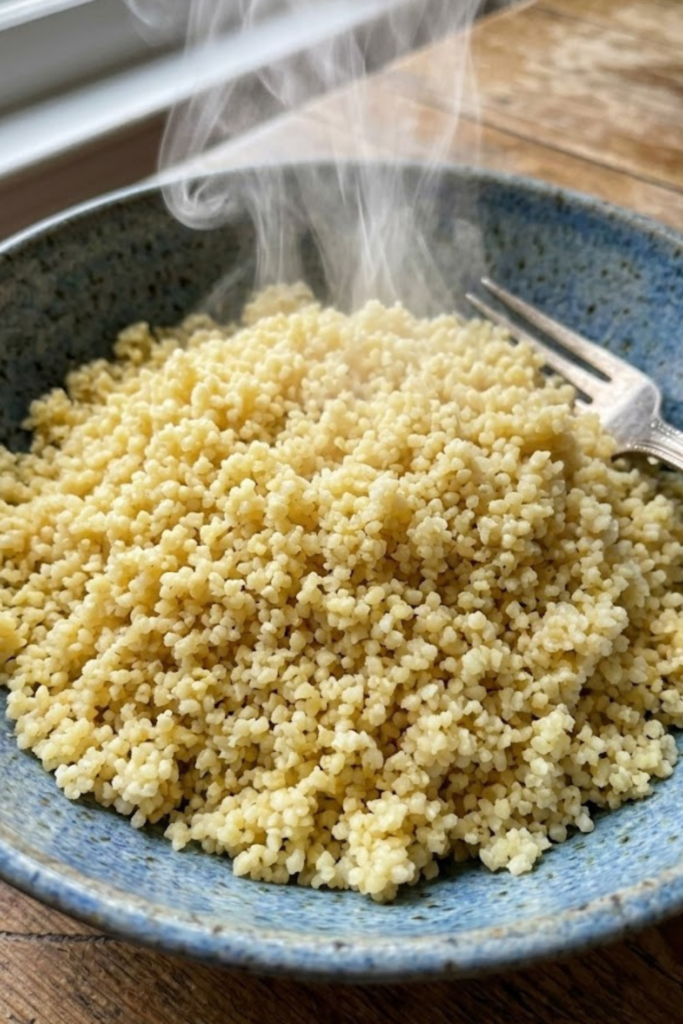
Here’s my big secret: don’t just use plain water. Grab some vegetable broth instead. It adds a ton of flavor to those tiny pasta bits that water just can’t do. I also like to toss in a tiny splash of olive oil or a small pat of butter into the broth while it’s heating up to help keep the grains from sticking together later. Once the broth is boiling, take the pot off the heat and stir in the grains. Put a lid on it and just let it sit there for about five minutes. The steam is what actually cooks it, so don’t peek!
If you really want to go the extra mile, try toasting the dry couscous in the pan for about two minutes before you add the boiling broth. It gives the dish a slightly nutty flavor that is just incredible. When the timer goes off, stay away from the spoons. If you use a spoon, you’ll just smash the couscous into a big clump. Use a fork instead. Just gently scrape the grains and watch them separate. We call this “fluffing” and it’s honestly the best part. After you fluff it, let it sit for another minute without the lid so any extra moisture can evaporate. This step makes sure your salad doesn’t get watery. It turns a solid brick of pasta into a soft, golden pile of deliciousness that is ready for all your fresh veggies.
Chopping for Color: Fresh Mediterranean Ingredients
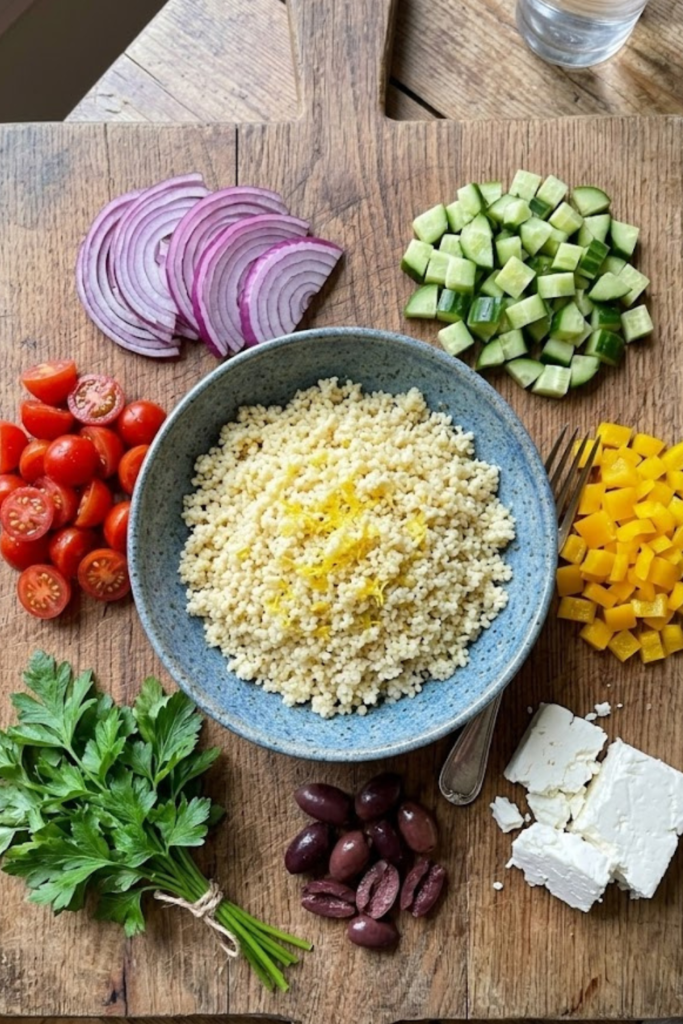
Now that your couscous is sitting pretty, it’s time to get those veggies ready. I always tell my students that you eat with your eyes first, so we want this bowl to look like a rainbow. Plus, getting the right crunch is what makes this meal feel fresh instead of boring.
I usually grab an English cucumber because the skin is thin and you don’t have to peel it. Just give it a quick wash and chop it into small cubes. For the tomatoes, go with cherry or grape tomatoes. I like to slice them in half or quarters if they’re big. They add a nice sweetness that balances out the salty stuff we’ll add later.
One big tip I have for you: try to keep all your veggie pieces about the same size. If you have a giant chunk of cucumber and a tiny speck of onion, the flavors get all lopsided. You want to be able to get a little bit of everything in a single bite. It makes the whole experience way better.
Don’t forget the red onion and bell peppers. I know some people are scared of raw onion, but if you dice it really small, it just adds a nice little zing. If you find the red onion flavor a bit too strong, here is a little trick I tell my students: soak the chopped pieces in a bowl of cold water for about five minutes before adding them. It takes away that sharp “burn” but keeps the crunch.
I usually pick a yellow or orange bell pepper to keep the colors bright. It adds a bit of crunch and a mild sweetness that really ties the whole salad together. Just take your time with the knife and try to keep things even! I also love to throw in a handful of chopped baby spinach or even some raw zucchini if I have some leftover in the crisper drawer. It’s a great way to use up whatever is about to go bad. Just make sure your knife is nice and sharp before you start. A dull knife is actually more dangerous because it slips easier, and we want to keep all our fingers! Taking that extra minute to get your prep work right really makes the final dish feel like something you’d get at a fancy cafe.
Bold Flavors: Olives, Feta, and Zesty Herbs
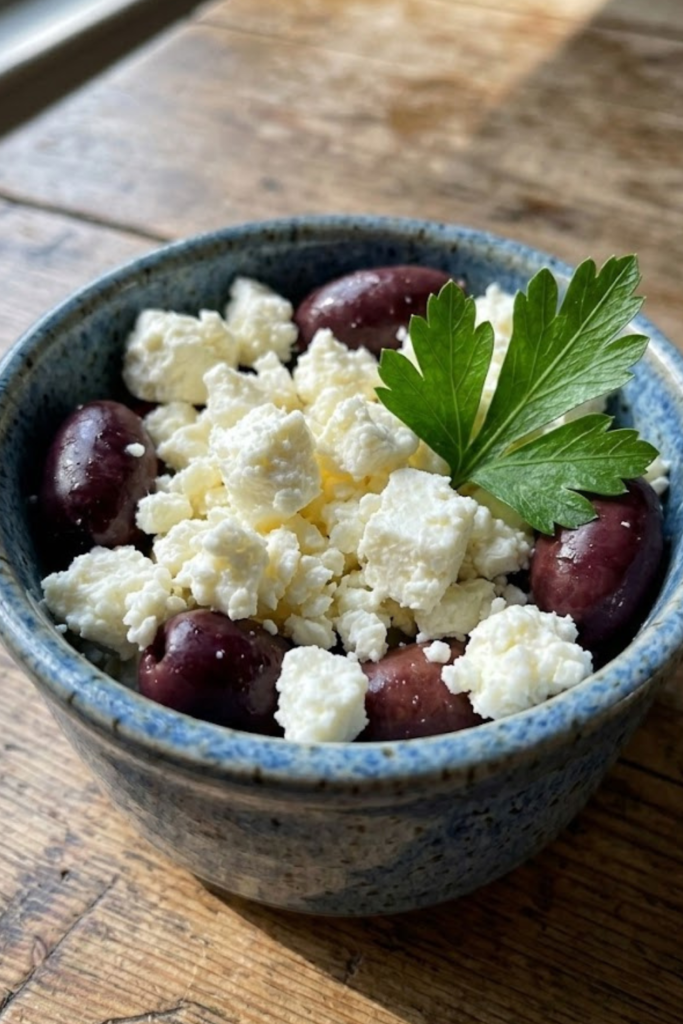
I think the real magic happens when you start adding the “punchy” stuff. You know, those ingredients that make your mouth water just thinking about them. For me, that’s the olives and the feta. I usually go for Kalamata olives—those dark purple ones—because they have a deep, salty flavor. But hey, if you like the green ones better, go for it! Just make sure you get the ones without pits. If you leave the pits in, someone’s gonna have a very bad time at the dinner table, and we don’t want any broken teeth today.
Then there’s the feta. I always tell people to buy the kind that comes in a big block sitting in liquid. It’s way creamier than the pre-crumbled stuff you find in those plastic tubs. Just crumble it with your fingers right over the bowl. It adds this tangy, salty kick that really makes the veggies stand out.
And please, don’t even think about using dried herbs here! I’ve tried it when I was in a big rush and it just isn’t the same. You want fresh flat-leaf parsley and maybe even some mint. Chop them up real fine. They add a freshness that makes the whole dish feel light. It’s like a little breath of fresh air in every bite. A lot of people forget the herbs, but they’re really the secret to making this taste like it came from a professional kitchen instead of just your own stovetop. Keep it simple, keep it fresh, and you can’t go wrong.
The Perfect Dressing: Lemon and Olive Oil Emulsion
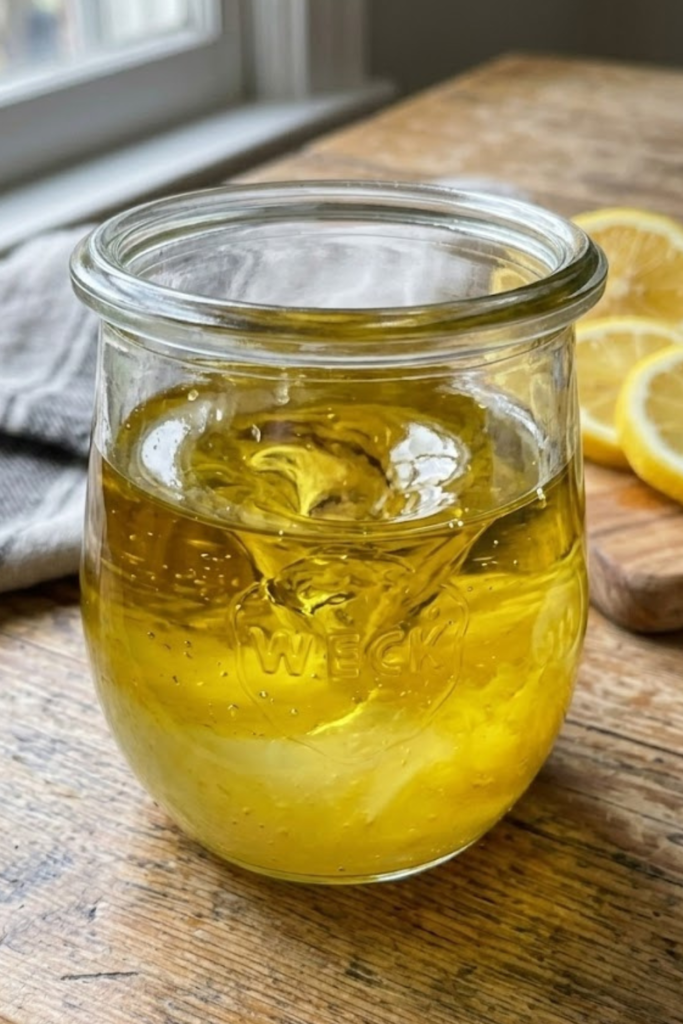
I used to grab those bottled Greek dressings at the store because I thought making my own was way too much work. Turns out, I was wrong. A simple mix of extra virgin olive oil and fresh lemon juice is all you really need to bring this whole dish together. The lemon gives it that bright zing that cuts through the salty feta, and the olive oil makes everything feel smooth and rich.
When I make this, I like to whisk the oil and juice in a small jar first. You can also just shake it up if the lid is tight. I usually throw in a pinch of dried oregano or maybe a little bit of cumin if I want a warmer flavor. It doesn’t take much—just enough to give it a little personality.
One thing I’ve learned is to pour the dressing over the couscous while it’s still a little bit warm. The grains soak up all that flavor much better than when they’re cold. Give it a good toss so every single piece of veggie and every grain of couscous gets a little bit of that golden liquid. It’s the final step that turns a bunch of random ingredients into a real meal. It’s simple, it’s fast, and it tastes a hundred times better than anything you’ll find in a plastic bottle.
I hope you really enjoy making this dish as much as I do. It is one of those recipes that makes you feel like a total pro in the kitchen, even if you are just starting out. We covered how to get that perfect fluffy texture without making a soggy mess, and we talked about why chopping those veggies small makes every bite taste better. Plus, adding those punchy flavors like the feta and lemon really brings the whole thing to life.
This Beginner Mediterranean Veggie Couscous is great for a quick lunch, a light dinner, or even a side dish for a big get-together. It is simple, healthy, and honestly just looks beautiful on the plate. If you found these tips helpful, please do me a huge favor and save this to your favorite Pinterest board! It helps other people find this recipe and it really helps support my work here. Happy cooking!