Ever had a dish that felt like a warm hug from a Greek grandmother you never actually had? That was me three years ago, huddled in a tiny kitchen trying to recreate a Mediterranean Eggplant Stew I’d eaten on a rainy afternoon. Honestly, I thought I’d ruined it when the eggplant looked like mush, but that’s the secret—the “mush” is where the magic happens! Did you know that eggplant consumption has jumped nearly 15% globally since 2023 because of its incredible ability to mimic meat textures in plant-based diets? This stew isn’t just a meal; it’s a masterclass in slow-cooked, savory goodness that’ll make your kitchen smell like a summer villa in Crete.
Master the Prep: Selecting and Salting Your Eggplant
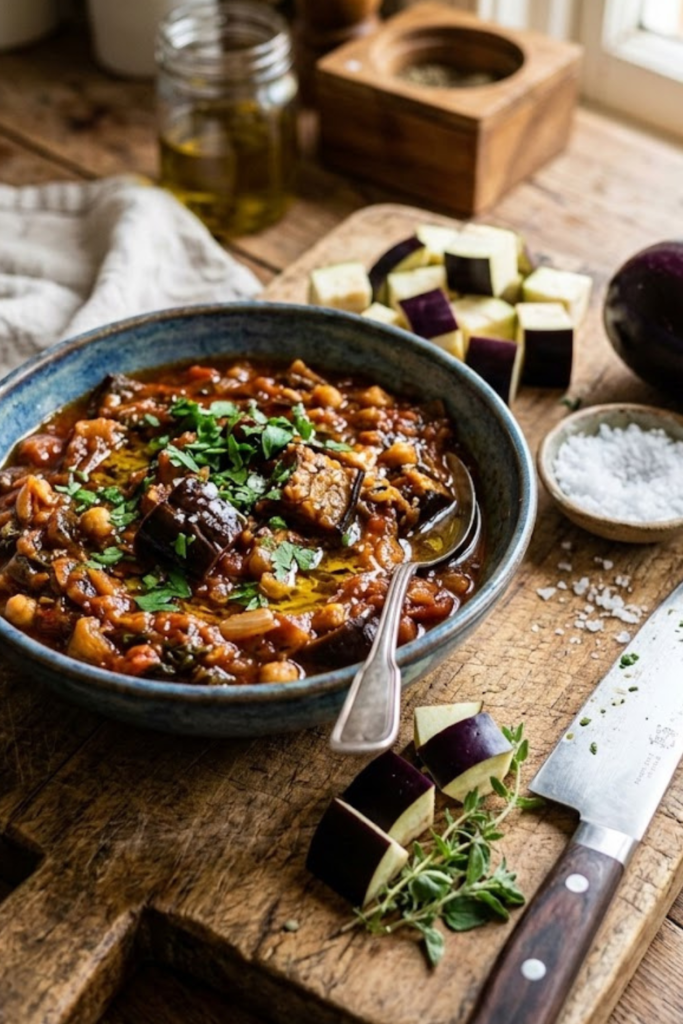
I remember the first time I tried to make this stew. I picked the biggest, most giant eggplant I could find at the grocery store because I thought it would be a better value. Big mistake! It ended up being full of seeds and had a really bitter taste that even the garlic couldn’t hide. Now, I always tell my friends to look for medium-sized eggplants. You want them to feel heavy for their size and have skin that shines like a new car. If you see soft spots or the skin looks dull, just leave it there. A firm eggplant is what gives you that meaty texture that makes this dish so satisfying.
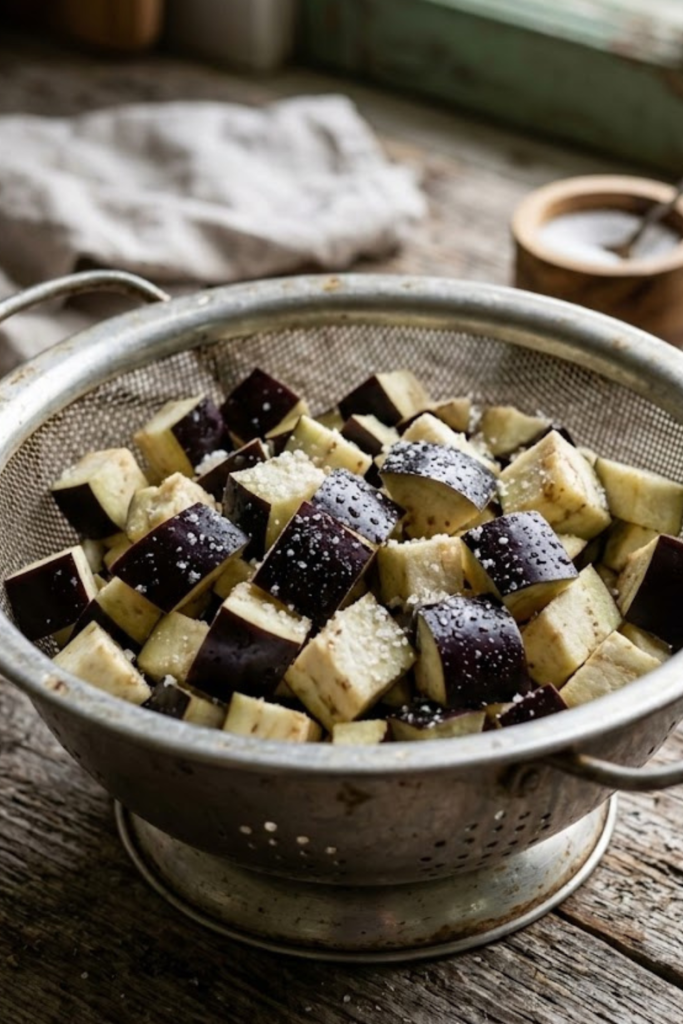
One thing I learned the hard way is that you can’t just chop an eggplant and throw it in the pan. Well, you can, but it will soak up olive oil like a dry sponge. I found that if I salt my cubes first, the texture is much better. I cut them into 1-inch pieces—try to keep them the same size so they cook evenly—and toss them in a colander with a good sprinkle of salt.
Let them sit for about 20 or 30 minutes. You’ll see little beads of “sweat” on the cubes. This is great because the salt is pulling out the bitter juices and closing up those tiny air pockets in the veggie. After they sit, I just pat them dry with a paper towel. Doing this makes sure your stew doesn’t turn into an oily mess. It takes a little extra time, but your taste buds will definitely thank you later. It really makes the difference between a “meh” meal and a great one.
The Aromatics: Building a Flavor Foundation
If there is one thing I’ve learned from years of cooking for my family and friends, it’s that you can’t rush the beginning. Once your eggplant is prepped, it is time to move on to what I call the “flavor base.” This is where your kitchen starts to smell so good that people will wander in asking when dinner is ready. I always start with a generous pour of extra virgin olive oil. Don’t be shy with it! Mediterranean cooking relies on that healthy fat to carry all the other flavors.
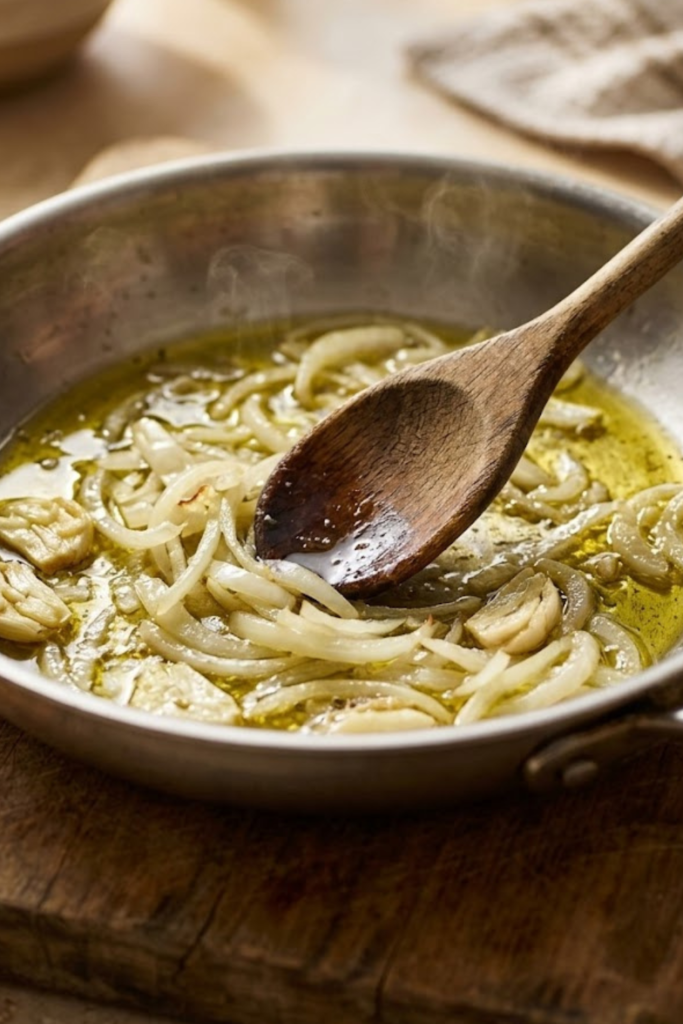
I toss in a diced yellow onion and let it cook until it’s soft and translucent. Then comes the garlic. I like to smash my garlic cloves before chopping them because it releases more of those flavorful oils. A little tip from my kitchen: add the garlic last so it doesn’t burn. Burnt garlic tastes bitter and can really ruin the whole pot.
Now, let’s talk about the spices. I always use dried oregano and a pinch of red pepper flakes for a tiny bit of heat. But the real “secret” I tell everyone is a tiny pinch of cinnamon. It sounds strange for a savory stew, but it adds a warmth that makes people wonder what that delicious “hidden” ingredient is. After the onions and spices have cooked for a few minutes, you might see some brown bits stuck to the bottom of the pan. That is flavor gold! I pour in a splash of balsamic vinegar or a little red wine to scrape those bits up. This simple step makes the sauce taste much deeper and richer without much effort.
Slow-Simmered Perfection: Cooking the Stew
After you get those onions and spices smelling great, it’s time for the tomatoes. This is the part that really brings the stew together. I usually go for a big can of San Marzano tomatoes because they have a naturally sweet taste and aren’t too acidic. If it’s summer and my garden is overflowing with fresh, vine-ripened tomatoes, I’ll use those instead. Just make sure to peel them first if you don’t like bits of skin in your sauce.
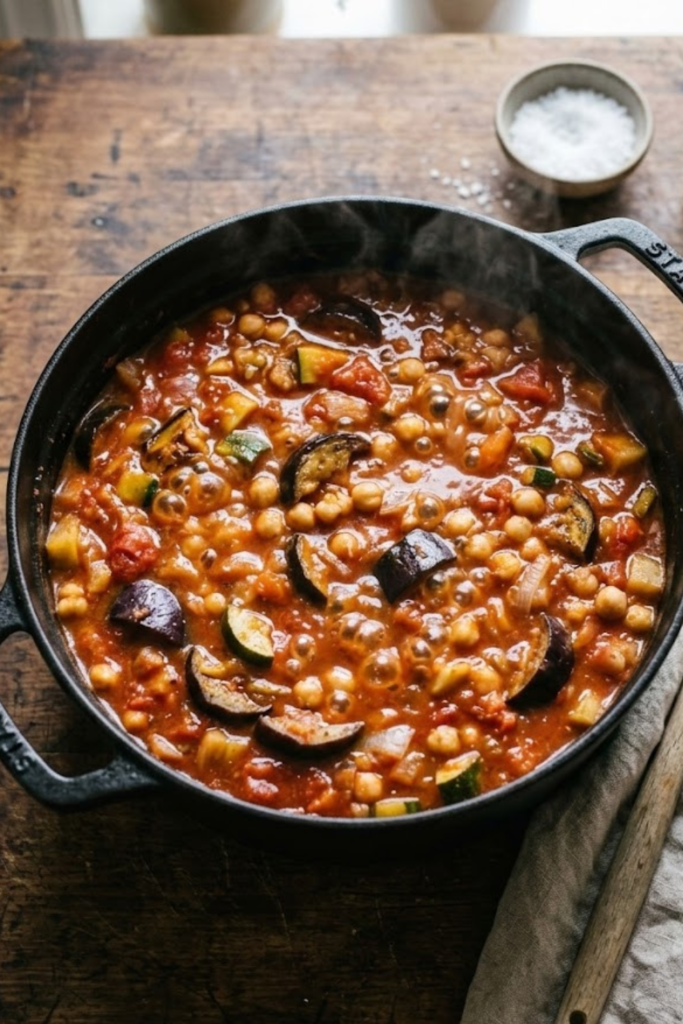
Now, here is where you have to be patient. You want to turn the heat down low and let it simmer. Don’t rush this! I usually let mine go for at least 30 to 40 minutes. This gives the eggplant time to get soft and soak up all that tomatoey goodness. If you cook it too fast on high heat, the eggplant stays tough and the flavors don’t mix well.
To make the meal a bit more filling, I like to add some texture. A can of chickpeas or some big, buttery gigante beans works wonders. I just drain them and stir them in about ten minutes before the stew is done. It adds a nice protein boost and makes the dish feel like a full meal. Sometimes I even add a bit of vegetable broth if the sauce gets too thick. Just keep an eye on it and stir it every now and then so nothing sticks to the bottom. It’s an easy way to get a healthy dinner on the table.
Finishes and Garnishes: Elevating the Dish
Once the stew is finished cooking and looks thick and delicious, don’t just jump in and start eating quite yet! This last part is what makes the meal go from “pretty good” to something people will actually talk about. I always think of fresh herbs as the finishing touch that makes the whole dish pop. I like to use a big handful of flat-leaf parsley. If I have some mint or dill sitting in the fridge, I’ll chop that up and toss it in too. It adds a bright freshness that cuts right through the heavy, rich tomato sauce.
Another trick I use is adding a big squeeze of fresh lemon juice right before I serve it. A friend once told me their cooking tasted a bit “flat,” and I told them they just needed some acid. That little bit of lemon wakes up all the earthy flavors in the eggplant. If you don’t have a lemon handy, a tiny drop of balsamic vinegar can do the trick too.
When it’s finally time to eat, I usually grab a big piece of crusty sourdough bread. You really want something that can soak up every last drop of that sauce so none of it goes to waste! Sometimes I’ll serve the stew over a bowl of fluffy couscous or even add a big scoop of cold Greek yogurt on top. The mix of the cold yogurt against the hot, savory stew is so good. And if you’re a fan of cheese, a little bit of crumbled feta on top is a total game changer. It adds a salty kick that fits perfectly with the eggplant.
I also like to sprinkle a few toasted pine nuts or even some sunflower seeds on top if I have them in the pantry. That tiny bit of crunch really changes the whole experience and makes the soft eggplant taste even better. If you have some Kalamata olives in the back of the fridge, chop those up and throw them in too for a nice salty punch. I always keep a bottle of my “good” olive oil hidden in the cupboard just for drizzling on top at the very end. It adds a silky feeling that you just can’t get from cooking alone. I’ve found that these little extras are what get my family to actually finish their vegetables without complaining. It’s funny how a bit of cheese and some fresh green stuff can make a simple stew feel like a real holiday feast. Even if you are tired after work, taking two minutes to add these toppings makes the meal feel much more special.
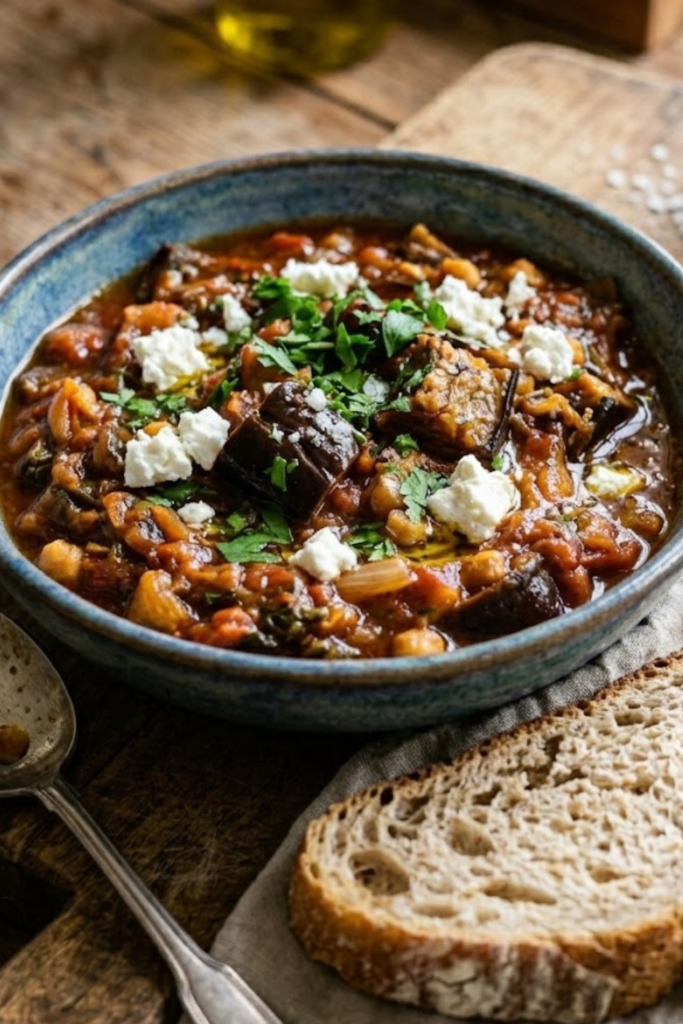
Making this Mediterranean Eggplant Stew has taught me that being patient is really the best thing you can do in the kitchen. It is a hearty, filling meal that actually tastes even better the next day after the flavors have had time to sit together in the fridge! It’s one of those recipes that feels fancy but is actually pretty simple once you get the hang of prepping the eggplant. I hope this becomes a favorite in your house like it is in mine.
I often make a double batch on Sundays so I have easy lunches ready for the whole week. It’s also a great way to use up any leftover veggies you have in the crisper drawer, like zucchini or even a handful of spinach. Just remember that there’s no “wrong” way to do this as long as you like the taste. Seeing my kids actually ask for seconds of a vegetable dish is the best feeling in the world. Cooking shouldn’t be something that stresses you out, so just take your time and enjoy the process. If you enjoyed this recipe, please save it and share it on Pinterest so other people can find it and give it a try!