Did you know that the Mediterranean diet has been ranked as the healthiest way to eat for years now? Honestly, I used to think “healthy” meant eating flavorless grass. I was so wrong! My first Beginner Mediterranean Veggie Bowl was a total accident because I just threw leftovers in a bowl, and wow, my life changed!
Y’all, eating healthy shouldn’t feel like a chore or some big math problem. It’s about fresh flavors and feeling good after you eat. This bowl is the perfect way to start your 2026 wellness journey without wanting to cry over a kale leaf.
Picking Your Base: It’s Not Just Lettuce!
When I first started trying to eat better, I thought a “bowl” was just a fancy way to say “salad.” I’d fill up a big plastic bowl with iceberg lettuce, throw in two cherry tomatoes, and call it a meal. Let me tell you, that was a huge mistake. By the time I finished my lunch break, I was already looking for the vending machine. That’s the first thing I tell everyone now: your Beginner Mediterranean Veggie Bowl needs a solid foundation if you want to actually stay full.
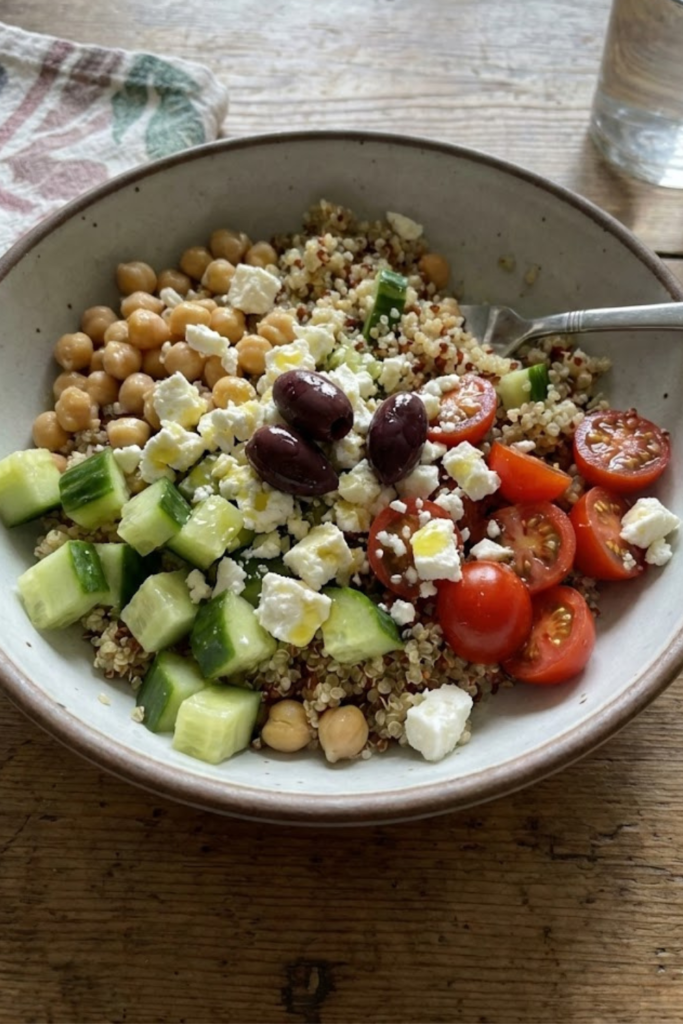
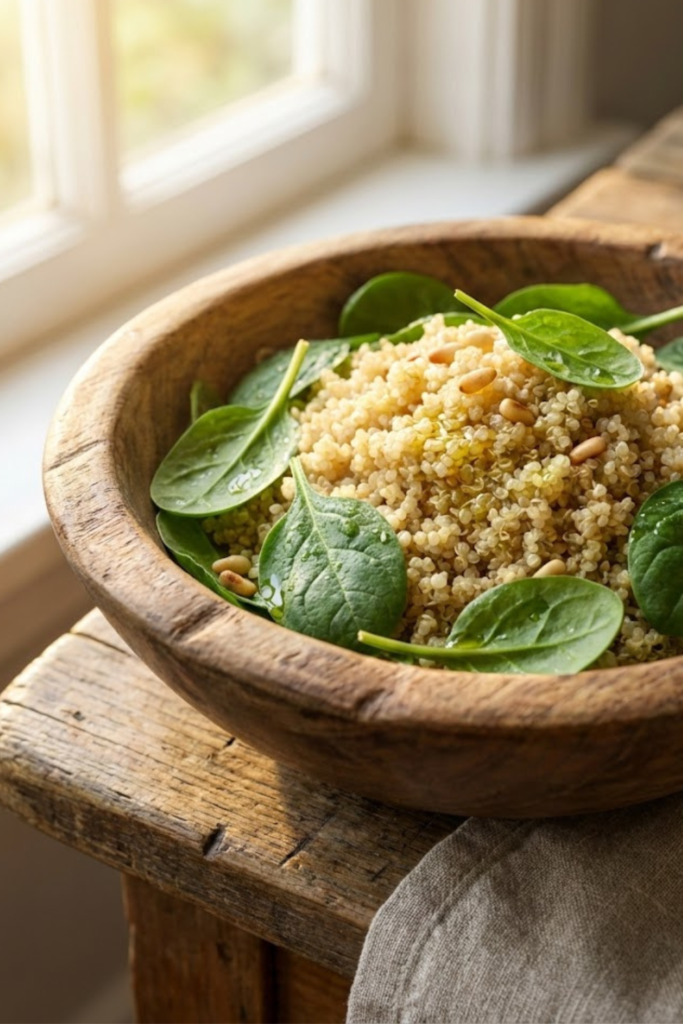
I usually go for grains because they soak up all the yummy juices from the veggies. My absolute favorite is quinoa. It’s funny, because a few years ago I couldn’t even pronounce it (it’s keen-wah, by the way), but now it’s a staple in my pantry. Quinoa is great because its a “complete protein,” which is just a science way of saying it has everything your body needs to stay strong. To cook it, I use a simple ratio: two cups of water for every one cup of quinoa. Bring it to a boil, then turn it down low and cover it for about 15 minutes. It comes out fluffy every time. Just make sure you rinse it first in a fine mesh strainer, or it can taste a bit like dirt!
If you aren’t a fan of quinoa, farro is another great pick. It’s got this nutty, chewy texture that reminds me of barley. It takes a little longer to cook—about 30 minutes—but it’s very filling. On the weeks when my grocery budget is a bit tight, I just use brown rice. It’s cheap, it’s easy, and it gets the job done.
For my friends who are trying to watch their carbs, you can use cauliflower rice. But here is a teacher tip: don’t use only cauliflower rice or you’ll be hungry in an hour. I like to do a “half and half” mix. Half cauliflower rice and half quinoa. It gives you that volume you want without all the extra calories, but still keeps you satisfied.
The goal here is to create a base that acts like a sponge for your dressing. Whether you pick a grain or a mix of greens and grains, make sure you season it with a little salt and pepper while it’s still warm. It makes a world of difference in the final taste!
The Roasted Veggie Secret (My Biggest Mistake)
Listen, I used to be so impatient in the kitchen. I’d try to roast sweet potatoes for my Beginner Mediterranean Veggie Bowl and take them out while they were still hard in the middle. It was gross! I thought I was saving time, but I was really just ruining my lunch. The real secret to a bowl that tastes like it came from a fancy cafe is letting those veggies get a little bit of a “tan” in the oven. That caramelization is where all the flavor lives.
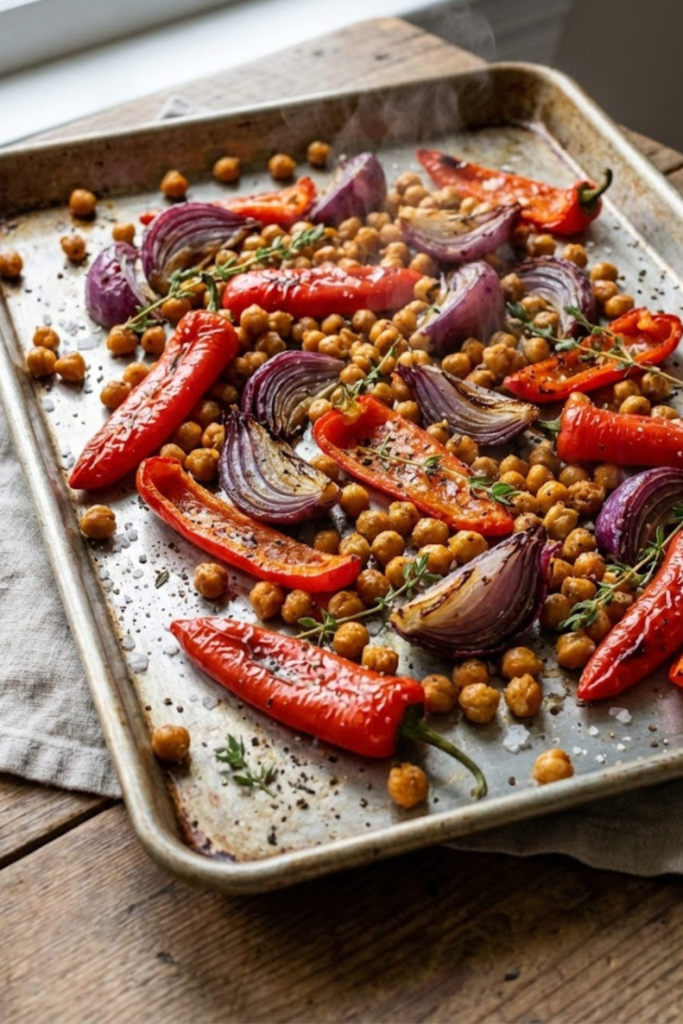
When you’re roasting, don’t crowd the pan. I used to pile everything on top of each other because I didn’t want to wash two baking sheets. But if the veggies are touching, they just steam and get mushy instead of getting those crispy edges. Now, I make sure they have plenty of room to breathe. I usually set my oven to 400 degrees. Toss your chopped peppers, onions, and sweet potatoes in a bowl with a good splash of olive oil, salt, and maybe some dried oregano. Give them a good toss with your hands—it’s the best way to make sure every piece is covered.
One thing that surprised me was roasting chickpeas. If you’ve only ever had them straight from the can, you are missing out! I dry them off really well with a paper towel first. If they stay wet, they won’t get crunchy. I roast them right on the same tray as the other veggies. They get this nutty, crispy texture that acts like croutons but is way better for you.
I usually leave my tray in for about 25 to 30 minutes. You want to see the edges of the red onions getting dark and the peppers getting soft and sweet. Don’t be scared if a few spots look a little burnt; that’s actually the best part! About halfway through, I just give the tray a little shake or use a spatula to flip things over.
Teaching my students about this always makes them realize that healthy food doesn’t have to be boring or raw. It’s all about how you cook it. Just remember: patience is the most important ingredient here. If you pull them out too early, you’re just eating warm raw vegetables, and nobody wants that! Let them get those golden-brown edges, and your taste buds will thank you later.
The “Holy Grail” Sauce: Lemon Tahini
If you skip the sauce, you’re basically just eating a pile of dry vegetables. I learned this the hard way back when I first tried making a Beginner Mediterranean Veggie Bowl. I thought I could just squeeze a little lime on top and call it a day. Boy, was I wrong! It tasted like I was chewing on a damp garden. You need something creamy to tie everything together.
For me, the real winner is a lemon tahini dressing. Now, let me tell you about my first time with tahini. I bought a jar, opened it up, and saw this layer of oil on top. I didn’t know you had to stir it! I just poured the oil out like a total rookie. Don’t do that. You need that oil for the texture.
My Big Tahini Disaster
One time, I was trying to impress some fellow teachers at a potluck. I started mixing my lemon juice into the tahini, and suddenly, it turned into a thick, gritty paste. I panicked! I thought it was ruined and almost threw the whole bowl in the trash. It looked like wet sand.
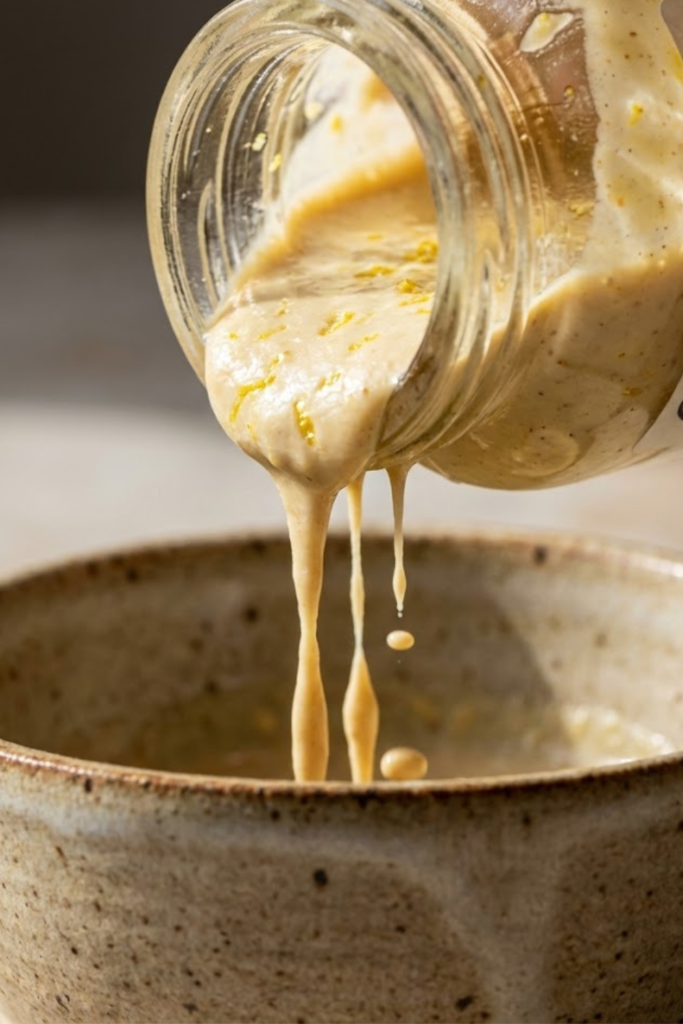
It turns out, tahini does this weird thing called “seizing” when you add liquid. I learned that you just have to keep whisking and adding water. It’s like magic. One second it’s a mess, and the next, it’s as smooth as silk. If your Beginner Mediterranean Veggie Bowl sauce looks chunky at first, just stay calm. Keep adding a tablespoon of warm water at a time. It will come back to life, I promise!
The Perfect Ratio
I like to keep things simple. Use 1/4 cup of tahini, the juice of one big lemon, and a clove of smashed garlic. If you want it to be really good, use fresh lemons. That bottled stuff in the plastic fruit? It’s got a weird metallic taste that ruins the vibe. I usually add about 2 or 3 tablespoons of water to get it to the right thickness.
- Tip 1: Use warm water to thin it out. It helps the fats blend better.
- Tip 2: Add a pinch of cumin if you want it to taste “authentic.”
- Tip 3: Taste it as you go! If it’s too sour, add a drop of maple syrup.
Why It Matters For Your Bowl
This sauce is what makes the Beginner Mediterranean Veggie Bowl feel like a real meal. It adds those healthy fats that satisfy your brain. Plus, it covers up any veggies you might have accidentally overcooked. We’ve all been there!
When you pour this over your quinoa and roasted chickpeas, it creates this beautiful glaze. I honestly think I could eat a shoe if it was covered in this tahini sauce. Its that good. Just remember to whisk it until it’s creamy, and don’t be afraid of the garlic breath. It’s worth it.
Toppings That Make You Feel Fancy
This is where the fun really starts! Adding toppings is my favorite part of making a Beginner Mediterranean Veggie Bowl because it’s where you can really get creative. When I first started cooking like this, I was a bit stingy. I’d put like two olives and a tiny sprinkle of cheese because I was worried about calories. But I quickly realized that these little “extras” are what actually make the meal feel like a treat instead of a chore.
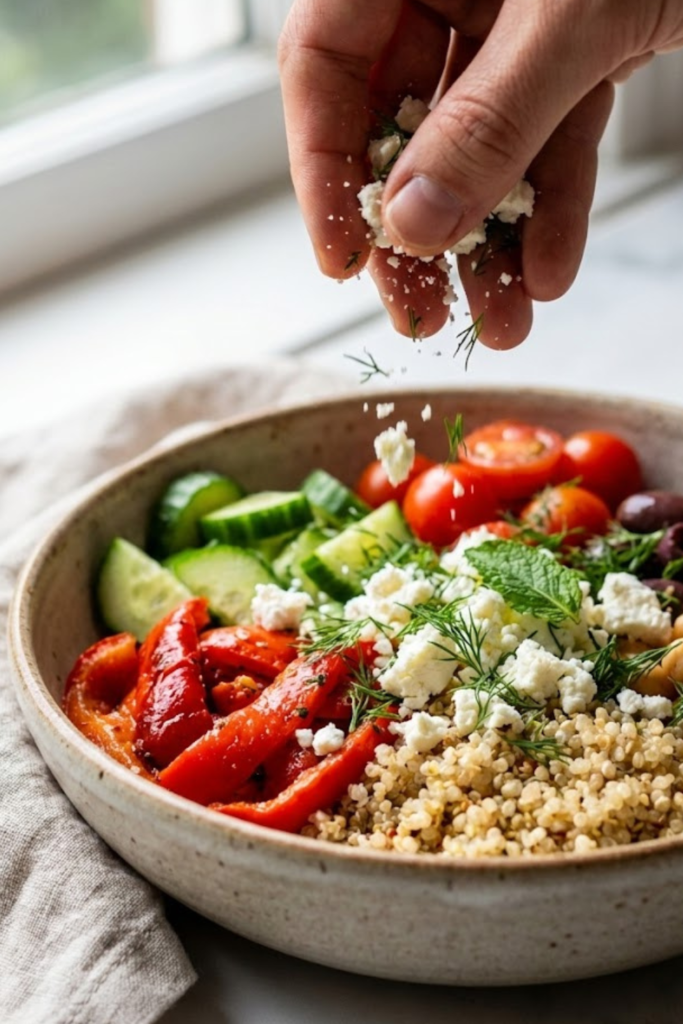
I remember one time I invited my neighbor over for lunch. I had made these bowls, but I forgot to buy the feta cheese. I felt so bad! I tried to play it off like it was a “vegan version,” but the bowl just felt like it was missing its soul. Now, I always keep a block of feta in the fridge. It adds that salty, tangy kick that makes everything else pop. If you’re using feta, buy the kind that comes in a block of brine rather than the pre-crumbled stuff. It tastes way fresher and doesn’t have that weird chalky coating.
Here are the toppings I never skip:
- Feta Cheese: Like I said, its a game changer. If you don’t do dairy, a scoop of vegan almond-based cheese works too.
- Kalamata Olives: These are the dark purple ones. Don’t use the canned black olives you put on tacos; they just don’t have enough flavor for this.
- Fresh Parsley: I used to think garnish was just for show, but fresh herbs actually help your digestion and make the whole bowl smell amazing.
- A Scoop of Hummus: I like to put a big dollop right in the center. It acts like a second sauce and gives you a different texture in every bite.
Another thing I love is adding something crunchy. Sometimes I’ll throw on a handful of toasted pine nuts or even some sunflower seeds if I’m trying to save money. It gives your mouth something to do while you’re eating! I once tried putting walnuts on my Beginner Mediterranean Veggie Bowl because I ran out of everything else. It was a bit weird at first, but honestly? It worked!
The best part about toppings is that there are no real rules. If you like heat, throw on some red pepper flakes. If you love avocado, mash half of one on top. I tell my students all the time: your bowl should look like a rainbow when you’re done. If it looks pretty, you’re going to be much more excited to eat it. Just don’t be afraid to pile them on. This is your meal, so make it something you actually look forward to!
Honestly, making your own Beginner Mediterranean Veggie Bowl is a total game changer for those busy weeks where you feel like you have zero time to breathe. I remember when I used to just grab a greasy burger because I thought cooking something healthy would take hours. I was so wrong! Once you get the hang of roasting your veggies and whisking that sauce, it all comes together so fast.
This bowl isn’t just about eating your greens; it’s about fueling your body so you don’t crash by 3:00 PM. I’ve noticed that since I started eating these for lunch, I don’t need that third cup of coffee anymore. It’s funny how much better you feel when you actually give your body what it needs. Plus, it’s so easy to switch things up so you never get bored. One day I might use farro and the next I’m using brown rice.
I really hope this guide helps you get started on your own healthy journey in 2026. Don’t worry if your first bowl doesn’t look like a picture from a magazine—it’s the taste and how it makes you feel that matters! Just keep practicing and you’ll be a pro in no time. If you enjoyed this recipe and want to help others find it, please share this post on Pinterest so we can keep the veggie party going! Happy eating!