I used to think quinoa was strictly a dinner side dish until I accidentally made too much one night. The next morning, I tossed in some eggs and veggies, and wow—game changer! Did you know that opting for a savory breakfast can actually curb sugar cravings later in the day? This Mediterranean Breakfast Quinoa is my absolute go-to for sustaining energy without the mid-morning crash. It’s vibrant, fresh, and honestly, it tastes like a vacation in a bowl. You have to try this!
Why You Need to Switch to Savory Quinoa Breakfast Bowls
Look, I get it. The idea of eating “dinner food” for breakfast sounds a little weird at first. I used to be the person who needed something sweet with my coffee—usually a muffin or a bowl of cereal that was basically just sugar in disguise. But by 10:30 AM, heavily crashing in my classroom and staring at the clock, I realized something had to change. That’s when I stumbled onto savory breakfasts. Specifically, these quinoa bowls.
Switching to savory quinoa wasn’t just about trying to be “healthy.” It was about actually functioning like a human being before noon. When you front-load your day with veggies and grains instead of syrup and flour, your whole morning vibe changes. You don’t feel heavy or sluggish. You feel ready to go.
It’s a Total Protein Powerhouse
Most of us just don’t get enough protein in the morning. Traditional breakfast foods like toast or oatmeal are okay, but they often leave you hungry an hour later. Quinoa is different. It is one of the few plant foods that is a “complete protein,” meaning it has all the little building blocks (amino acids) your body needs to fix itself up.
When I eat this bowl, I stay full until lunch. No snacking, no wandering into the breakroom looking for donuts. It sticks to your ribs in a good way, not a heavy way.
Say Goodbye to the Sugar Crash
We have all been there. You eat a bagel, you feel great for thirty minutes, and then boom—you want to take a nap. That is the sugar crash. It happens because refined carbs shoot your blood sugar up and then drop it off a cliff.
Quinoa is a complex carbohydrate. This means your body takes a long time to break it down. Instead of a spike and a crash, you get a slow, steady burn of energy. It’s like putting a big log on the fire instead of a bunch of newspaper. You get steady heat all morning long.
Naturally Gluten-Free and Gut Friendly
I know a lot of people are trying to cut back on bread these days. Maybe your stomach gets upset, or you just feel bloated. Since quinoa is actually a seed (weird, right?), it is naturally gluten-free.
Plus, with the Mediterranean twist, you are getting healthy fats from olive oil and fiber from the veggies. It keeps things moving, if you know what I mean. Your gut is going to be a lot happier with cucumber and olive oil than it is with processed bacon or sugary pastries. Trust me on this one.
Essential Ingredients for the Perfect Mediterranean Bowl
Honest talk here: a recipe is only as good as the stuff you put in it. Since this breakfast bowl is mostly raw ingredients mixed with the grain, you really want them to taste fresh. I remember the first time I made this, I used a sad, mealy tomato I found rolling around the back of my vegetable drawer, and it just ruined the whole vibe. You don’t have to buy the most expensive organic stuff at the store, but try to pick veggies that look bright and crisp.
The best part is that this is super flexible. I hate wasting food, so if I have half a bell pepper left over from taco night, guess what? It goes in the breakfast bowl.
The Quinoa Base
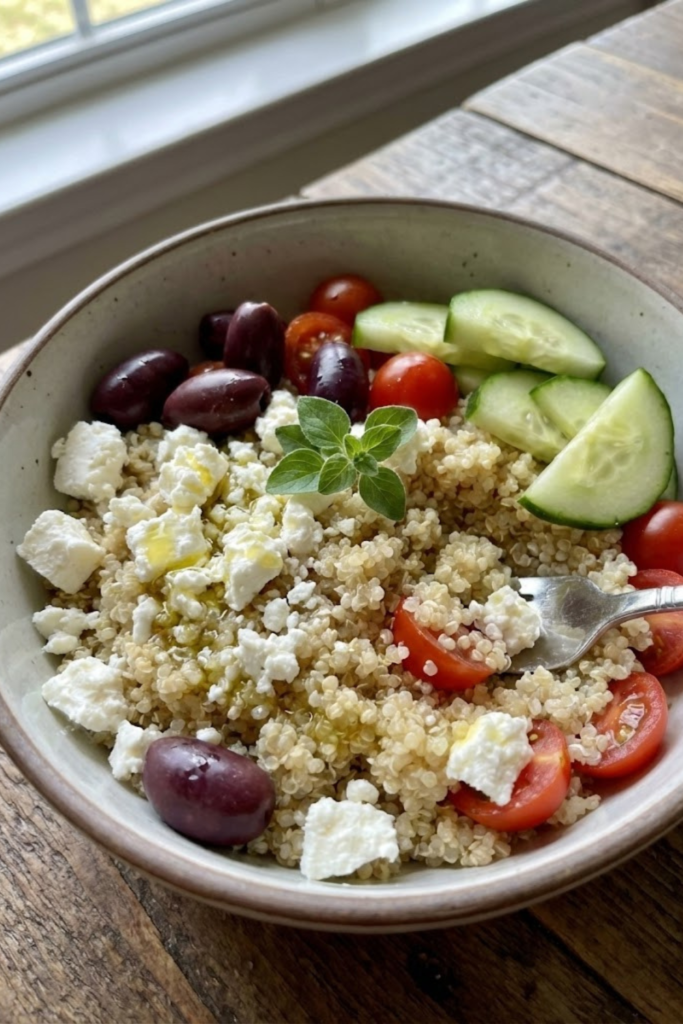
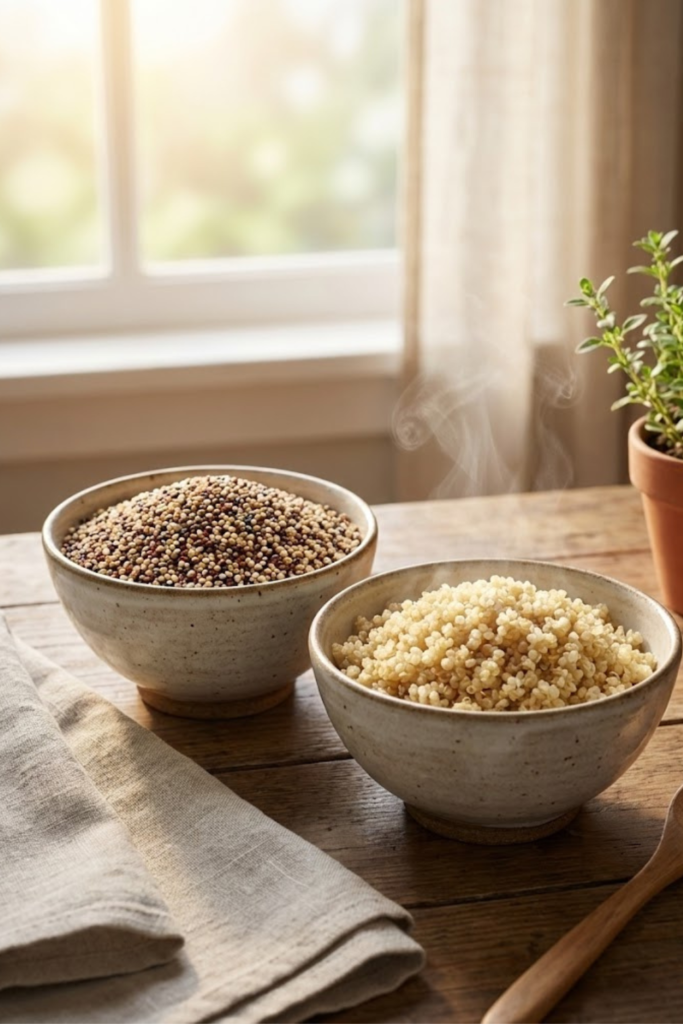
You actually have a few choices in the grain aisle. I usually stick with white quinoa because it cooks up the fastest and ends up the fluffiest. It has a mild flavor that doesn’t fight with the dressing, which is great if you are new to this. Red or black quinoa is a little earthier and chewier. Sometimes I use the tri-color bag just because it looks pretty in the bowl, and hey, we eat with our eyes first, right?
Just a quick teacher tip: if the box doesn’t say “pre-rinsed,” make sure you wash it! Unwashed quinoa has a natural coating called saponin that tastes bitter, kind of like soap. Definitely not a flavor you want first thing in the morning.
The Fresh Veggies
For the cucumber, I highly recommend getting the English cucumbers (the long skinny ones usually wrapped in plastic). They have thinner skin so you don’t have to peel them, and they have fewer seeds. The regular fat cucumbers can be really watery and make your breakfast soggy by the time you get to work.
For tomatoes, I stick to cherry or grape tomatoes. They are usually sweeter than the big slicing tomatoes and they have a nice “pop” when you bite them. If you do use a big tomato, scoop out the seeds so your bowl doesn’t turn into soup.
The Salty Kick
This is the secret weapon. Feta cheese provides that creamy, salty bite that makes this feel like a treat instead of health food. Please, do yourself a favor and buy the block of feta that comes in the brine (salt water), not the dry pre-crumbled stuff. It stays moist and tastes so much fresher.
Then there are the Kalamata olives. I know some people pick them out, but they add a depth that regular salt just can’t give. If you absolutely hate olives, you could try capers or just add a pinch more salt to your dressing.
The Simple Dressing
Don’t overthink this part. You don’t need a bottle of store-bought dressing with twenty ingredients you can’t pronounce. A good “glug” of extra virgin olive oil, fresh lemon juice (not the stuff in the plastic lemon shape), and dried oregano are all you need. The warm quinoa soaks up that lemon and oil, and it is just magic.

How to Make Mediterranean Breakfast Quinoa (Step-by-Step)
If you can boil water, you can make this dish. Seriously. I am not a trained chef; I’m a teacher who is usually grading papers while trying to get dinner on the table. This recipe is super forgiving. If you mess up the chopping a little, it will still taste fine. The biggest mistake people make is treating quinoa like pasta. You don’t drain it at the end; you want the water to absorb completely.
Rinsing Is Not Optional
Okay, listen to me on this one because I learned the hard way. The first time I made quinoa, I dumped it straight from the box into the pot. It tasted bitter and weirdly soapy. Quinoa has a natural coating called saponin. It keeps bugs away in nature, but it tastes terrible to us.
Get a fine-mesh strainer (the one with the tiny holes, not a colander you use for macaroni). Put your grain in there and run cold water over it for a minute. Use your hand to swish it around until the water runs clear. It takes sixty seconds and makes a huge difference in the final taste.
The Cooking Method That Works
I use the “two-to-one” rule. That means two cups of water for every one cup of dried quinoa. Put the water and the rinsed grain in a small pot. Turn the heat up high until it boils. As soon as you see big bubbles, turn the heat down to low—like, really low. Put the lid on and walk away.
Here is the hard part: do not lift the lid! I know you want to check it. Don’t. It needs the steam to cook evenly. Set a timer for 15 minutes. When the timer beeps, take it off the stove but leave the lid on for another 5 minutes. Then, open it up and fluff it with a fork. It should look light and spiral-y, not mushy.
Chop While It Simmers
While the grain is doing its thing on the stove, that is your time to shine with the knife. Dice your cucumber into small squares and cut your cherry tomatoes in half. If you are using red onion, chop it really small. Big chunks of raw onion at 7 AM might be a bit much for your coworkers to handle later!
Putting It All Together
I like to mix everything while the quinoa is still a little warm. It helps the flavors blend better than if the grain is ice cold. Dump the fluffy grain into a big mixing bowl. Throw in your chopped veggies, the olives, and the crumbled feta. The warmth from the quinoa makes the feta get just a little soft and creamy, which is delicious.
Pour your olive oil and lemon juice right on top. Sprinkle some dried oregano and maybe a little black pepper. Give it a big toss until everything looks shiny and coated. That’s it. You just made a healthy, fancy-looking breakfast in about twenty minutes.

Meal Prep and Storage Tips for Busy Mornings
Mornings in my house are pretty much a zoo. Between finding my keys, grading that one last stack of papers, and trying to get out the door before the bell rings, cooking breakfast on a Tuesday is just not happening. That is why meal prepping this quinoa bowl is a total lifesaver. If I don’t make it ahead of time, I’m probably ending up with a vending machine granola bar, and nobody wants that.
This dish holds up really well in the fridge, which is rare for salads. Most leafy salads turn into slime after a day, but quinoa and crunchy veggies are tough enough to last.
Sunday is Prep Day
I usually take about thirty minutes on Sunday afternoon to get my life together for the week. I cook a big pot of quinoa—usually double what the recipe says—and let it cool down completely. This is important. If you put hot quinoa in the fridge, it creates condensation (water droplets), and that makes everything mushy.
Once it’s cool, I chop all the cucumbers and onions. I usually leave the tomatoes whole until the day of, or I keep them in a separate little container because they can get juicy and messy.
Glass Over Plastic
I used to use those cheap plastic tubs, but I switched to glass containers a few years ago. Glass keeps the food colder and doesn’t hold onto smells. You know how plastic sometimes smells like the spaghetti you made three months ago? Yeah, you don’t want your breakfast tasting like old garlic.
Plus, if you decide you want to warm up the quinoa part, you can just pop the glass container in the microwave without worrying about melting anything.
The Mason Jar Trick
If you want to feel fancy and keep your salad perfectly crisp, use the mason jar method. It actually works. You get a tall glass jar and layer the ingredients in a specific order so they don’t get soggy.
- Bottom: Put your dressing here (the oil and lemon).
- Layer 2: Hard veggies like cucumbers and onions. They can sit in the dressing and marinate without getting gross.
- Layer 3: The quinoa.
- Top: The feta cheese and delicate stuff like spinach or herbs. When you are ready to eat, you just dump it into a bowl and mix. Everything stays fresh for about 4 days this way.
Cold or Warm?
This is the big question. Honestly, in the summer, I eat it straight from the fridge. It’s refreshing when it’s hot outside. But in the winter, when my classroom is freezing, I like to heat up just the quinoa base in the microwave for 30 seconds before tossing in the cold veggies. It gives you a nice warm-cold contrast that feels a bit more like a comfort meal.

So, there you have it. That is how I turned a bag of “bird seed” (my husband’s words, not mine) into my absolute favorite way to start the day. I know it seems like a lot of steps when you read it all at once, but once you make it one time, you will see how easy it actually is. It’s just cooking a grain and chopping some veggies. You have done harder things than this!
If you are still sitting there thinking, “I don’t know, I really love my cinnamon toast,” I challenge you to just try it for one week. Just one. See how you feel at 11:00 AM compared to how you usually feel. When I switched to this Mediterranean bowl, the biggest difference wasn’t the number on the scale or anything like that—it was my brain fog. I could actually focus on my students and not just countdown the minutes until lunch. It feels good to put real fuel in your tank instead of just sugar.
Plus, there is something really nice about opening the fridge and seeing a bright, colorful meal waiting for you. It makes you feel like you are really taking care of yourself, even if the rest of your day is chaotic. We spend so much time taking care of other people—kids, bosses, family—that we forget to feed ourselves properly. This is a small way to reclaim that.
I really hope this recipe helps you as much as it helped me. It’s fresh, it’s filling, and it tastes like a little bit of summer even in the middle of January. You deserve a breakfast that makes you feel great.
Call to Action: If this recipe sounds like something you want to try, or if you just want to save it for later when you are feeling ambitious, please pin this to your Healthy Breakfasts board on Pinterest! It helps other people find the recipe, and it saves you from frantically searching Google for “savory quinoa thing” three weeks from now.
Thanks for reading, and happy cooking!