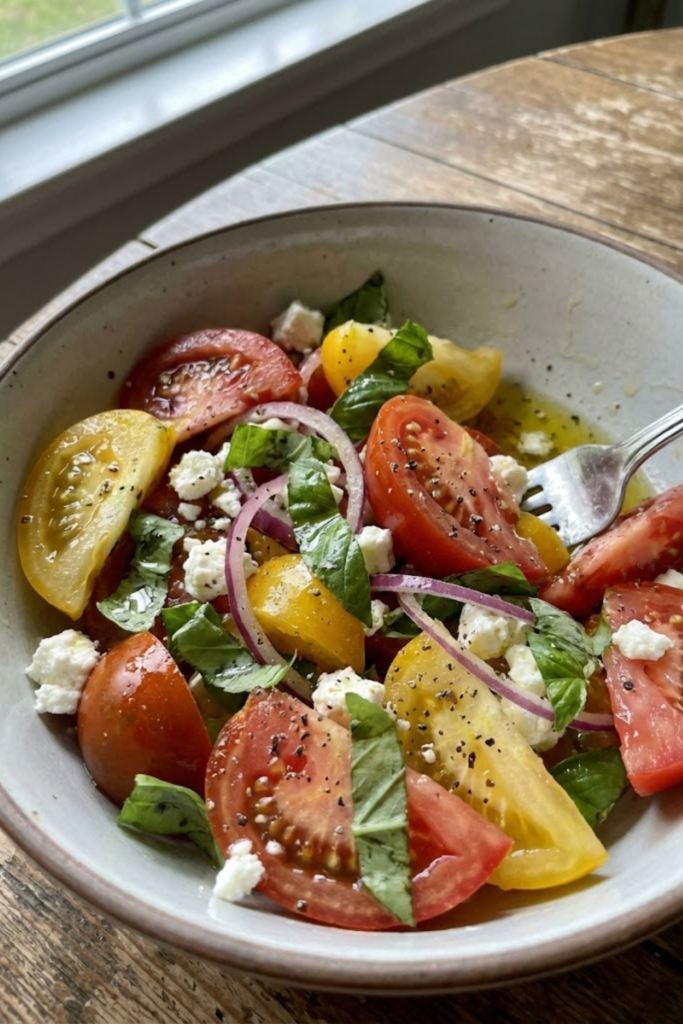
You know that feeling when you bite into a tomato that actually tastes like sunshine? That is exactly what we are chasing today! I remember my first trip to the Amalfi Coast; the salads were deceptively simple—just three or four ingredients—yet they exploded with flavor in a way my sad desk lunches never could. Why do we complicate things? This Mediterranean Tomato Basil Salad isn’t just a recipe; it’s a celebration of fresh produce and vibrant colors! Whether you are hosting a backyard BBQ or just need a quick lunch fix, this dish delivers a massive punch of flavor with minimal effort. Ready to ditch the boring greens? Let’s dive in!
Choosing the Best Tomatoes for Maximum Flavor
I have to be honest with you, I used to think a tomato was just a tomato. I would grab whatever bag was on sale at the grocery store, usually those hard, pale red ones that look perfect but taste like absolutely nothing. It wasn’t until I tried a real, garden-grown tomato that I realized what I was missing. If you want your salad to actually taste good, you can’t skimp on this part. It is the star of the show, after all. You need the right base to build a great dish, kind of like how you need a good foundation before you build a house.
Why “Ugly” Tomatoes Are Often Better
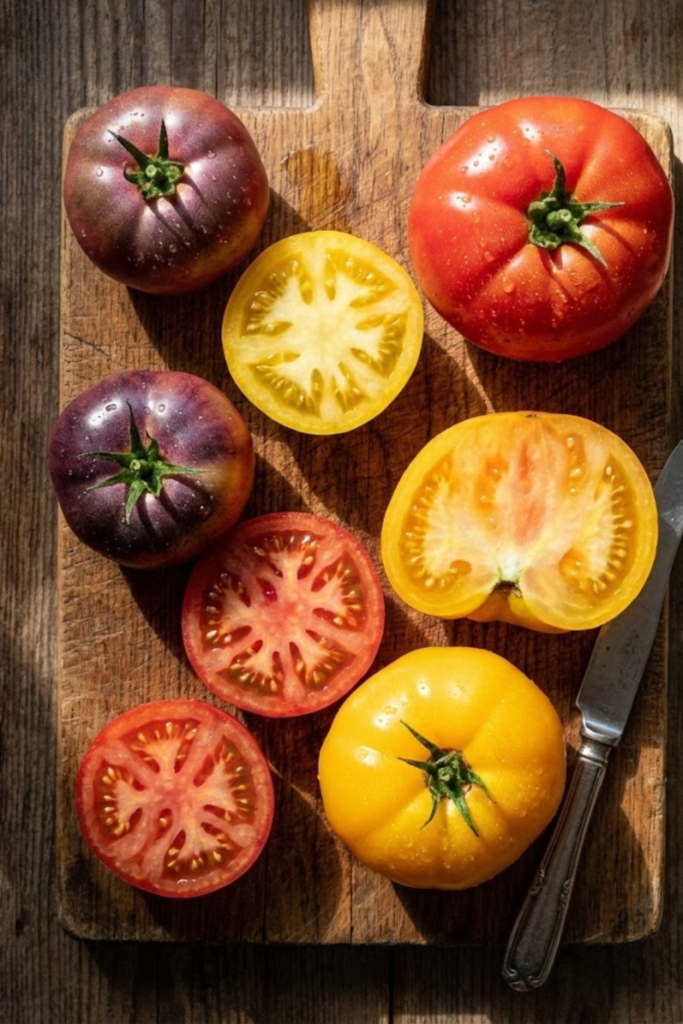
You might see those lumpy, weirdly colored tomatoes in the produce section and think they look a bit strange. Those are usually heirloom tomatoes, and let me tell you, they are the best thing you can buy for this salad. They aren’t bred to look pretty or travel in a truck for weeks; they are grown for flavor.
I love mixing up the colors—get a yellow one, a dark purple one (they sometimes call these “Cherokee Purple”), and a bright red one. It makes the bowl look amazing. If you can’t find heirlooms, look for anything labeled “vine-ripened.” These stay on the plant longer so they have a chance to actually get sweet before they are picked. Avoid the ones that feel like baseballs; they are just going to be crunchy and watery, which is definitely not what we want here.
The Squeeze Test
How do you know if it’s ready to eat? You have to pick it up. I tell my kids not to squeeze the produce too hard, but you need to give it a gentle little press. A good tomato for this salad should have a little bit of give to it. It shouldn’t be squishy—that means it’s overripe and will turn into mush when you slice it—but it shouldn’t feel like a rock either.
It should also feel heavy for its size. That means it is full of juice. If it feels light, it might be dry inside. Use your nose, too. If you smell the stem area, it should smell earthy and sweet, like a tomato plant. If it has no smell, it probably has no flavor.
Please, Keep Them Out of the Fridge!
If you take one thing away from reading this, let it be this rule: Do not put your tomatoes in the refrigerator. My husband tries to do this to “keep them fresh,” and I have to correct him every single time. Cold temperatures kill the flavor and change the texture.
When you put a tomato in the fridge, the insides get mealy and grainy. It loses that nice, silky texture we are looking for. Just leave them on the counter in a bowl. They will continue to ripen a little bit and will taste sweet and juicy when you cut into them. Trust me, room temperature tomatoes make a huge difference in how the final salad turns out.
The Art of the Vinaigrette: Olive Oil and Balsamic
I used to drown my salads in store-bought ranch because I thought eating veggies was a chore. But this salad? It is different. The dressing isn’t really a “dressing” like you buy in a bottle. It is just a few things you probably already have in your pantry, but how you use them changes everything. You aren’t hiding the flavor of the tomatoes; you are making them shine brighter. It is like putting a spotlight on a student who is doing a great job. The goal here isn’t to cover up the taste, but to lift it up.
Why the Oil Really Matters
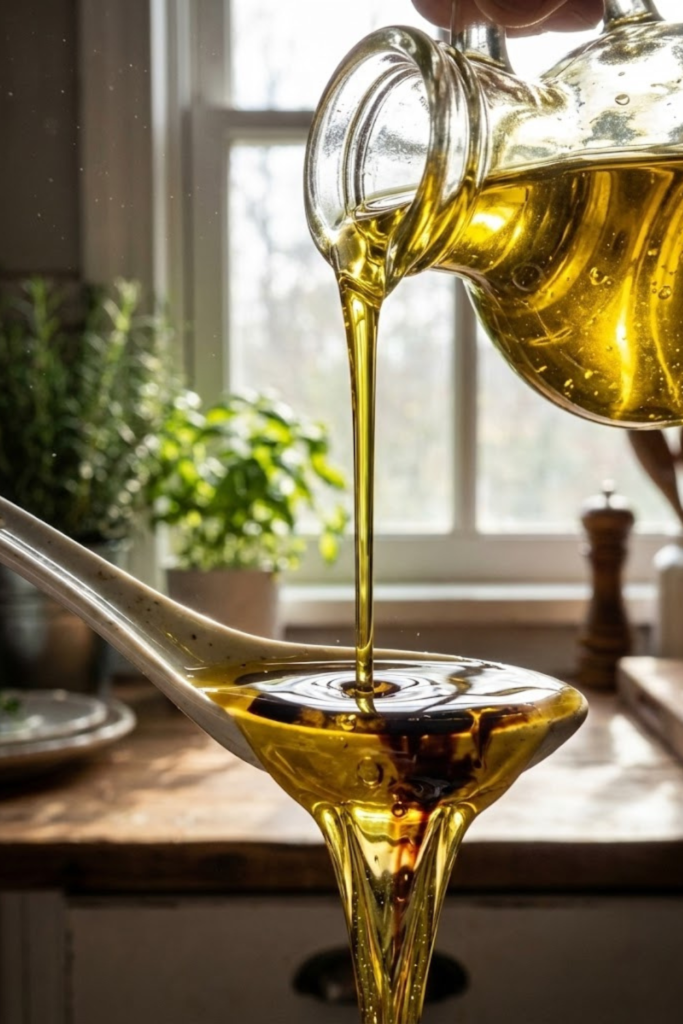
Since we are only using a couple of ingredients here, there is nowhere to hide. You really need to use Extra Virgin Olive Oil (EVOO). Please don’t grab the vegetable oil or canola oil you use for baking or frying. It just won’t taste right. You want that dark green, fruity-smelling olive oil.
I like to save my “good” oil—the slightly more expensive bottle—for raw dishes like this. Think of the oil as the blanket that wraps everything together. If the blanket is scratchy and cheap, nobody is comfortable. If the oil is bland or old, the salad falls flat. I always suggest pouring a little bit on a spoon and tasting it by itself first. If it tastes good plain, it will taste great on your fresh basil and tomatoes.
Getting the Tang Right
Now, the oil needs a partner to balance things out. That is where the vinegar comes in. I usually reach for a balsamic glaze or a good aged balsamic vinegar. It adds a deep, sweet tanginess that cuts through the richness of the oil. If you don’t have balsamic, red wine vinegar works fine too, though it will be a little bit sharper and less sweet.
I don’t usually measure—I know, I’m a bad teacher for not following the rules!—but a good starting point is three parts oil to one part vinegar. You can always add more, but you can’t take it out once it is in there. So, start small. Drizzle it on, give it a gentle stir, and taste a leaf. Does it make your mouth water? That is exactly what we are aiming for.
The Magic of Salt and Pepper
Finally, do not forget the seasoning. And I don’t mean the powdery stuff in the shaker. Get yourself some sea salt flakes or coarse kosher salt. The bigger grains give you a nice little crunch and a burst of salty flavor that really wakes up the tomatoes.
When you salt the tomatoes, something scientific happens. It draws out the natural juices—osmosis, for my science class fans—and those juices mix with the oil and vinegar. This creates a delicious sauce at the bottom of the bowl that you will want to sop up with bread later. Add some freshly cracked black pepper for a little bit of heat, and you are done. It is incredibly simple, but it works every time.
Fresh Herbs and Cheese Pairings
We have talked about the tomatoes and the dressing, but now we need to add the “accessories” to the outfit. This is where the salad really comes alive. To me, the smell of fresh basil is the smell of summer. You just can’t replicate it with the dried stuff in the jar. If you try to use dried basil here, you are going to be disappointed. It tastes a bit like dust and doesn’t give you that bright, peppery pop that makes this dish special.
Treating Your Basil with Respect
I usually grow a little pot of basil on my kitchen windowsill because it is cheaper than buying those plastic clamshells at the store. When you are ready to add it, you have to be gentle. Basil leaves bruise very easily. If you crush them or chop them with a dull knife, the edges turn black and they look unappealing.
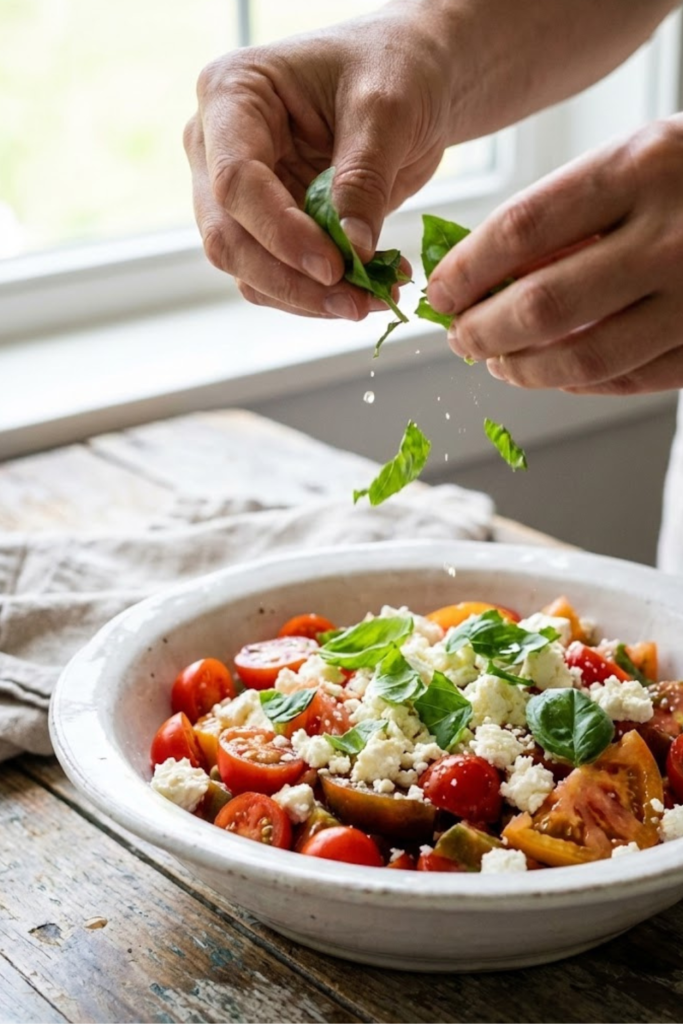
I like to use a fancy-sounding technique called a “chiffonade,” but it is actually super easy. You just stack a few leaves on top of each other, roll them up tight like a little cigar, and then slice across the roll. You end up with these beautiful, thin ribbons of green that look like confetti. If you are in a rush, you can just tear the leaves with your hands. Tearing them is actually better for keeping the flavor in than chopping them too much. Just make sure the pieces are bite-sized so nobody gets a whole leaf stuck to the roof of their mouth.
The Big Cheese Decision: Feta vs. Mozzarella
Now, you have a choice to make. Traditionally, a Caprese salad uses fresh mozzarella, while a Greek salad uses feta. For this Mediterranean mix, I honestly think crumbled feta cheese is the winner. Feta is briny and salty. It has a sharp bite that stands up really well to the sweet tomatoes and the rich oil. Because it crumbles, you get a little bit of cheese in almost every single bite.
However, if you have picky eaters or kids who aren’t fans of strong flavors, fresh mozzarella is a safe bet. Look for “bocconcini” (the little balls) or “pearls.” They are mild, creamy, and have a soft, squishy texture that is very comforting. They soak up the balsamic vinegar nicely, too. You can’t really go wrong either way, but the feta adds a nice punch that I personally love.
Branching Out with Other Herbs
While basil is the king here, you can invite other herbs to the party if you want. Sometimes I add a tiny bit of fresh oregano. You have to be careful with oregano, though. It is very strong. If you use too much, your salad will taste like a pizza sauce. Just a pinch of fresh leaves—not the dried stuff—adds an earthy note.
Fresh parsley is another option if you want more green color without adding a strong flavor. It adds a nice fresh crunch. Just remember, the goal is to keep it fresh. Don’t use anything that looks wilted or yellow. We want vibrant colors that make you want to dive right in with your fork.
Assembling and Marinating Your Salad
Now we get to the fun part where we actually build the salad. You might think you can just throw everything into a bowl and be done with it. Well, you technically can, but if you want it to taste like the ones you get at a nice restaurant, there is a little bit of a trick to the timing. It is kind of like baking cookies—you have to let the dough chill before you bake it to get the best result. Here, we have to let the ingredients get to know each other before we dig in. I learned this the hard way years ago when I served a salad immediately after mixing it, and it just tasted like oil and raw tomatoes. It lacked that special zing that makes you go back for seconds.
The Marination Sweet Spot
You need to let the salad sit for a bit. I call this the “marinating zone.” After you combine the tomatoes, the onions, and the dressing, leave the bowl on the counter for about 15 or 20 minutes. Please, do not put it in the fridge! We already talked about how cold temperatures kill the flavor here. Just let it rest at room temperature.
During this time, the salt pulls the juice out of the tomatoes, and those juices mix with the vinegar and oil. It creates this amazing, flavorful broth at the bottom of the bowl. However, you have to watch the clock. If you let it sit for too long, like over an hour, the tomatoes start to get really soft and lose their shape. The herbs will get soggy and dark. So, there is a balance. I usually mix it right before I start grilling the main course, and by the time the meat is done, the salad is perfect.
How to Mix Without Making a Mess
When you are combining everything, be gentle. I see people going at their salad with metal tongs like they are trying to fight it. These are delicate ingredients. If you stir too hard, you will bruise the basil leaves and smash the cheese into a paste. I prefer to use two large spoons or even my clean hands to gently lift and turn the salad.
Think of it like folding egg whites into a cake batter. You want to coat everything evenly without crushing the life out of it. If you are using feta cheese, I usually sprinkle that on at the very end, right before serving. This keeps it looking white and crumbly instead of turning a muddy brown color from the balsamic vinegar. Presentation matters, especially if you are feeding guests!
Adding a Little Crunch
While soft tomatoes and creamy cheese are great, sometimes you need a little snap to wake up your mouth. I almost always add thinly sliced red onion. It gives a nice sharpness and a beautiful purple color that contrasts with the red and green.
If raw onion is too spicy for you or your kids, here is a teacher’s secret: soak the onion slices in a bowl of ice water for ten minutes before adding them. This takes the harsh “bite” out but keeps the crunch. You could also toss in some cucumber slices if you want it to be extra refreshing. It is all about creating a mix of textures so every bite is interesting.

Serving Suggestions and Pairings
So, you have made this beautiful bowl of food. It looks amazing, smells great, and is sitting on your counter. Now, what do you eat it with? While I have definitely eaten a whole bowl of this by myself for lunch standing over the sink (don’t judge!), it is usually served as a side dish. It acts like the supporting actor in a movie—it makes the main star look even better. Because the flavors are so bright and acidic, you want to pair it with things that are a little heavier or richer. It balances out the meal so your mouth doesn’t get bored.
The Perfect Protein Match
Since this salad screams “summer,” it naturally belongs next to anything that comes off a grill. My absolute favorite thing to serve this with is grilled chicken. Chicken breasts can sometimes be a little dry or plain on their own. When you pile this juicy tomato mixture on top, it acts like a built-in sauce. The vinegar cuts right through the char flavor from the grill.
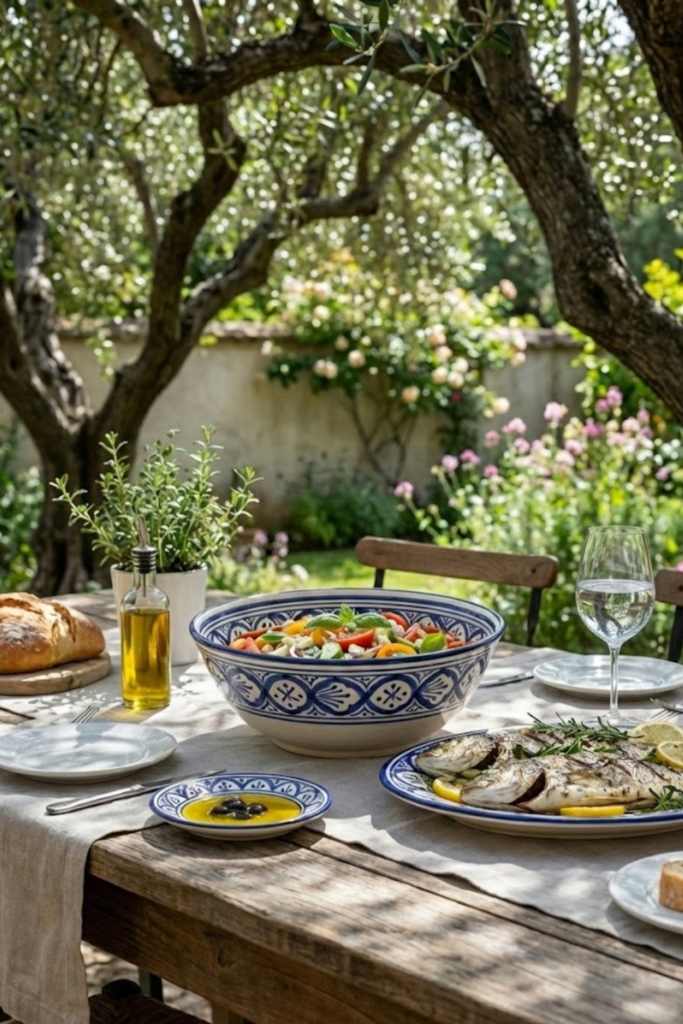
It is also fantastic with steak. If you have a nice, fatty ribeye, the acid in the tomatoes helps clean your palate between bites so the meat doesn’t feel too heavy. And we can’t forget about fish. Salmon and basil are best friends. If you grill a piece of salmon with just a little lemon and salt, this salad adds all the extra flavor you need. It keeps the meal light, which is great if you plan on swimming or running around outside afterwards.
Do Not Forget the Bread
I am going to be strict about this one rule: you need bread. Remember that juice we talked about earlier? The mixture of tomato water, olive oil, and vinegar at the bottom of the bowl? In Italian culture, they call mopping that up “scarpetta,” which means “little shoe.” You make a little shoe with your bread to scoop up the sauce.
You need a bread that is tough enough to handle the liquid. A soft white sandwich bread will just turn into mush and fall apart. You want a crusty baguette or a loaf of sourdough. Slice it thick. If you want to be extra fancy, brush the bread with a little oil and toast it on the grill first. Garlic bread is also a solid choice, though you don’t want the garlic butter to overpower the fresh basil.
What to Drink
Since we are eating fresh, raw vegetables, you want a drink that is equally crisp and refreshing. Heavy drinks like dark beer or red wine can sometimes clash with the vinegar. The vinegar makes the red wine taste metallic, which is not pleasant.
I suggest a glass of cold white wine. A Sauvignon Blanc or a Pinot Grigio is perfect because they are high in acid, just like the tomatoes. They taste bright and clean. If you prefer something non-alcoholic, sparkling water with a big squeeze of lemon or lime is the way to go. You want something with bubbles to scrub your tongue and keep everything tasting fresh. Iced tea with a sprig of mint is another great option that mirrors the herbs in the salad.
We have finally reached the end of our little cooking lesson today. I hope you are feeling a little more confident about walking into the kitchen and throwing this together. It is funny, isn’t it? We spend so much time thinking that cooking has to be hard or complicated to be good. But usually, the best things are the simplest. It is just like in school—sometimes the simple answer is the right one. You don’t need a degree in culinary arts to make something that tastes amazing. You just need good ingredients and a little bit of patience.
Trust Your Taste Buds
I want you to remember that a recipe is really just a guide. It is not a strict set of laws that you will get in trouble for breaking. If you make this and think, “Hmm, I think it needs more vinegar,” then add more vinegar! If you love basil and want to put a whole bush of it in there, go for it. Cooking is personal. You are the one eating it, so you should make it taste the way you like it.
I tell my students all the time that mistakes are how we learn. If you put too much salt in it this time, you will know to use less next time. Don’t beat yourself up. Even the best chefs burn toast or over-season things sometimes. The important part is that you are actually making food from scratch. That is a huge win in my book.
Bring People Together
Food has this special way of getting people to sit down and actually talk to each other. When you put a big, colorful bowl like this on the table, it makes people smile. It is bright and happy. I promise you, if you bring this to a potluck or a barbecue, people are going to ask you for the recipe. You can tell them it was super hard and took you hours, or you can tell them the truth—that it’s all about the tomatoes.
Save It for Later
If you found this helpful and think you might want to make it for your next family dinner, please do me a huge favor. Pin this recipe on Pinterest! It helps other people find it, and it helps me keep sharing these tips with you. It is like putting a gold star on the chalkboard. Plus, it makes it way easier for you to find it when you are standing in the grocery store trying to remember which cheese to buy.
Thanks for hanging out with me today. Now, go wash your hands, grab those tomatoes, and get chopping. You’ve got this! Happy cooking, everyone.