I used to think salads were just sad bowls of wilting lettuce. Boy, was I wrong! Enter the Mediterranean Farro Salad. It is chewy, nutty, and honestly? It changes the whole game. Did you know that farro is an ancient grain that has fed people for thousands of years? It’s true. And now, it’s going to feed you (and actually keep you full).
I remember the first time I tried to make a grain bowl. I overcooked the grains until they were mush. It was a disaster! But after a few tries, I found the sweet spot. This recipe brings the sunny flavors of the Mediterranean right into your kitchen. We are talking crisp cucumbers, juicy tomatoes, and that salty kick from feta cheese. Whether you are meal prepping for a busy week or bringing a side dish to a potluck, this salad is your new best friend. Let’s get cooking!
What is Farro and Why You Should Eat It
I used to stare at the bulk bins in the grocery store and just feel totally lost. I’d see this brown, rice-looking stuff labeled “farro” and honestly, I was too scared to buy it. I stuck to white rice for years because it was safe. But then I tried a Mediterranean Farro Salad at a potluck, and I was hooked immediately.
It wasn’t mushy like my rice usually turned out. It had this bite to it.
So, what is farro exactly? It isn’t just one single grain; it’s actually a group of three wheat species. The most common one we see here is Emmer wheat. It’s an ancient grain, meaning it’s been around for thousands of years without being genetically modified like modern wheat. It’s pretty cool to think you are eating the same stuff folks in the Mediterranean ate way back in the day.
Why It Beats White Rice
I used to crash hard after eating a big bowl of white pasta or rice. It was the carb coma. Farro is different because it is a nutritional powerhouse. It’s got complex carbs, which means it breaks down slower.
You get steady energy instead of a spike and a crash.
Here is the data that sold me on it. A quarter-cup of dry farro usually packs about:
- 6 to 7 grams of protein (Rice has way less).
- 3 grams of fiber.
- A good amount of magnesium and zinc.
Because of that fiber and protein combo, a smaller bowl actually keeps you full. When I make my Mediterranean Farro Salad for lunch, I’m not digging around the pantry for snacks at 3 PM. That’s a win in my book.
The Texture is Everything
This is where I messed up the first time. I expected it to be soft. Farro is famous for its chewy texture and distinct nutty flavor. It holds its shape really well, even if you accidentally overcook it a little bit (which I have definitely done).
Because it stays firm, it is perfect for salads. It doesn’t turn into a soggy mess when you toss it with dressing.
Watch Out for the “Type” on the Label
Okay, here is a mistake I made so you don’t have to. I once bought “whole farro” thinking it was the same as the stuff I had before. I boiled it for 40 minutes, and it was still hard as a rock!
There are three main types you’ll see:
- Pearled Farro: The bran is removed. It cooks the fastest, usually in 15–20 minutes. This is what you want for quick weeknight salads.
- Semi-Pearled: Some bran is left on. It takes a bit longer.
- Whole Farro: The whole grain with the bran intact. You usually need to soak this overnight, or it takes forever to cook.
Always check the package. If you want dinner on the table fast, grab the pearled version. It makes life so much easier.

Essential Ingredients for Mediterranean Farro Salad
I have made this salad a hundred times, mostly because I can mess it up and it still tastes good. But I learned that the ingredients you pick actually matter. You can’t just throw whatever in a bowl and hope for the best.
Here is what I grab from the store to make it taste right.
The Grain Base
Like I mentioned earlier, I usually grab the pearled farro. It is just easier. I once accidentally bought a bag of “soup mix” grains thinking it was plain farro. It had dried peas in it. It was weird. Stick to the plain bag. Remember that one cup of dry farro expands a lot. It usually makes enough salad for my lunches for half the week.
The Crisp Vegetables
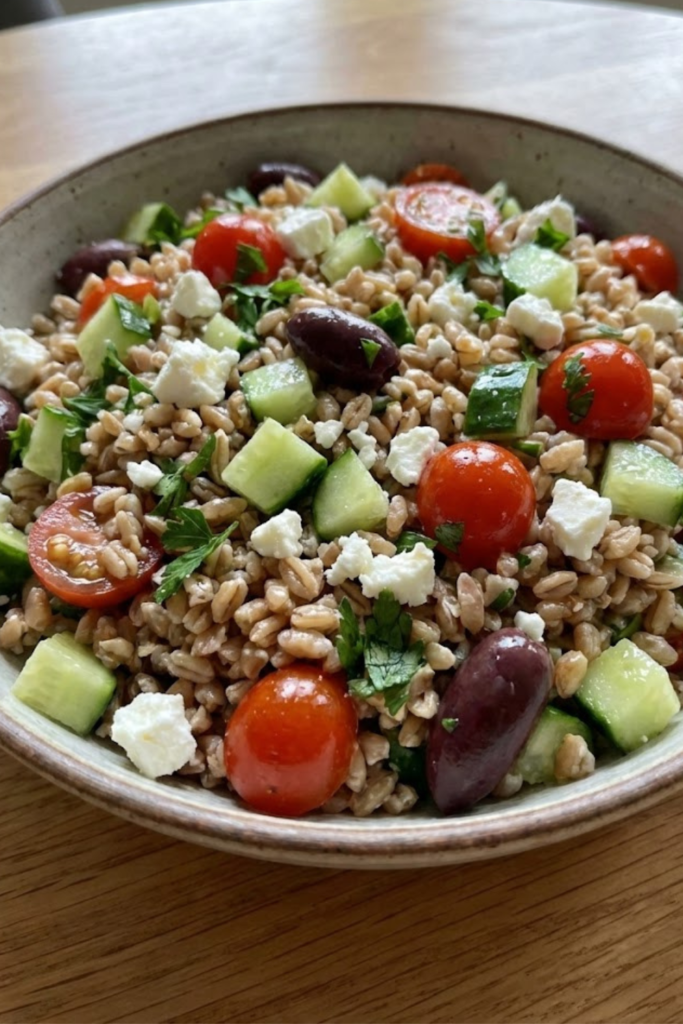
I love using English cucumbers. You know, the long skinny ones wrapped in plastic? They have fewer seeds and the skin isn’t waxy. I used to peel normal garden cucumbers, but it took too long. With English ones, I just chop and go. The crunch is better.
Also, get cherry tomatoes or grape tomatoes. They hold their shape way better than big tomatoes cut up. If you cut up a big beefsteak tomato, it leaks juice everywhere and makes the salad soggy.
The Salty Elements (My Favorite Part)
You have to have feta cheese. Please, try to buy the block of feta in the brine if you can. The pre-crumbled stuff in the tub can be really dry and chalky. I crumble it myself right over the bowl. It stays creamy that way.
And Kalamata olives. I used to hate olives as a kid, but now? I put in way more than the recipe usually calls for. They add that vinegar punch you need to cut through the heavy grain. If you really hate olives, you could use capers, but it changes the flavor a bit.
Fresh Herbs
Don’t use the dried stuff from the spice rack here. It just doesn’t work the same. I usually chop up a big bunch of fresh parsley. Sometimes I add mint if I have it growing in the pot on my porch, but flat-leaf parsley is the main one. It makes everything look bright green and fresh.

How to Cook Farro Perfectly Every Time
I used to think cooking grains was hard. I’d measure the water exactly, cover the pot, and pray I didn’t burn the bottom. It was stressful! Then a friend told me, “Just cook it like pasta.”
That advice changed everything for me. This is the Pasta Method, and it is the only way I do it now.
Rinsing is Key
First, put your farro in a mesh strainer and run cold water over it. You’ll see the water look a little cloudy at first. That is the dusty starch. If you don’t wash it off, the grains can get gummy and stick together. I just rinse it until the water looks clear. It takes like 30 seconds.
The Pasta Method
Fill a medium pot with water and salt it. I usually throw in a big pinch of salt. Bring it to a boil, then dump in the rinsed farro. You don’t need to measure the water perfectly; just make sure there is plenty of it for the grains to swim around.
Cooking Time This part depends on what you bought.
- Pearled Farro: This is what I usually find at the store. It takes about 15 to 20 minutes.
- Whole Farro: If you have this, you might be standing there for 40 minutes.
I start checking it at the 15-minute mark. Fish a few grains out with a spoon and taste them. You want them to be chewy but tender. You don’t want a crunch in the middle. If it’s still hard, let it boil longer.
Drain and Cool Once it tastes done, pour the whole pot into a colander in the sink. Drain out all the water.
Teacher Tip: Since we are making salad, you can’t mix the hot grains with the veggies right away. If you do, the cucumber gets weird and soft, and the feta cheese melts into a goo. I spread the cooked farro out on a baking sheet to let it cool down fast. Or, if I am in a rush, I run cold water over it in the colander (though some chefs say that washes away flavor, I think it works fine for a quick lunch).
Here is the next section about the dressing. I promise, once you make this, you will never buy the bottled stuff again.

The Zesty Greek Lemon Dressing
I used to buy those bottles of “Greek Dressing” from the store. They were okay, I guess. But then I looked at the label and saw a bunch of words I couldn’t pronounce. Making it at home is so easy, and it tastes way fresher.
You really only need a few things from your pantry.
The Golden Ratio
In cooking class, they usually teach you to use three parts oil to one part vinegar. But for this farro salad, I think the grains soak up a lot of flavor. So I like it a little punchier. I usually do about half olive oil and half acid.
The Ingredients
- Olive Oil: Use the Extra Virgin kind if you have it. It just tastes better since we aren’t cooking it.
- The Acid: I use a mix. I squeeze a fresh lemon (don’t use the plastic lemon stuff, it tastes weird) and add a splash of Red Wine Vinegar. The vinegar gives it that sharp bite.
- Seasoning: Dried oregano is a must. Here is a teacher trick: put the dried oregano in your palm and rub your hands together over the bowl. It wakes up the smell. Then add a clove of fresh garlic that you minced up really small, plus plenty of salt and pepper.
The Jar Method
I don’t bother with a whisk and a bowl. I just find an old jam jar with a lid. Dump everything in there, screw the lid on tight, and shake it like crazy for ten seconds.
It will turn creamy and thick. That is called emulsification. It looks fancy, but you just shook a jar.
Let It Sit
If you have time, let the dressing sit in the jar for about 10 minutes before you pour it on the salad. It lets the garlic flavor get into the oil. It makes a big difference. Then, pour it over your cool grains and veggies and toss it all up.

Variations and Add-Ins to Try
One of the best things about this salad is that you don’t have to follow the rules strictly. Sometimes I look in my fridge and just throw in what I have. That is how I found some of my favorite combinations.
Here are a few ways I like to switch it up so I don’t get bored.
Add Some Protein The salad is good on its own, but sometimes I need it to be a full meal.
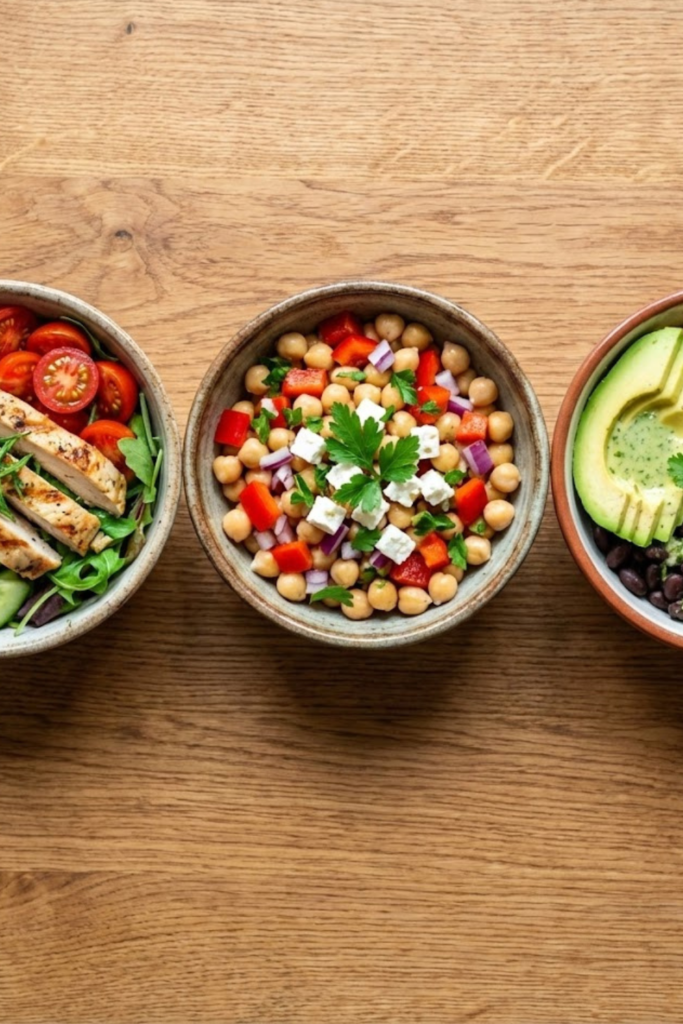
- Chicken: I usually grill a couple of chicken breasts on Sunday and chop them up. Throwing that in makes this a really filling dinner.
- Chickpeas: This is my go-to when I am trying to save money. Just open a can, rinse them off, and toss them in. They add a nice texture and plenty of protein without any cooking.
- Shrimp: If you have frozen shrimp, thaw them out and sauté them with garlic. It feels a bit fancier.
Make it Vegan
The only thing in this recipe that isn’t plant-based is the feta cheese. You can buy the dairy-free feta at the store now, and some of it is actually pretty good. But honestly? I prefer using avocado chunks. They are creamy and rich like cheese. Just make sure you add the avocado right before you eat it so it doesn’t turn brown and mushy in the fridge.
Roasted Vegetables
In the summer, raw veggies are perfect because they are crisp. But in the winter, I like something warmer. I roast red peppers, zucchini, or even eggplant in the oven until they get soft. Mixing those warm, sweet veggies with the chewy farro is delicious. It changes the whole vibe of the dish.
Add a Crunch
If you want to impress someone, toast some pine nuts in a dry pan. Watch them closely because they burn really fast! I have ruined so many batches by looking at my phone. If pine nuts are too expensive (they are pricey!), chopped walnuts work great too. It gives the salad a nice bite.
There you have it! This Mediterranean Farro Salad is not just healthy; it is a flavor explosion that keeps well in the fridge for days. It has saved me from so many boring desk lunches, and I know it will do the same for you.
You get the chewy grains, the salty feta, and that bright lemon dressing all in one bite. It really is the perfect meal prep dish. Give this recipe a try this week. I bet you’ll be surprised at how easy it is to make something this good.
Call to Action: Did you love this recipe? Don’t forget to pin this recipe on Pinterest to save it for your next meal prep Sunday!