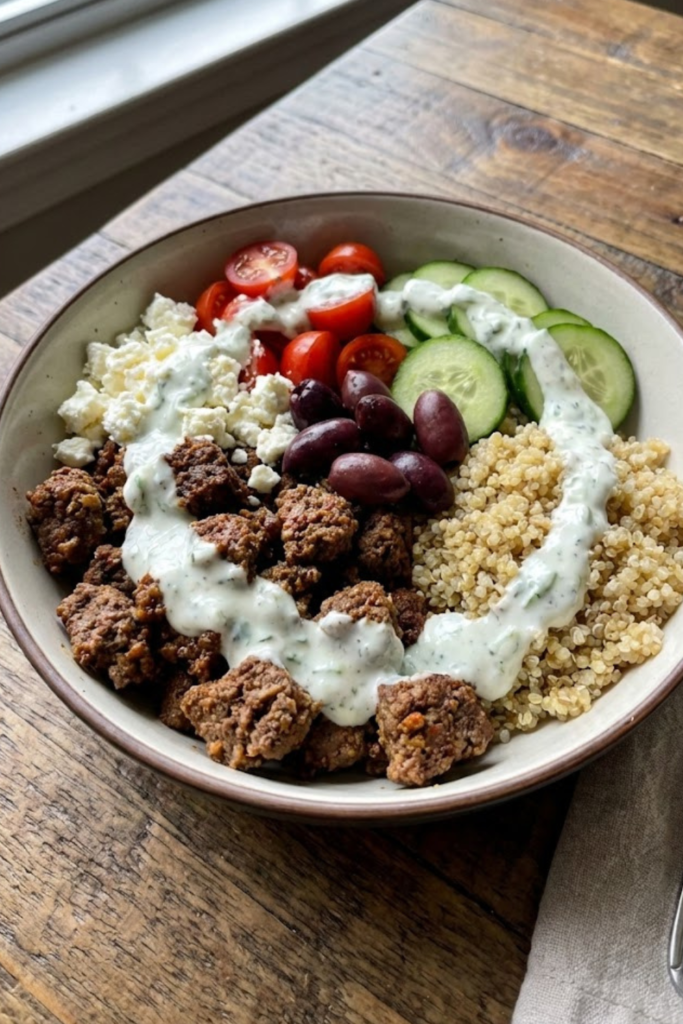
Picture this: It’s Tuesday night, you’re exhausted, and the idea of cooking a complex meal feels impossible. I have been there a thousand times! But then I discovered the magic of the Mediterranean Beef Dinner Bowl, and it completely changed my weeknight routine. Did you know that Mediterranean-style eating is consistently rated as one of the healthiest diets in the world? It’s true!
This isn’t just a salad; it’s a flavor explosion of savory spiced meat, cool cucumbers, and tangy feta that will make your tastebuds dance. You are going to obsess over how simple yet gourmet this feels! Whether you are cooking for a family or meal-prepping just for you, this bowl delivers serious satisfaction without the heavy cleanup. Let’s get cooking!
Unlocking the Flavor Profile of Mediterranean Cuisine
I have to be honest with you guys. For the longest time, I thought “healthy eating” meant boiled chicken and steamed broccoli that tasted like absolutely nothing. I remember trying to meal prep back in my late twenties, and by Wednesday, I was so bored with my food that I’d end up ordering a pizza. It was a total disaster. But then I stumbled into Mediterranean cooking, and it clicked. It wasn’t about taking things away; it was about adding the right things in.
When we talk about this Mediterranean Beef Dinner Bowl, we aren’t just tossing meat in a pan. We are building a flavor profile that hits every single part of your tongue.
The Secret is in the Balance
The biggest mistake I see people make—and I used to do this too—is forgetting the acid. You can have the most expensive, organic grass-fed beef, but if you don’t cut that richness with something bright, it falls flat. In Mediterranean cuisine, lemon juice and vinegar are your best friends.
For this beef bowl, the savory umami of the spiced meat needs to fight a little bit with the tangy feta and the lemon zest. That conflict? That is where the flavor lives. I used to be scared of salt, thinking it was “bad” for me. But if you are eating whole foods, a little sea salt is necessary to wake up those tomatoes and cucumbers. It’s a game changer.
Texture is Just as Important as Taste
Have you ever eaten a bowl of mush? Yeah, me neither. Well, not voluntarily. A great Mediterranean diet recipe needs crunch.
I learned the hard way that if you put hot beef directly on top of lettuce, you get wilted, sad slime. Don’t do that! You want the cold, crisp snap of a Persian cucumber right next to the warm, tender beef.
- Creamy: That’s your feta or a dollop of hummus.
- Crunchy: Fresh veggies or maybe some toasted pine nuts if you’re feeling fancy.
- Chewy: The ground beef and your grain base (like quinoa or rice).
Why This Flavor Profile Actually Works for Health
Look, I’m not a doctor, just a teacher who loves to eat. But the reason this specific flavor profile is a 2026 favorite is because it leaves you satisfied. You aren’t looking for a cookie ten minutes later.
The healthy fats from the olive oil and the protein from the beef signal to your brain that you are full. Plus, using fresh herbs like dill and mint adds tons of antioxidants without you even trying. I used to think herbs were just for garnish, like a little decoration. Nope. In this bowl, they are a main ingredient. Toss them in by the handful!
So, stop overthinking it. Get some good olive oil, don’t be shy with the lemon, and let the ingredients do the talking.

Selecting the Best Ingredients for Your Beef Bowl
I used to think all ground beef was the same. I would just walk into the store, grab the cheapest package with the red sticker, and throw it in my cart. Big mistake. One time I made this recipe with really fatty meat, and the whole bowl ended up swimming in grease. It was gross, and I felt terrible wasting it.
So, let’s talk about what you actually need to buy so you don’t waste your money. You don’t need the fanciest ingredients, but picking the right ones matters.
Picking the Right Beef
For this bowl, you want lean ground beef. I usually look for the 90/10 label or even 93/7 if it is on sale. You want the meat to brown up nicely and get those crispy edges, not boil in its own fat.
- Ground Beef: It’s cheaper, cooks faster, and honestly, I think it soaks up the spices better than steak.
- Steak Strips: If you are feeling fancy or have some leftovers, steak works too. But for a quick weeknight dinner, stick to ground beef.
Choosing Your Base
You need something to soak up the juices from the meat and the dressing. I personally love quinoa because it has a nice nutty flavor and makes me feel like I have my life together. But I know quinoa can be annoying to cook sometimes.
If you aren’t a fan, brown rice or even couscous are great options. If you are watching your carbs, cauliflower rice is surprisingly okay here since there is so much flavor coming from the spices and the feta. Just don’t skip a base entirely, or you might find yourself hungry again in an hour.
Fresh Veggies: Crunch is King
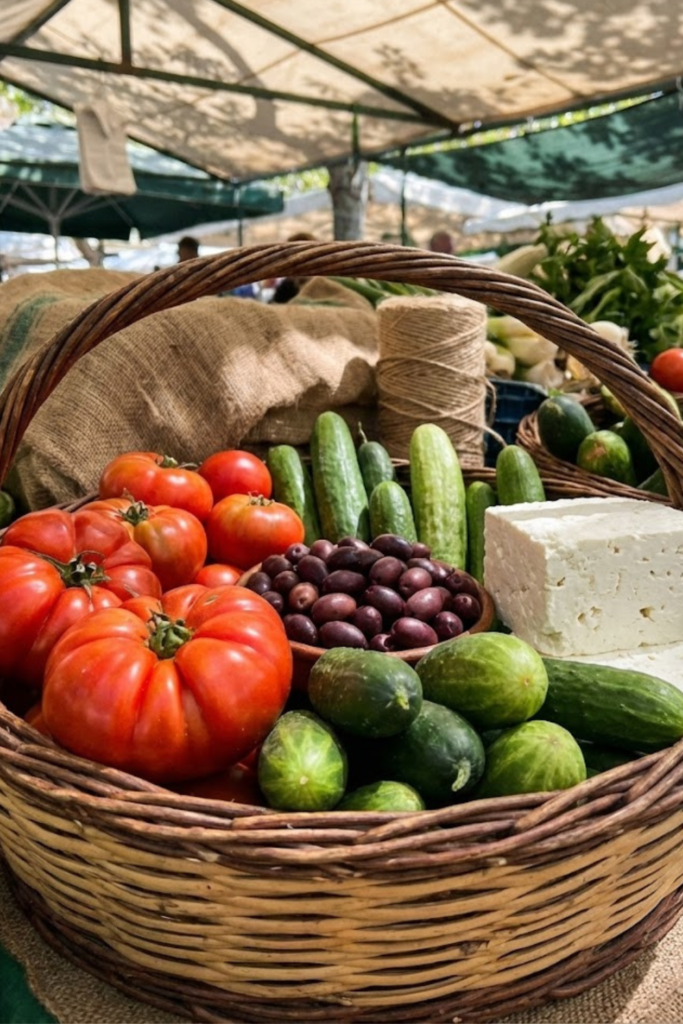
Please check your cucumbers before you buy them! Give them a little squeeze. If they are soft or squishy, put them back. You need that loud crunch when you bite down to contrast with the warm beef.
For tomatoes, I stick to cherry or grape tomatoes. The big slicing tomatoes have too much water inside and they can turn your bowl into a soggy soup. Keep it simple. And yes, you should use red onion. It gives it a bite that regular onions just don’t have. If the taste is too strong for you, soak the slices in cold water for ten minutes before eating.
The “Wow” Factor: The Cheese
Okay, listen to me on this one. Do not buy the pre-crumbled feta cheese. I know it saves time, but it tastes like dry sawdust.
Buy the block of feta that comes in the brine (that salty water). It is creamier, tangier, and just tastes way fresher. Crumbling it yourself with a fork takes literally five seconds and it makes a huge difference in the final dish. Trust me on this.
Mastering the Spiced Beef Skillet Technique
Cooking ground beef seems like the easiest thing in the world, right? You just throw it in a pan and stir. Well, that is what I used to do, and my beef always turned out gray, rubbery, and bland. It was edible, but it wasn’t good.
Over time, I learned that getting that restaurant-quality taste is actually pretty simple if you follow a few rules. You don’t need to be a professional chef, you just need to pay attention to the heat.
The Seasoning Mix
Please, put down the pre-made taco seasoning packet. Those are full of salt and weird fillers. For a true Mediterranean flavor, you want to control the spices yourself.
I mix these together in a small bowl before I even turn on the stove:
- Dried Oregano: Use a lot. This is the main flavor.
- Garlic Powder & Onion Powder: For that savory kick.
- Salt & Black Pepper: Be generous here.
- Cumin: Just a little bit gives it warmth.
Dump the spices onto the meat while it cooks, not after. This helps the flavors wake up in the heat.
Stop Stirring So Much!
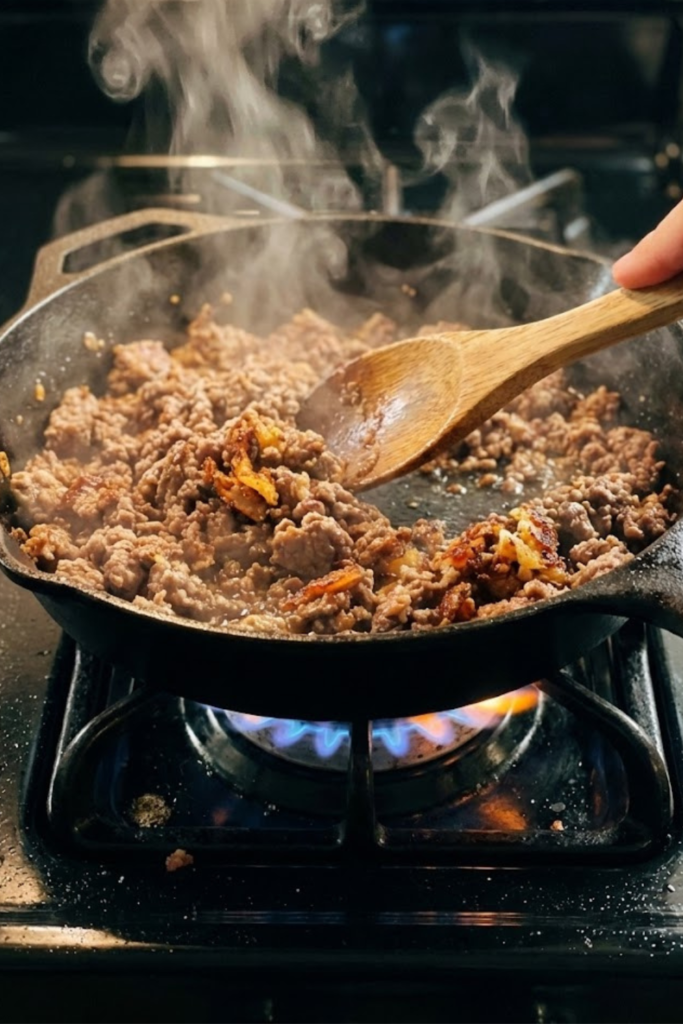
This was the hardest habit for me to break. When you put the beef in the skillet, you want to break it up with a wooden spoon, but then let it sit.
If you keep moving it around constantly, the meat just steams in its own juices and turns gray. You want it to brown. Let it sizzle undisturbed for about 2-3 minutes. You want to see some dark, crispy bits on the bottom. That is where all the flavor hides!
To Drain or Not to Drain?
If you bought the 90/10 beef like I mentioned earlier, you probably won’t have a ton of grease left over. I usually leave a little bit of the fat in the pan because fat equals flavor. If there is a huge pool of oil, carefully spoon some out, but don’t dry it out completely or your bowl will be dry.
The Secret Finishing Touch
Here is the trick that changed everything for me. Right before you take the pan off the burner, squeeze half a lemon over the meat.
It sounds weird to put lemon on beef, I know. But the acid lifts up the heavy flavors of the meat and spices. It makes the whole dish taste brighter and fresher. Give it a quick stir, count to ten, and turn off the heat. Perfect every time.
Assembling the Ultimate Mediterranean Salad Components
You might think cutting vegetables is boring, but honestly, this is the part that makes or breaks the whole bowl. I used to just chop things into huge chunks because I wanted to get out of the kitchen fast. But then I’d try to eat it, and a giant piece of cucumber would fall off my fork and splash dressing on my shirt. Every. Single. Time.
So, here is a little lesson on salad assembly that I learned the hard way.
The Chop Matters
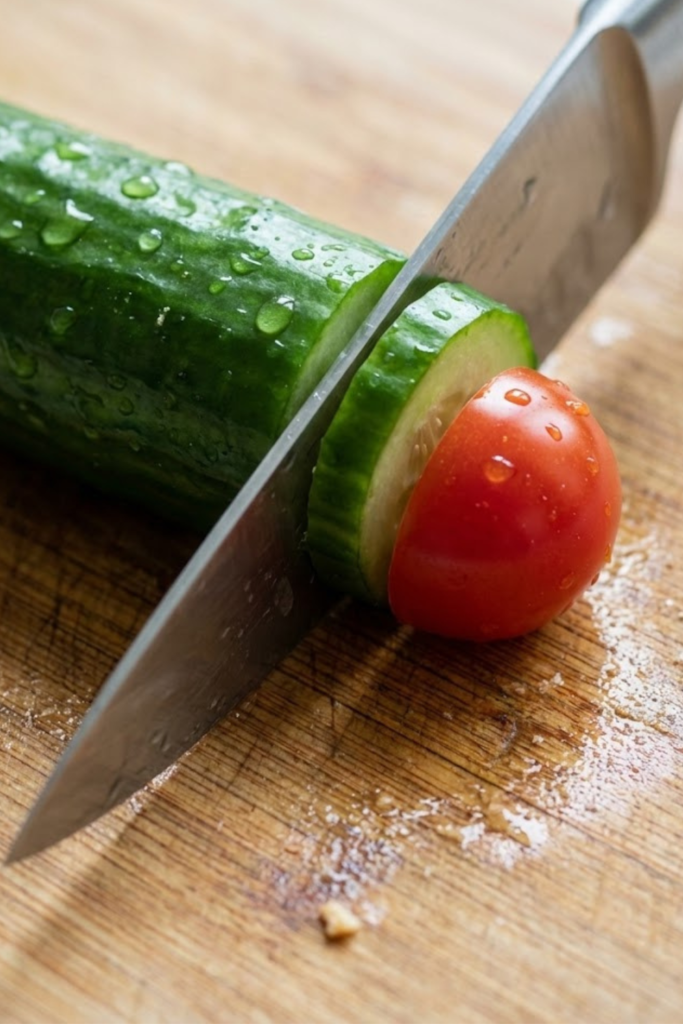
When you are cutting your cucumbers, tomatoes, and red onions, try to make them all roughly the same size. I aim for pieces that are small enough so you can fit a little bit of beef, a piece of feta, and a veggie on your fork all at once.
It makes the eating experience so much better. You don’t want to be sawing through a massive tomato wedge while you are trying to relax and watch TV. Just take the extra two minutes to dice them small. It’s worth it.
The Salting Trick (Do Not Skip This!)
Here is a trick I picked up recently that keeps your bowl from getting watery at the bottom.
While your beef is browning on the stove, put your cut cucumbers and tomatoes in a colander or a strainer. Sprinkle a good pinch of salt over them and toss them around. Let them sit there for about 10 minutes.
The salt pulls out the extra water from the vegetables. You will be shocked at how much liquid drains out! This keeps your salad crisp and crunchy instead of soggy. Plus, it makes the veggies taste more flavorful because they aren’t watered down.
Choosing Your Greens
You need a bed of greens to catch all the juices. I usually grab a bag of baby spinach or arugula. Arugula has a nice peppery taste that goes really well with the lemon dressing, but spinach is milder if you have picky eaters.
If you want crunch, romaine lettuce works too, but chop it up small!
The Final Crunch
If you want to feel like you are eating at a real restaurant, add something crunchy on top. I usually crush up a handful of pita chips. If I’m trying to be super healthy, I might use toasted pine nuts or sunflower seeds, but let’s be real—the pita chips are way better. They add that salty, dusty crunch that makes you want to keep eating.
Creating the Creamy Tzatziki and Hummus Toppings
Okay, we need to have a serious talk about sauce. There is nothing worse than a dry dinner bowl. You get halfway through and it just feels like you are eating plain rice. It’s sad. The sauce is the glue that holds this whole meal together.
To Buy or To Make?
I am all about saving time. I’m a teacher, I don’t have hours to spend in the kitchen on a Tuesday. So here is my rule: Buy the hummus, but make the tzatziki.
Store-bought hummus is actually really good these days. I usually grab the Roasted Red Pepper or the Garlic flavor just to add a little extra punch. But store-bought tzatziki? It usually disappoints me. It’s often watery and lacks that fresh garlic bite. Plus, making it takes like three minutes.
Tzatziki 101
You don’t need a recipe card for this. It is super simple.
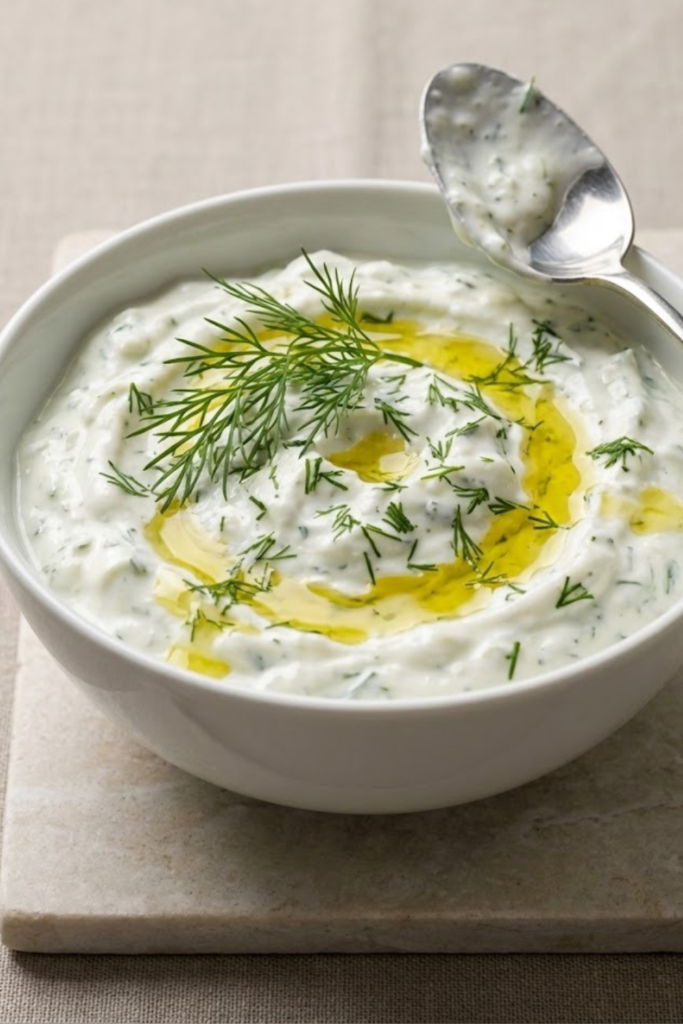
- The Yogurt: Use plain Greek yogurt. Please don’t use regular vanilla yogurt by mistake (I did that once, it was awful). Get the full-fat kind if you can; the low-fat stuff is too sour.
- The Cucumber: Grate a little bit of cucumber using a cheese grater. Important: Squeeze the water out of the shredded cucumber with a paper towel before you mix it in. If you don’t, your sauce will turn into soup.
- The Flavor: Stir in some dried dill, a splash of lemon juice, and a minced clove of garlic. Salt and pepper to taste. That’s it!
Getting the Drizzle Right
If you are using store-bought hummus, it is usually thick like paste. You can’t really drizzle that.
I like to take a big spoonful of hummus and put it in a small bowl. Then I mix in a tiny teaspoon of water or olive oil and stir it up until it gets smooth and runny. This way, you can drizzle it all over the beef and veggies so you get a little taste of it in every single bite. It makes the bowl feel way more fancy than it actually is.
Meal Prepping and Storage Tips for the Week
I am going to be real with you—if I don’t meal prep on Sunday, my whole week falls apart. By Thursday, I’m staring into the fridge hoping a fully cooked meal will magically appear. It never does. That is why I love this bowl. It is one of the few recipes that actually tastes good three days later.
But you have to store it right, or it gets gross. I learned this the hard way when I opened my lunch container in the staff lounge and found a soggy, sad mess.
Glass Containers Are Your Best Friend
If you are still using those old plastic tubs that are stained orange from spaghetti sauce three years ago, please throw them out. I finally switched to glass containers, and it makes such a difference.
Plastic holds onto smells. You don’t want your lunch to taste like last week’s chili. Glass cleans up easy, and you can see exactly what is inside so you don’t forget about it.
The Golden Rule: Keep It Separated
This is the most important part. Do not mix everything together if you aren’t eating it right away.
If you put the wet cucumber salad and the tzatziki on top of the beef and rice on Sunday, by Tuesday, you will have mush. The acid in the dressing breaks down the lettuce and veggies, turning them into slime.
- Container 1: Put your cooked beef and your quinoa/rice here. This is the stuff you will microwave later.
- Container 2: Put your chopped cucumbers, tomatoes, feta, and a little cup of sauce here. This stays cold.
It takes up a little more space in the dishwasher, but trust me, eating a crisp, fresh salad is way better than eating warm, wilted lettuce.
Reheating Without Ruining It
When it’s time to eat, just pop the container with the meat and grains in the microwave for about 90 seconds. Once it’s hot, then you dump the cold veggie mix on top.
The contrast between the hot beef and the cold, crunchy veggies is what makes this meal so good. If you microwave the cucumbers… well, just don’t do that. It’s weird.
How Long Does It Last?
In my experience, the beef stays good in the fridge for about 3 to 4 days. After day four, the meat starts to get a little dry and the veggies lose their crunch. So, this is perfect for Monday through Thursday lunches. On Friday? Treat yourself to takeout. You earned it.

So, that is pretty much it. You really don’t need to overcomplicate dinner to eat well. This Mediterranean Beef Dinner Bowl has saved me on so many busy nights when I just wanted to give up and order takeout. It’s fast, it keeps you full, and honestly, it just makes you feel good after you eat it.
I really hope you give this one a try this week. It feels amazing to put a meal on the table that looks this fancy but actually took less than 30 minutes. If you do make it, please let me know how it turned out in the comments! I love hearing from you guys.
Oh, and do me a huge favor—save this recipe to your “Healthy Dinners” board on Pinterest! It helps other people find the recipe, and that way you won’t lose it when you need a quick meal idea next Tuesday.