I used to hate eggplant. I know, strong start, right? But seriously, my first experience with it was a soggy, flavorless sponge that made me question why anyone would eat it! That all changed when I discovered the magic of roasting. There is a staggering statistic that says nearly 40% of home cooks avoid eggplant simply because they don’t know how to cook it without it getting oily. Don’t be that 40%!
In this article, we are going to dive deep into Herb Roasted Eggplant. I’m talking about golden-brown edges, creamy interiors, and a flavor profile that sings with fresh herbs. Whether you are a seasoned chef or just trying to get some veggies on the table, this guide is for you. We’ll cover everything from picking the right vegetable to the exact temperature that guarantees success. Let’s turn that purple mystery into your new favorite dish!
Choosing the Perfect Eggplant for Roasting
You might think all eggplants in the grocery store bin are created equal, but that is definitely not true. I remember the first time I tried to make this dish, I just grabbed the biggest purple vegetable I could find. It ended up being full of seeds and tasted incredibly bitter. I learned the hard way that picking the right produce is actually the most important step in the whole recipe. If you start with a bad eggplant, no amount of seasoning is going to fix it.
To make sure you don’t make the same mistake I did, you need to use your senses. You are looking for freshness, mostly because eggplants get bitter as they age. Here is exactly what I look for when I am shopping.
Check the Skin and Stem
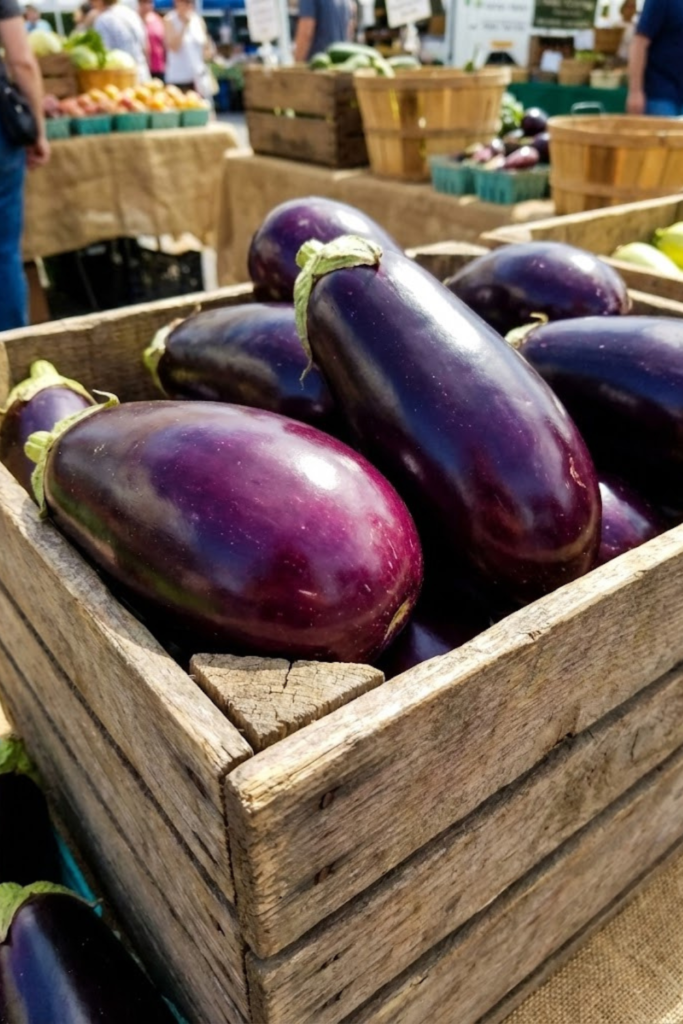
First, look at the outside. The skin should be smooth and shiny. If it looks dull or has a lot of wrinkles, put it back. Wrinkles usually mean the vegetable was picked a long time ago and has lost a lot of its moisture. You want it to reflect the overhead lights almost like a mirror.
Also, take a look at the green cap or stem at the top. It should be a bright, healthy green. If the stem looks brown, dry, or shriveled up, the eggplant is old. I always tell people to look for soft spots too. Press your thumb gently against the skin. It should bounce back. If your thumb leaves a dent, it’s probably starting to rot inside.
The Weight Test
This is a trick I learned from a friend who gardens. Pick up two eggplants that are roughly the same size, one in each hand. You want the one that feels heavier. It sounds strange, but a heavier eggplant means it is full of water and fresh flesh. If it feels light for its size, the inside might be dry or “cottony,” which gives you a weird texture when you try to roast it.
Picking the Right Variety
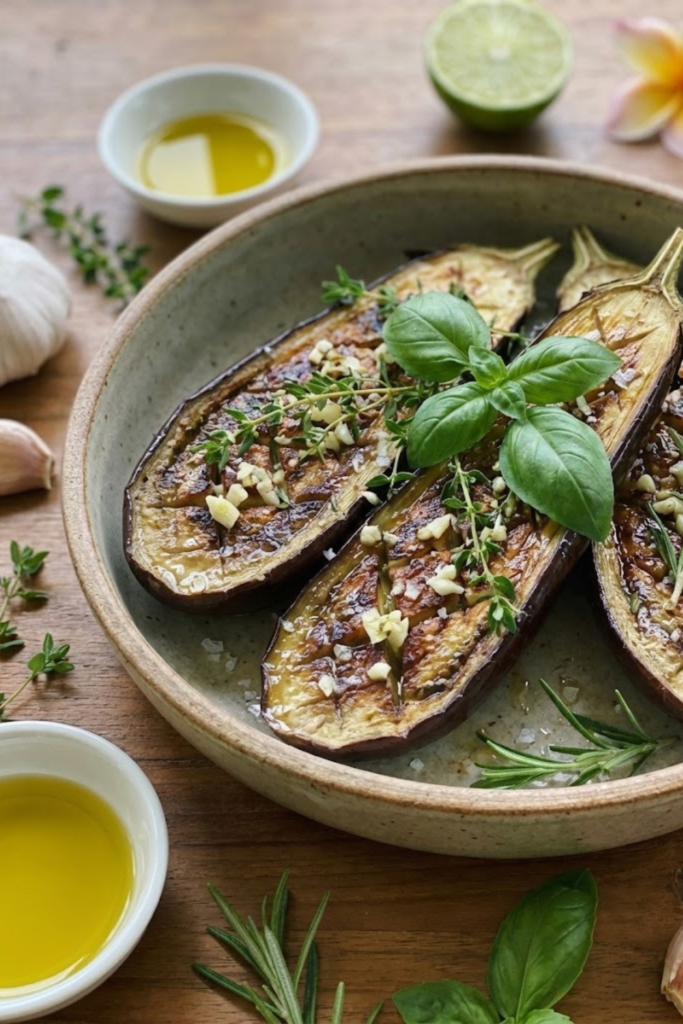
For this herb roasted recipe, I usually stick with the standard Globe eggplant. These are the big, fat dark purple ones you see everywhere. They are meaty and hold up well to high heat in the oven. You can use Japanese or Italian eggplants, which are skinnier and lighter in color, but they cook much faster. If you use those, just remember to check the oven a little earlier so they don’t burn. Sticking to the Globe variety is usually your best bet for big, roasting chunks.
Essential Ingredients for the Herb Blend
I used to think that the vegetable was the star of the show, but honestly, with this dish, the flavor really comes from what you put on it. You can have the freshest garden eggplant in the world, but if you don’t season it right, it’s just going to taste bland. Over the years, I have played around with a lot of different combinations in my kitchen, and I finally settled on a mix that works every single time. It is simple, but it packs a punch.
Fresh Herbs vs. Dried Herbs
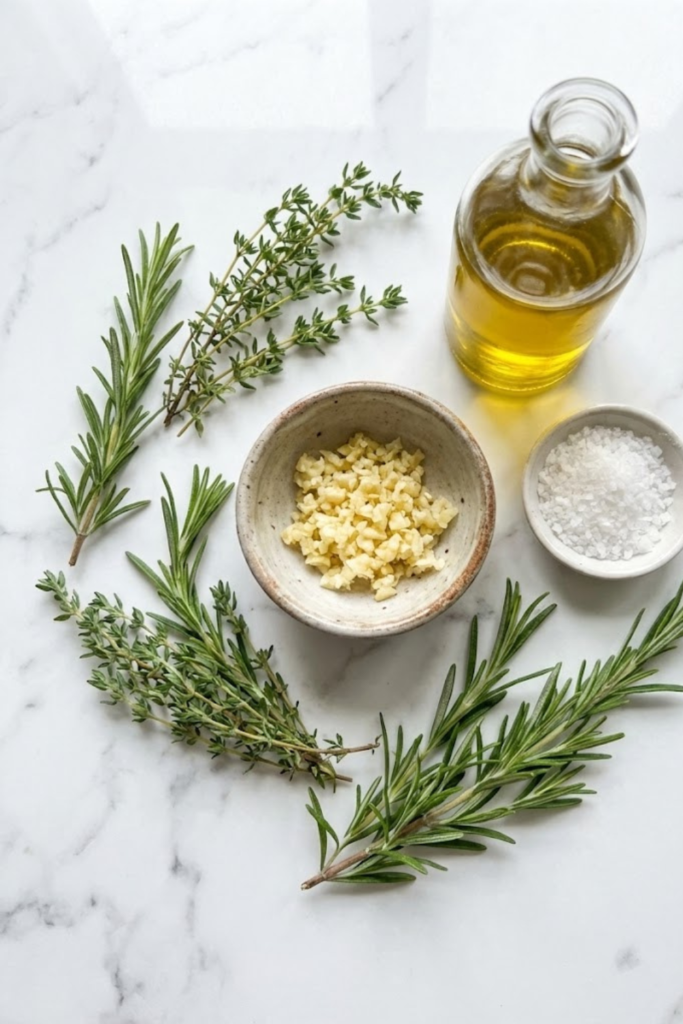
I always tell my friends that if they can, they should splurge on the fresh herbs. I know, dried herbs are easier to keep in the pantry, and I use them too when I am in a rush. But fresh herbs make a huge difference here. I usually grab a “poultry blend” from the grocery store because it has rosemary, thyme, and sage all in one package.
Rosemary is my favorite because it gets crispy in the oven. When you chop it up, make sure you get the pieces pretty small so you don’t get a giant needle of rosemary in a bite. Thyme is great too; you just pull the little leaves off the woody stem. If you absolutely have to use dried herbs, just remember they are stronger than fresh ones, so use about half of what you think you need.
The Oil Factor
You cannot be stingy with the oil here. Eggplant is basically a sponge. It will soak up whatever liquid touches it first. I use Extra Virgin Olive Oil. You don’t need the most expensive bottle on the shelf, but don’t use the stuff that tastes like nothing, either. The oil helps the herbs stick to the cubes and, more importantly, it helps the edges get that golden brown color we want. If you use too little, the eggplant sort of dries out and gets chewy in a bad way. I usually pour a good amount into a big bowl and mix the herbs right into the oil before tossing the veggies in.
Garlic and Seasoning
Please, put down the garlic powder! For this recipe, fresh garlic is the way to go. I smash a few cloves and mince them up really fine. When they roast, they get sweet and sticky. For salt, I switched to coarse sea salt a few years ago and haven’t looked back. The bigger grains give you a nice little crunch and a burst of salty flavor that regular table salt just doesn’t have. And don’t forget fresh cracked black pepper.
A Little Acidic Kick
This is my secret weapon. Eggplant and olive oil are both very rich and heavy flavors. To balance that out, I like to add a splash of something acidic right at the end or even in the marinade. A tiny bit of balsamic vinegar adds a nice sweetness. If I don’t have that, a squeeze of fresh lemon juice right before serving brightens the whole dish up. It makes the flavors pop without adding salt.
Preparing and Cutting the Eggplant
I used to rush through this part because I just wanted to get the food in the oven. I figured, “It’s all going to the same place, right?” Well, I was wrong. How you prep the veggie actually changes how it tastes and feels in your mouth. If you cut it wrong, you end up with mush. If you prep it right, you get those nice crispy bites everyone fights over.
To Peel or Not to Peel?
This is the big question I get asked a lot. Personally, I leave the skin on most of the time. It holds the cubes together so they don’t turn into applesauce on the baking sheet. Plus, the purple skin looks really pretty when it is roasted. However, if I buy a large Globe eggplant and the skin feels really thick or tough, I might use a vegetable peeler to take off stripes of it. That way you get some texture but it isn’t too chewy. If you are cooking for picky eaters or kids who hate “weird textures,” you might want to peel it all off just to be safe.
Cubes vs. Rounds
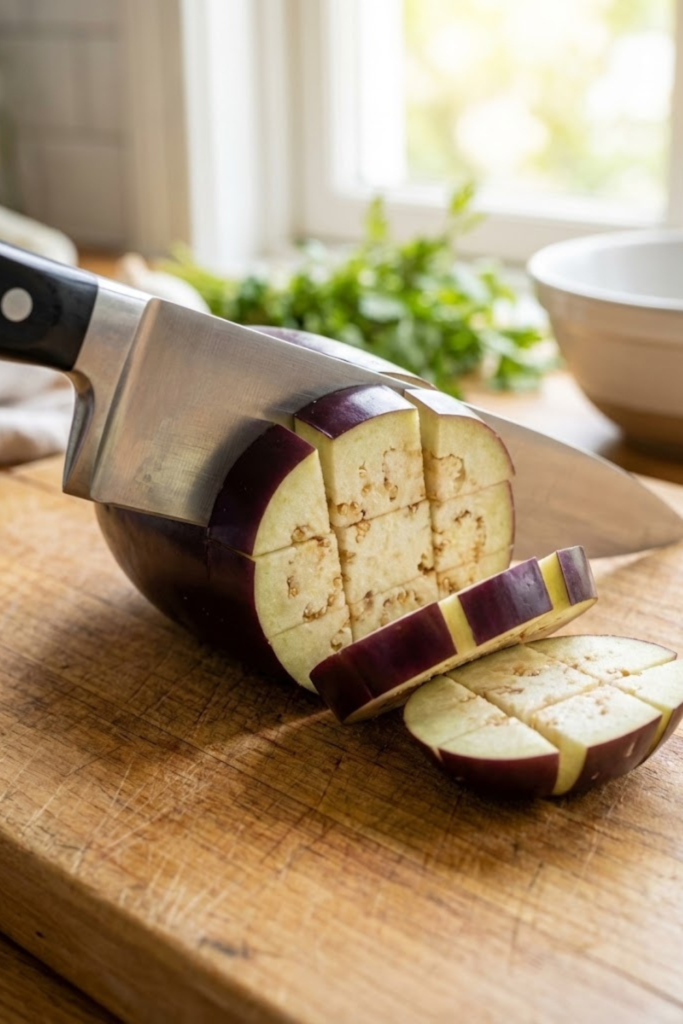
I know a lot of recipes, especially for things like eggplant parmesan, tell you to cut big round slices. But for herb roasted eggplant, cubes are the way to go. I cut mine into chunks that are about one inch big. Here is why: cubes have more sides. More sides means more surface area touching the hot air and the pan. This gives you way more caramelization—that brown, sweet crust—than if you just did slices. Rounds tend to steam in the middle and get soggy, which is exactly what we are trying to avoid.
The Salting Debate
My grandmother swore you had to salt eggplant before cooking it to “draw out the bitterness.” You would slice it, sprinkle salt on it, and let it sit for an hour, then rinse it off. Honestly? I don’t have time for that on a Tuesday night. The good news is that modern eggplants sold in supermarkets aren’t nearly as bitter as the ones from fifty years ago. I usually skip this step completely. The only time I do it is if the eggplant is really old or if I want it to be super dry and crispy. But for a regular dinner side dish, you can skip the salting and it will still taste great.
Uniformity is Key
If you take one thing away from this section, let it be this: cut your pieces the same size! I am terrible at eyeballing things, but I try really hard here. If you have some tiny pieces and some giant chunks, the tiny ones will burn to a crisp before the big ones are even soft. I aim for that one-inch size for everything. It helps everything roast evenly so you don’t have to pick through the pan looking for the “good pieces.” It makes the whole cooking process a lot less stressful.
Roasting Techniques for Crispy Texture
I spent years making soggy vegetables before I realized that roasting is actually a bit of a science. It isn’t just about getting the food hot; it is about how you apply that heat. If your eggplant always turns out like mushy baby food, don’t worry. It probably isn’t the vegetable’s fault. It is usually just a matter of technique. Once I figured out these few simple tricks, my family actually started asking me to make this dish, rather than just tolerating it.
Crank Up the Heat
The biggest mistake I see people make is being afraid of high temperatures. I used to bake everything at 350°F because that is what I used for cookies and cakes. But for herb roasted eggplant, 350°F is just too low. At that temperature, the eggplant steams in its own juices instead of crisping up. You want to shock the vegetable with high heat.
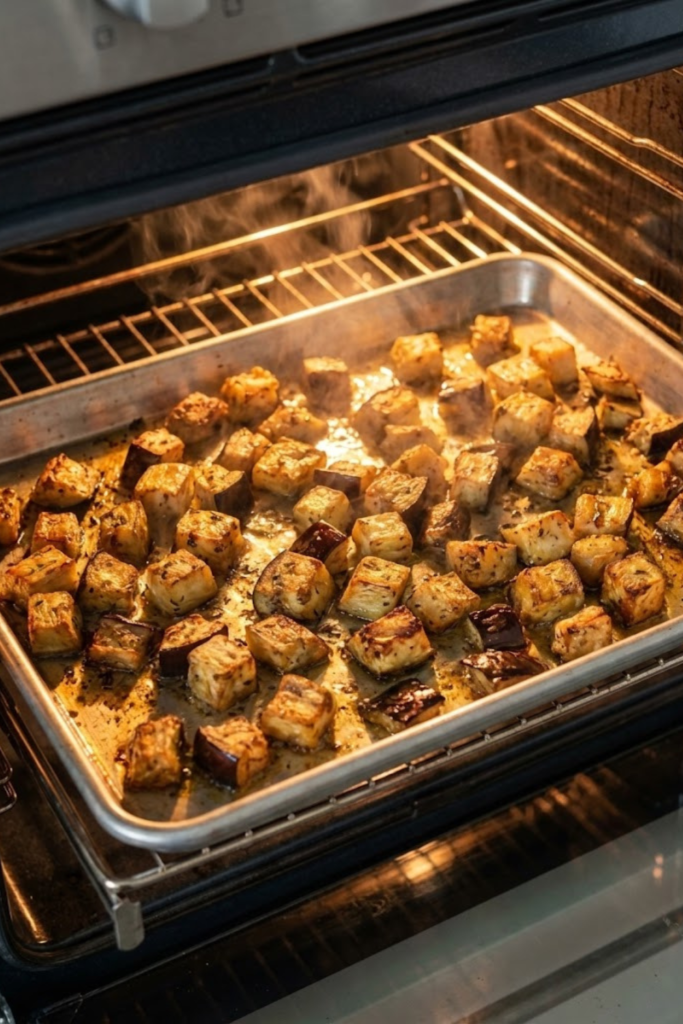
I always preheat my oven to 400°F or even 425°F. You need that intense heat to caramelize the natural sugars on the outside of the cubes. That is what creates that delicious brown crust. If you hear the veggies sizzling when you check on them, you know you are doing it right. If it’s quiet, your oven might not be hot enough.
Don’t Crowd the Pan
This is a lesson I learned the hard way when I was trying to cook a giant dinner for a holiday. I tried to fit three eggplants onto one baking sheet. They were packed in there like sardines. The result was terrible. When the pieces are touching each other, the hot air cannot circulate around them. Instead of roasting, the moisture gets trapped between the cubes and they steam.
You have to give them space to breathe. I try to make sure there is a little bit of empty baking sheet visible between each piece. If you have too much eggplant for one pan, just use two. It creates more dishes to wash, which is annoying, but the difference in taste is huge. You want them to roast, not stew.
The Flip Strategy
You can’t just put the pan in the oven and forget about it until the timer goes off. Well, you can, but one side will be burnt and the other side will be pale and flabby. I usually set a timer for halfway through the cooking time, usually about 15 minutes in.
I pull the rack out and use a spatula to flip the pieces over. You don’t have to turn every single cube individually—that would take forever. Just give them a good toss and spread them back out. This helps them get that golden-brown color on all sides.
The Waiting Game
This might be the hardest part. When you take the pan out of the oven, the eggplant is going to be incredibly hot and very soft. It smells amazing, so you will want to eat it right away. But if you let the pan sit on the counter for about two or three minutes, something magic happens. As they cool slightly, the outside firms up just a little bit. It gives you that perfect texture that is crispy on the outside and creamy on the inside, without burning your tongue.
Serving Suggestions and Pairings
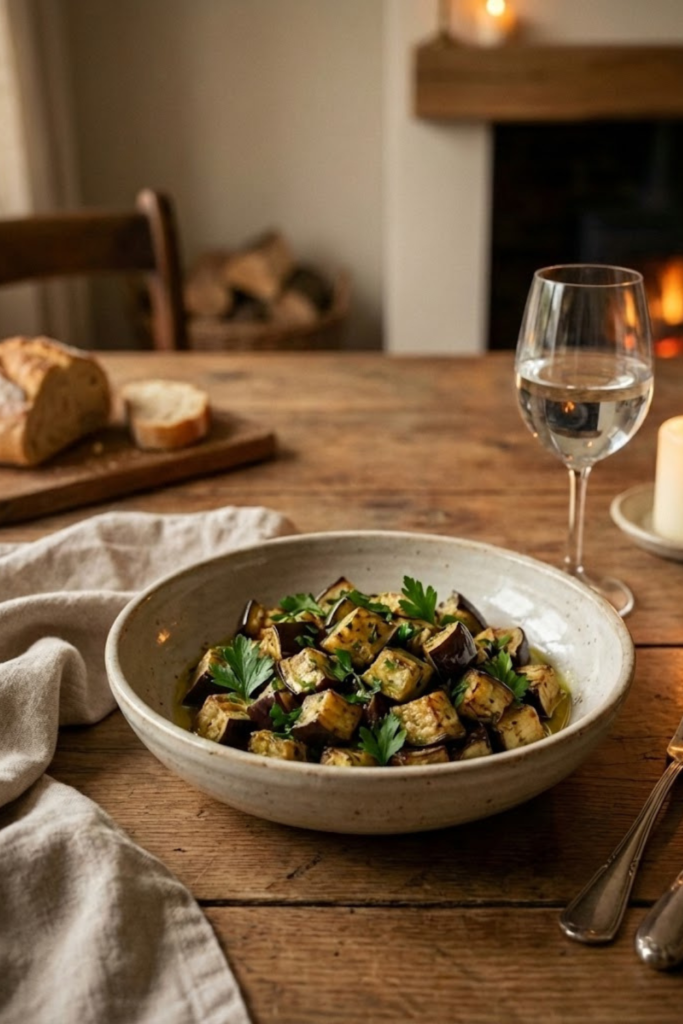
I honestly think the best part about this recipe is how versatile it is. I have made it for fancy dinner parties and I have made it for a quick lunch for myself while grading papers. It just works. I used to struggle with meal planning because I would make a main dish and then stare at the fridge wondering what veggie goes with it. This herb roasted eggplant has become my answer for almost everything because it plays nice with so many other flavors.
As a Side Dish
Usually, I serve this right alongside a simple roast chicken or some grilled steak. The earthy flavor of the eggplant stands up really well to red meat, but it isn’t too heavy for fish either. If you are making a white fish like cod or tilapia, the herbs on the veggies really help flavor the whole plate. It is a great alternative to potatoes if you are trying to cut back on starch but still want something satisfying to chew on. My kids even like it with turkey burgers, which was a huge win for me.
Vegetarian Main Course
Sometimes, I just don’t feel like cooking meat. On “Meatless Mondays,” I take these roasted cubes and toss them into a big bowl of pasta. If you add a little bit of the pasta water and some parmesan cheese, it creates its own light sauce that coats the noodles perfectly. I also love putting it on top of quinoa or farro. I make a big “grain bowl” with the eggplant, maybe some chickpeas, and whatever other veggies I have rotting in the crisper drawer. It fills you up without making you feel tired and heavy afterwards.
Dips and Sauces
While these taste great on their own, I am a huge fan of dipping sauces. My absolute favorite thing to pair this with is tzatziki. The cold, garlicky yogurt sauce with the hot, roasted vegetable is just an amazing combination. The temperature contrast is delightful. If you want to keep it vegan, a drizzle of tahini (sesame paste) mixed with lemon juice is delicious. Even a simple jarred marinara sauce works if you are going for that Italian vibe but don’t want to do all the work of making eggplant parmesan.
Leftover Ideas
If you are lucky enough to have leftovers, please don’t throw them out! I actually think they taste better the next day after the flavors have had time to meld together in the fridge. I like to put cold roasted eggplant in sandwiches or wraps for lunch. It adds a nice “meaty” texture without the meat. I have even thrown them into a morning omelet with some crumbled feta cheese. It beats plain old toast any day, and it makes me feel like I am starting the day off right.
Making Eggplant a Regular in Your Kitchen
We have covered a lot of ground today, and I really hope you are feeling a little more confident about tackling this purple vegetable. Like I said at the beginning, I avoided cooking eggplant for years because I thought it was too complicated or just didn’t taste good. But once I realized that the secret wasn’t some fancy culinary degree but just a hot oven and good olive oil, it changed everything for me.
If you only remember three things from this whole post, let them be these. First, buy fresh. If the vegetable is soft or wrinkled at the store, just walk away. No amount of cooking magic can save a bad eggplant. Second, don’t skimp on the oil. It needs that fat to carry the flavor of the herbs and to create that crispy crust we all love. And finally, give it space. Crowding the pan is the enemy of crispiness. If you follow those three golden rules, you are going to be just fine.
I encourage you to play around with the flavors too. The rosemary and thyme blend I shared is my personal favorite, but you might like oregano and red pepper flakes better. That is the fun part of cooking at home. You get to decide what tastes best. Maybe you will find a combination that becomes your family’s new secret recipe. Cooking should be fun, not stressful, so don’t worry if you burn a batch or two while you are learning your oven’s quirks. We have all been there.
This herb roasted eggplant has truly become a staple in my house. It is an easy way to get more vegetables on the plate without having to force anyone to eat them. My goal is always to make food that makes people happy, and this dish definitely does that.
If you try this recipe and love it, please do me a huge favor. Pin this recipe on Pinterest! It helps other home cooks find these tips and saves you from losing the recipe when you need it next time. Plus, I love seeing your photos, so if you post a picture of your dinner, be sure to tag me. Now, go preheat that oven and enjoy your delicious, healthy meal!