Did you know the simplest stuff in the pantry often makes the best dinners? It’s really true. I remember the first time I tried to make this easy olive oil pasta, what they call Aglio e Olio. I thought to myself, “It’s just oil and noodles, gonna be a breeze.” Boy, was I wrong! There is a real trick to getting that sauce creamy so it’s not just a pool of grease at the bottom of the bowl. But don’t worry, I messed this up plenty of times so you don’t have to. Here, I’m gonna share exactly how to nail this dish in 15 minutes flat, so you get a yummy meal without the headache.
Getting the Authentic Aglio e Olio Right
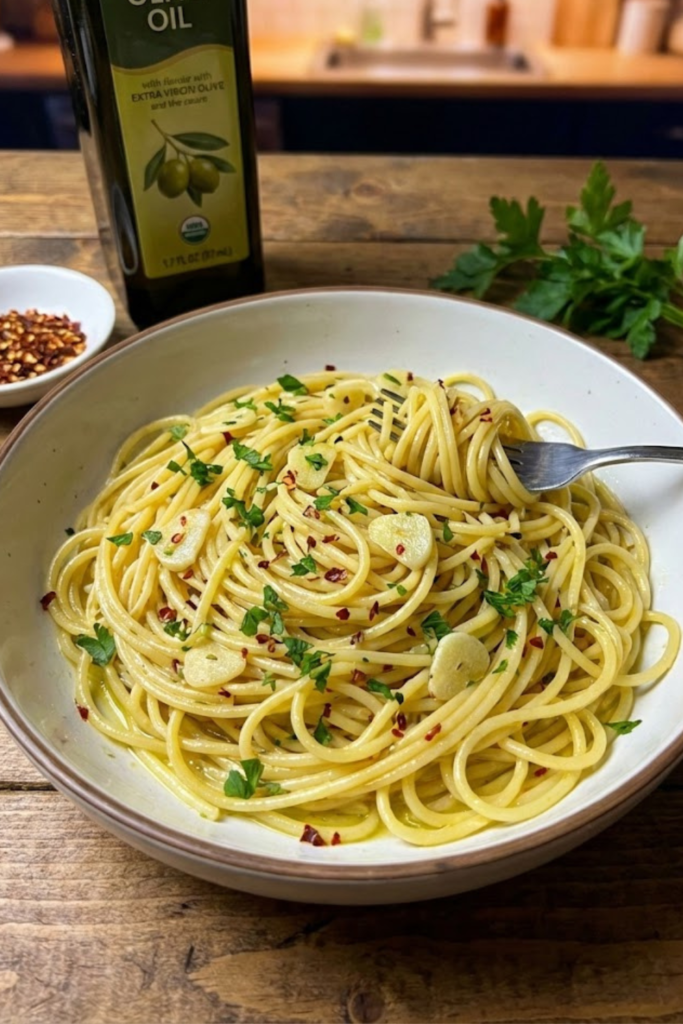
This dish comes from Naples, and it is honestly the best example of how simple Italian food can be. You might hear the name and think it sounds fancy, but it just translates to “Garlic and Oil.” It was traditionally a dish for late nights or when the pantry was almost empty. But don’t let that fool you; the flavor is huge if you do it right.
The biggest thing to learn here is how to make the sauce creamy without adding any cream. It is all about the starchy pasta water. You know how oil and water usually separate? Well, if you mix the hot oil with the cloudy water from the pasta pot and stir it like crazy, it creates an emulsion. That is just a science word for them mixing together smoothly. I used to just pour oil over my noodles and wonder why it was so greasy. Once I figured out the water trick, it changed everything. You want the garlic to be golden, not burnt, and that little kick from the red pepper keeps it interesting. It’s a balance of savory and spicy that just works.
Another thing folks often get wrong is the garlic prep. I used to use a garlic press because it was faster, but that makes the garlic burn almost instantly. You really want to slice the cloves into thin little chips instead. This way, they get soft and sweet in the warm oil rather than turning into bitter black specks. Also, don’t skimp on the fresh parsley at the very end. It adds a fresh green taste that cuts right through the richness of the oil. Some strict Italians might yell if you add cheese, but the creamy sauce you make with just the water is the real magic anyway. It feels fancy, but it is just good, simple cooking.

Choosing the Best Ingredients for Big Flavor
Since we are only using a handful of things here, you really can’t hide behind a heavy tomato sauce or cream. If one ingredient is bad, the whole dish tastes off. I learned this the hard way one Tuesday when I tried to use some cheap vegetable oil I found in the back of the cupboard. Let’s just say we ordered pizza that night.
For the pasta, you really want to stick to the long strands like spaghetti or linguine. The oil coats them much better than it does with short shapes like penne. If you can, look for pasta that looks a little rough or dusty, rather than super shiny smooth. That rough texture helps grab onto the oil so it doesn’t just slide off.
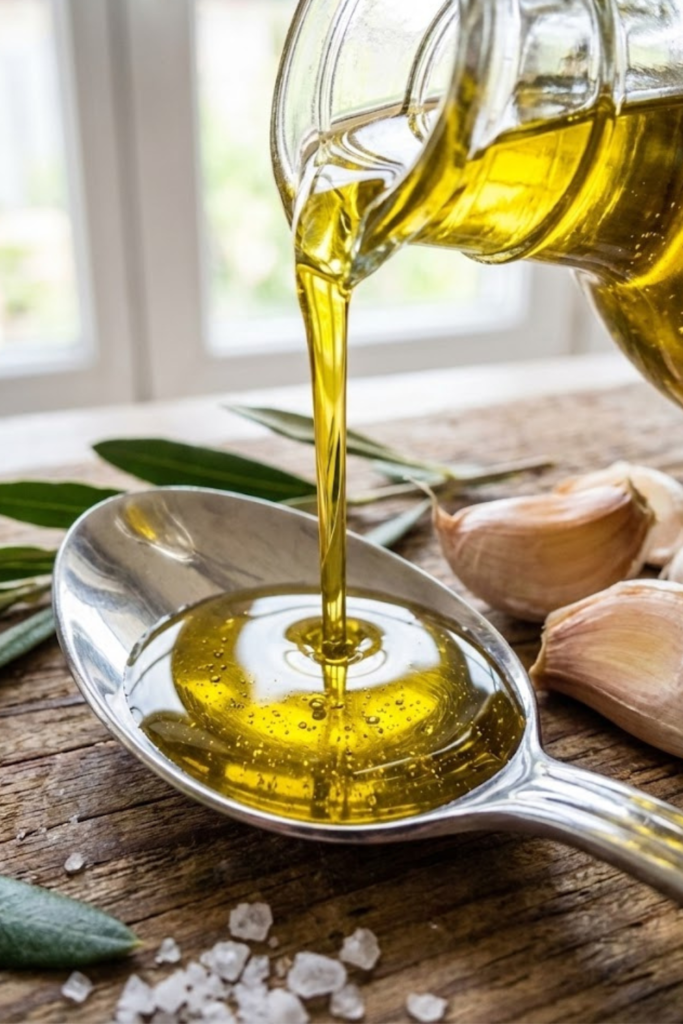
The olive oil is the real star, though. You have to use Extra Virgin Olive Oil. If you have a “nice bottle” you have been saving for a special occasion, this is the time to crack it open. It gives the dish a rich, fruity taste that regular cooking oil just doesn’t have. Then there is the garlic. Please, do yourself a favor and buy fresh bulbs. The chopped stuff in the jar just doesn’t taste the same and can be weirdly sour. And about the cheese? Most traditional Italian chefs will say absolutely no cheese on this. But I won’t tell if you sprinkle a little Parmesan on top. I do it all the time, and it’s delicious.
Also, don’t forget the heat. I always keep a jar of crushed red pepper flakes in my spice drawer, and they work great, but you have to be careful not to use old ones that have lost their kick. You want a gentle warmth, not to burn your mouth off. And please, skip the dried parsley shaker. It tastes like dust. Grab a fresh bunch of Italian flat-leaf parsley from the produce section. It adds this fresh, grassy brightness that cuts through the heavy oil. I usually chop up the stems finely and throw them in too because they have tons of flavor. It really makes the difference between a sad bowl of noodles and something that tastes like a real meal.
Mastering the Step-by-Step Cooking Method
Now, let’s get cooking. I used to try to do everything at once and ended up with burnt garlic, which tastes bitter and awful. The trick I learned is to take your time with the oil.
First, get a big pot of water boiling and add a good amount of salt. It should taste like seawater. Drop your spaghetti in, but here is a pro tip: look at the cooking time on the box and set your timer for two minutes less than that. You want the pasta to finish cooking in the sauce, not the water.
While the pasta boils, put your olive oil and sliced garlic into a large pan. Make sure the pan is cold when you start. Turn the heat to medium-low. This warms the garlic slowly so it infuses the oil with flavor without burning. As soon as the garlic starts to turn a light golden color, throw in your red pepper flakes and take it off the heat for a second if it’s getting too hot.
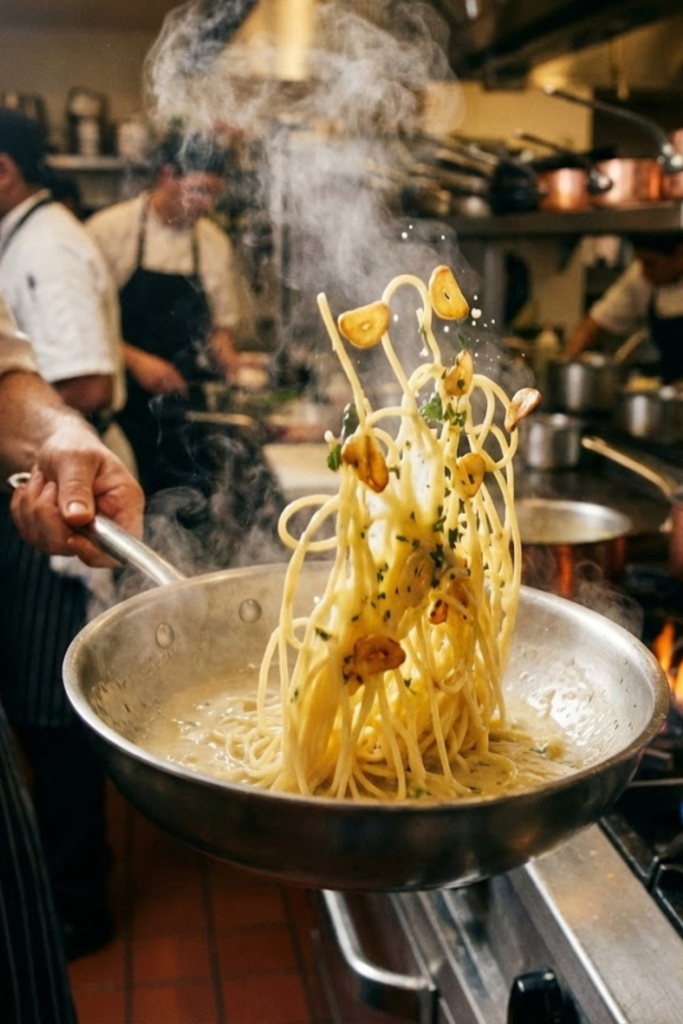
When the timer goes off, don’t drain the pasta in the sink! Use tongs to move the spaghetti straight from the water into the pan with the oil. It’s okay if water drips in; you want that. Turn the heat under the pan up to medium-high. Add a ladle of that cloudy pasta water. Now, you have to work fast. Stir and toss the pasta constantly. The water and oil will mix together to make a glossy sauce that clings to the noodles. If it looks dry, just add a splash more water. Keep tossing until the pasta is cooked perfectly. Toss in the parsley at the very end so it stays green and fresh.
One thing I always tell people is not to panic if it looks too watery at first. The sauce thickens up pretty quick as the starch does its work. You really have to keep things moving in the pan, though. If you stop stirring, the oil and water might split up, and nobody wants that. I usually grab a fork and taste a noodle right from the pan—careful, it burns!—just to check if it still has that little bite to it. If it feels too crunchy, add a tiny bit more water and keep going. And seriously, serve this immediately. It is one of those meals that tastes best the second it hits the plate, so make sure the family is already sitting at the table waiting.
Creative Ways to Change Up Your Pasta
I love the classic version, but sometimes I need a bit more to it, especially after a long day teaching. It is super easy to switch things up based on what you have lying around the kitchen. You don’t have to stick to the rules every time.
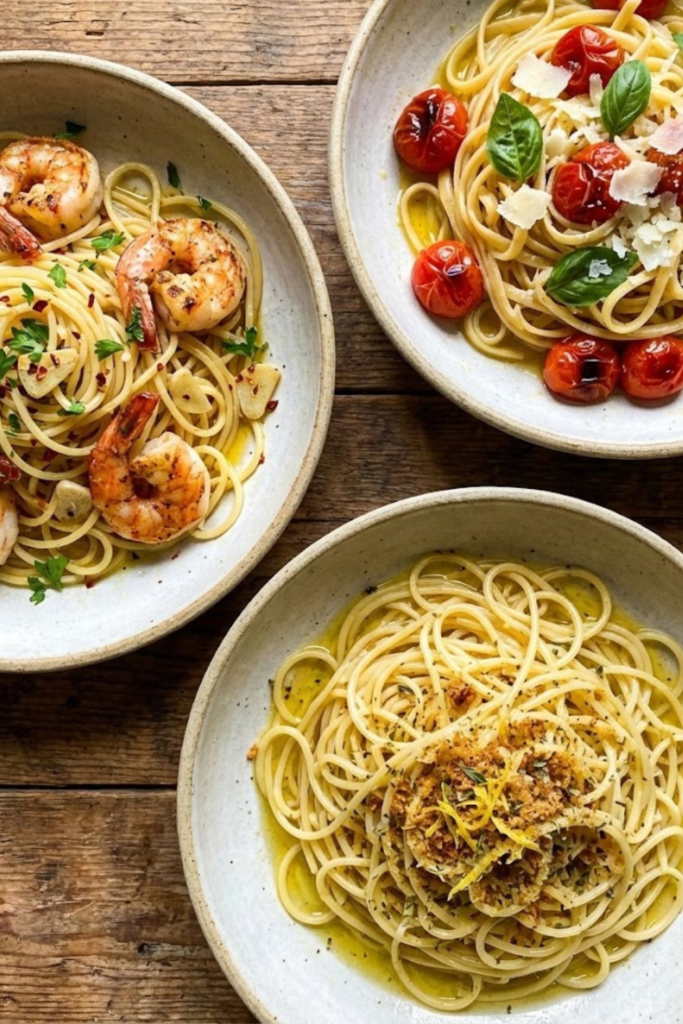
If you are hungry for a bigger meal, try adding some protein. I usually toss in some cooked shrimp or even leftover chicken from the night before. The meat soaks up that garlic oil and tastes amazing. My husband loves it when I add a can of chickpeas; it’s cheap and fills you up.
I also try to get more greens in my diet, so I will often throw a big handful of spinach into the pan right at the end. It wilts down in seconds. Roasted cherry tomatoes are great too. If you cook them until they burst, they make the sauce a little sweet and tangy.
One of my favorite tricks is using lemon. Just grate a little bit of the yellow skin (the zest) over the top before serving. It brightens the whole dish up and cuts through the oil so it doesn’t feel as heavy. And don’t stress if you don’t have fresh parsley. I have used dried oregano or fresh basil, and it turns out fine. Just use what you have!
Another thing I like to do is toast some breadcrumbs in a separate little pan with a drop of oil. My grandmother used to call this “poor man’s cheese” because it adds a nice crunch on top without spending money on expensive parmesan. It sounds weird, but the texture difference is awesome. If you want a deeper flavor, try melting one or two anchovy fillets in the oil before adding the garlic. I know, anchovies sound gross to some people, but trust me, they completely dissolve and just make the sauce taste savory and rich, not fishy at all. It is a little chef secret that makes people wonder why yours tastes so good.
So, there you have it. We went through everything from why you need that good Extra Virgin Olive Oil to the special “mantecatura” shake that stops it from being greasy. I know it might seem too simple to be good, but trust me, it is a game changer. This pasta has saved me on so many busy school nights when I just didn’t have the energy to cook a big meal.
Don’t be afraid to mess it up the first time. Even if it isn’t perfect, it’s still pasta and garlic, so it’s gonna taste good. Just give it a try next time you are staring at an empty fridge. If you found this helpful, do me a huge favor and Pin this easy dinner idea on Pinterest! It helps other people find the recipe, and I would love to see what you cook up. Happy cooking!