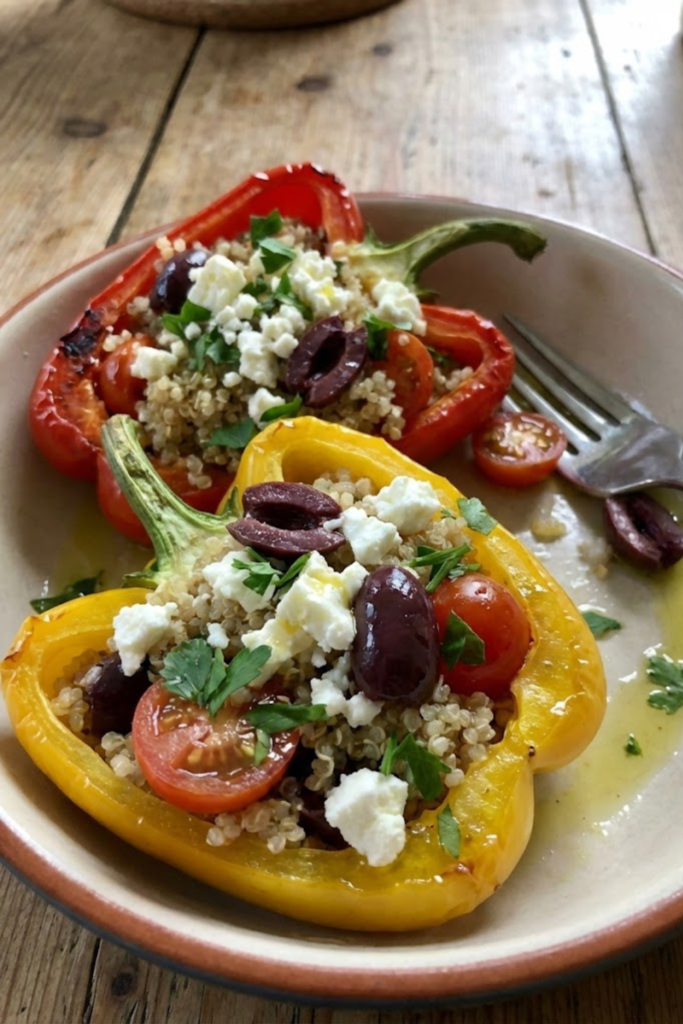
Have you ever bitten into a dish that instantly transported you to a sunny seaside taverna? That is exactly what happened the first time I nailed this recipe! Mediterranean Stuffed Peppers are not just a meal; they are a vibrant celebration of fresh ingredients and bold flavors that turn a boring Tuesday night dinner into an event.
Did you know that bell peppers contain more Vitamin C than oranges? It’s true! Combining that nutritional punch with the heart-healthy fats of olive oil and the protein of quinoa makes this dish a powerhouse. Whether you are a seasoned chef or a kitchen newbie, these peppers are forgiving, colorful, and absolutely delicious. Let’s dive into the kitchen and get cooking!
Choosing the Perfect Peppers for Stuffing
I used to just grab the first bag of peppers I saw at the grocery store. Big mistake. I remember one specific Tuesday night when I was rushing to get dinner on the table. I had bought these skinny, uneven peppers because they were on sale, thinking I was scoring a deal.
When I tried to stand them up in the baking dish, they kept falling over like dominos. It was a total disaster. Half the filling spilled out before they even hit the oven, and I ended up propping them up with wads of aluminum foil just to get them to stay put. Choosing the right vegetable is honestly half the battle when making Mediterranean Stuffed Peppers. You have to be picky here.
The Wobble Test
Here is a trick I learned the hard way. When you are in the produce aisle, actually set the pepper down on the shelf. Does it stand up straight on its own?
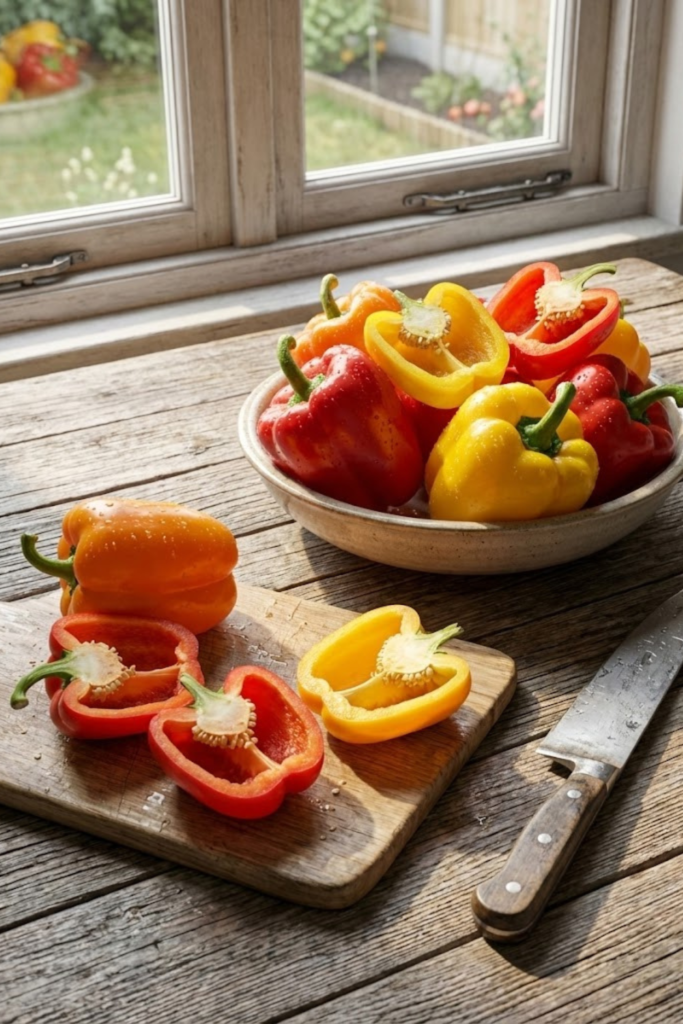
You want peppers with four distinct bumps (lobes) on the bottom, not three. They are usually much more stable. If a pepper wobbles on the shelf, it is definitely going to wobble in your oven. You need a flat foundation so all that delicious quinoa and feta stays inside where it belongs.
Don’t be shy about testing them out. I probably look a bit crazy arranging peppers at the store, but my dinner turns out better for it.
Red vs. Green: The Flavor Battle
I grew up eating green stuffed peppers. They are classic, sure. But for this specific Mediterranean recipe, green peppers are just too bitter. They taste a bit grassy and can overpower the sweetness of the sun-dried tomatoes.
I always tell people to go for red, orange, or yellow peppers. Red peppers are actually just green peppers that have been allowed to ripen longer. This makes them significantly sweeter and packs them with more Vitamin C.
That sweetness pairs perfectly with the salty kick of the olives. If you are on a tight budget, green ones work, but the flavor profile won’t be quite the same.
Size and Skin Quality
Don’t buy the biggest peppers you can find. It seems like a good idea, but they take forever to cook. By the time the pepper is tender, your filling is dried out.
Aim for medium-sized peppers that are all roughly the same size. This helps them cook evenly. Also, look for tight, shiny skin. If the skin is wrinkling, the pepper is old and will turn to mush in the oven.
A Note on the “Dirty Dozen”
Bell peppers often land on the “Dirty Dozen” list for pesticide residue. It is a bummer, I know. Since we are eating the skin, this is one specific time I really recommend springing for organic if you can.
If organic isn’t in the cards this week, just give them a really good scrub with a vinegar and water solution. It helps remove some of that surface wax and residue so you can eat without worry.
Crafting the Ultimate Mediterranean Filling
The filling is where the magic happens. I used to think you could just throw leftover rice and some veggies into a pepper and call it a day. But if you want that real Mediterranean taste, you have to be a little more thoughtful with your ingredients.
I remember making these for a potluck a few years ago. I didn’t season the grain base enough, and honestly, it tasted like cardboard inside a vegetable. I was so embarrassed. Since then, I’ve reworked my method to make sure every bite is packed with flavor.
Quinoa vs. Rice: The Great Debate
Most old-school recipes call for white rice. And look, rice is fine. But for this recipe, I’ve switched to quinoa and I’m never going back.
Quinoa has this nutty flavor that stands up really well to the strong tastes of olives and feta. Plus, it doesn’t get as mushy as white rice does when it bakes inside the pepper. If you are using quinoa, here is a teacher tip: rinse it really, really well before cooking. If you don’t, it has a bitter coating that can ruin the whole dish.
If you absolutely must use rice, try brown rice. It has a firmer texture that won’t turn into a paste in the oven.
The Salty, Savory Mix-Ins
The difference between a bland pepper and a great one is the add-ins. You can’t be stingy here. I always use Kalamata olives. Don’t use those generic black olives from a can; they just don’t have the punch you need.
I also chop up sun-dried tomatoes. They add a sweet, chewy texture that breaks up the softness of the grain. A mistake I used to make was leaving the pieces too big. You want to chop everything pretty small—the olives, the tomatoes, the spinach. This way, you get a little bit of everything in a single forkful, instead of a mouthful of just olive.
Why You Should Crumble Your Own Feta
Please, I am begging you, stop buying the pre-crumbled feta cheese. It is coated in this potato starch powder to keep it from clumping, and it makes the cheese dry.
Buy the block of feta that comes in the brine. It stays moist and has a much sharper, fresher flavor. Taking two minutes to crumble it yourself with a fork makes a huge difference in how it melts. It gets creamy instead of rubbery.
Sneaking in Extra Veggies
As a teacher, I’m always trying to get kids (and my husband) to eat more greens. This filling is the perfect hiding spot. I stir in a big handful of fresh spinach right when the quinoa finishes cooking. The heat from the grains wilts the spinach perfectly without making it slimy. You don’t even need to cook it separately. It adds color and vitamins, and nobody ever complains because it’s covered in cheese.

Step-by-Step Baking for Tender Results
There is nothing worse than cutting into a stuffed pepper and realizing the vegetable is still rock hard while the filling is scorching hot. I have definitely done that. It feels like eating a raw salad with hot quinoa on top, and it is just not appetizing.
On the flip side, you don’t want a mushy mess that collapses as soon as you touch it with a fork. Finding that middle ground where the pepper is tender but still holds its shape took me a lot of trial and error. I burned a few batches and served some crunchy ones before I finally figured out the routine.
To Parboil or Not to Parboil?
You will see a lot of fancy recipes telling you to boil (parboil) the peppers in a pot of water before stuffing them. Honestly? I don’t have time for that. I am usually grading papers while I cook, and washing an extra giant pot is not on my to-do list.
I skip the boiling step completely. It makes the peppers too soft and hard to handle. If you try to stuff a boiled pepper, it often rips. Baking them from raw is perfectly fine, as long as you use the steam trick I explain below. It saves time and keeps the structural integrity of the pepper much better.
The Steam Bath Trick
This is the most important part of the whole recipe. Since we aren’t boiling the peppers first, we have to create steam inside the oven.
Once you have arranged your stuffed peppers in the baking dish, take a measuring cup and pour about half a cup of water into the bottom of the dish. You pour it right around the peppers, not over them.
Then, cover the dish tightly with aluminum foil. This traps the water vapor. As the water heats up, it steams the peppers from the outside while the filling warms up on the inside. This is how you get that tender texture without boiling water.
Temperature and Timing
I set my oven to 375°F (190°C). I used to do 350°F, but I found it took way too long. 400°F is too hot and burns the bottoms. 375°F is the sweet spot.
With the foil on, bake them for about 30 to 35 minutes. You can check them by lifting a corner of the foil (be careful of the steam!) and poking the thickest part of a pepper with a sharp knife. If it slides in easily like it’s butter, they are cooked. If there is resistance, put the foil back and give it another ten minutes.
The Cheese Melt
Don’t take them out yet! The best part is the cheese crust. Once the peppers are soft, remove the foil completely.
I like to sprinkle a little extra feta or maybe some mozzarella on top right at this stage. Put the dish back in the oven, uncovered, for another 10 to 15 minutes. This evaporates any leftover water in the dish and lets the cheese get bubbly and slightly brown. If you really like it crispy, you can turn on the broiler for the last two minutes, but watch it closely so it doesn’t burn.

Serving Suggestions and Storage Tips
Serving these peppers is always a fun part of the night. I used to just plop a single pepper on a paper plate and call it dinner. Honestly, that works fine if you are eating alone. But my husband complained he was still hungry an hour later, so I had to start thinking about sides.
These peppers are pretty filling on their own because of the quinoa, but they look kind of lonely on a big dinner plate. If you are trying to impress someone or just want a full meal, you need to add a few things to the table.
What Goes on the Side?
Since the oven is already hot, I usually throw in a tray of lemon roasted potatoes. I put them on the rack under the peppers. The lemon flavor matches the Mediterranean vibe perfectly.
If you don’t want to cook another thing (I totally get it), just cut up a fresh Greek salad. I chop cucumbers, tomatoes, and red onion into big chunks. I don’t even make a fancy dressing; just olive oil and vinegar does the trick. The cold, crisp salad tastes really good next to the hot, soft pepper.
Also, you have to have Tzatziki sauce. I buy the tub from the store because making it from scratch takes too long on a weeknight. Dipping a piece of the roasted pepper into that cold yogurt sauce is the best bite of the meal.
Making it Look Fancy
I am definitely not a professional chef, but I like my food to look good. When the peppers come out of the oven, they can look a little wrinkled.
To fix that, I chop up some fresh parsley and sprinkle it over the top. It adds a pop of bright green color. If you like acid, squeeze a wedge of fresh lemon over the whole thing right before you eat. It wakes up all the heavy flavors of the cheese and olives.
Lunch for the Week (Storage)
I am a huge fan of meal prepping. Sunday is usually my big cooking day so I don’t have to stress during the school week. These peppers hold up really well in the fridge.
I put them in glass containers with the locking lids. They stay good for about four days. Actually, I think they taste better the next day. It’s like chili or lasagna; the flavors need time to sit together and get to know each other.
When you reheat them, just pop them in the microwave for two minutes. Cut them in half first so the middle gets hot.
Can You Freeze Them?
People always ask me this. Yes, you can, but there is a catch.
Peppers have a lot of water in them. When you freeze a cooked pepper and then thaw it out, it is going to be softer than it was fresh. It won’t be mush, but it won’t have that same bite.
If I freeze them, I wrap each cooked pepper individually in plastic wrap and then put them in a freezer bag. They last for about three months. It is a lifesaver on those nights when you get home late and literally cannot bring yourself to cook. Just let it thaw in the fridge while you are at work, then heat it up.

That is pretty much it! Mediterranean Stuffed Peppers are one of those meals that looks hard but is actually super easy once you get the hang of it. It’s healthy, it’s cheap, and it tastes like you spent hours in the kitchen.
I am constantly losing recipes I find online, so save yourself the headache and save this one now. Go ahead and Pin this image to your “Weeknight Dinners” or “Healthy Recipes” board on Pinterest. That way, when you are standing in the grocery store on Tuesday wondering what to buy, you can pull it right up.
Give it a try this week. Even if your peppers tip over a little bit in the oven, they are still going to taste amazing. Enjoy your dinner!